Good LG freezer tips are mostly about airflow and habits rather than about settings. A freezer that frosts up, runs constantly or loses things at the back is usually being asked to work against the way it moves air — and the fixes cost nothing. This guide covers how to load one, what temperature to hold, what the alarms are telling you, and which symptoms mean it is time to stop rearranging shelves and call someone.
Temperature: pick a number and leave it alone
Zero degrees Fahrenheit is the number that keeps food safely frozen and quality stable. Setting a freezer colder than that does not preserve food better; it just runs the compressor longer and costs more to own. Setting it warmer risks partial thawing and texture damage on anything stored for months.
Verify the number rather than trusting the display. Put an independent thermometer between packages in the middle of the cabinet and read it the next morning. The display reports a sensor in one place; the thermometer tells you what the food is actually experiencing, and a gap between the two is worth knowing about before it matters.
Load it so air can move
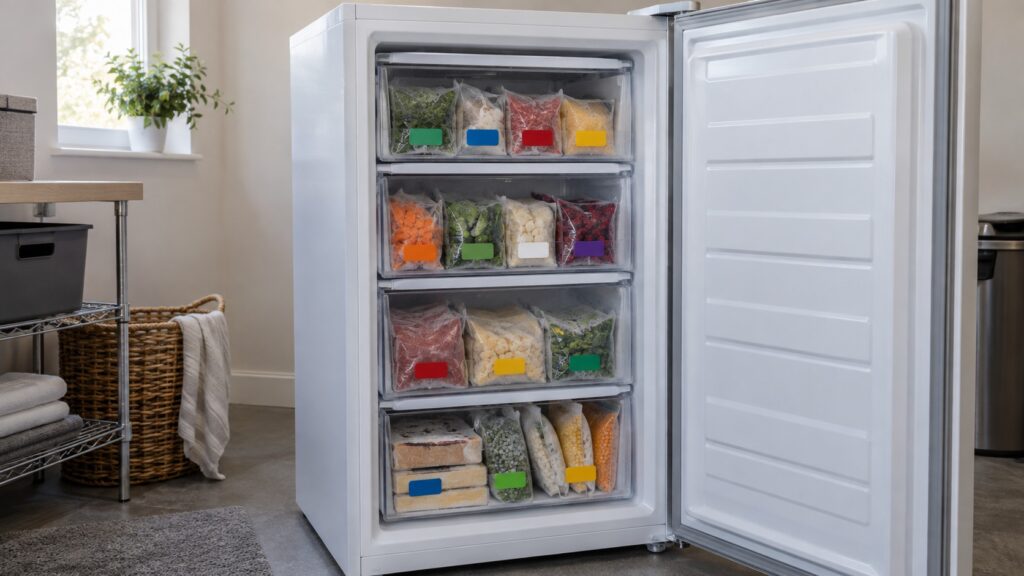
A freezer works by circulating cold air, not by radiating cold from the walls. Stacking boxes flat against the back wall or filling a drawer to the brim seals off the vents, and the result is warm pockets in places the thermostat will never see. Keep an inch of clearance around the vents, leave a finger’s width between stacks, and store flat packs upright like files rather than laying them in a solid slab.
Full is good; packed is not. A comfortably full freezer holds its temperature through a door opening far better than an empty one, because the frozen mass itself is the reservoir. If yours is usually half empty, fill the space with jugs of water — they cost nothing and behave like extra insulation.
Frost is information
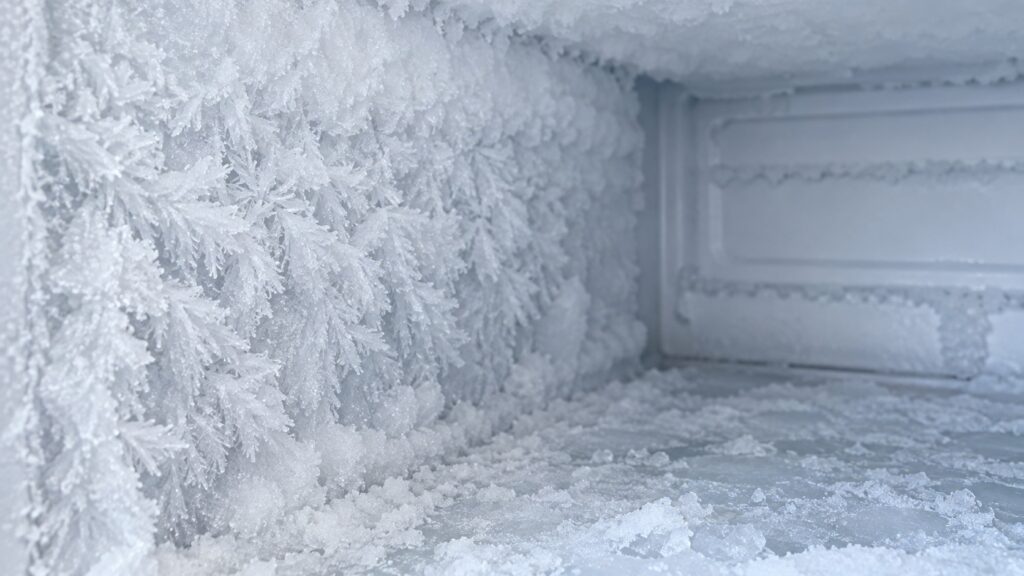
A light dusting on packages after months of storage is normal. Anything more is telling you something. Frost on one wall points at a door that is not sealing or a defrost problem; frost forming after each shopping trip points at warm, humid air getting in; frost around a specific vent means air is escaping where it should not.
Check the gasket first — close the door on a dollar bill and pull; if it slides out with no resistance, the seal is not doing its job at that point. Our guide on frost buildup covers the rest of the diagnosis when the seal is fine.
Organize so the door stays shut
The point of all of it is time with the door open. Thirty seconds of browsing deposits humid room air on every surface inside, and that becomes the frost you have to deal with later.
Two more habits belong here because they cost nothing and save food. Cool hot leftovers on the counter before they go in: a warm dish raises the temperature of everything around it and makes the compressor work for an hour to undo a decision that took a minute. And leave a little headroom in liquid containers, because water expands as it freezes and a cracked container in a freezer is a mess that finds its way into every drawer below it.
Alarms, and what they mean
A door alarm means exactly what it says — usually a drawer not pushed fully home, or a package holding the door off its seal by a quarter inch. A high-temperature alarm after a power cut is worth taking seriously: check whether items have softened before refreezing anything, because refreezing thawed food is a quality and safety question rather than a convenience one.
An alarm that repeats with no obvious cause deserves attention rather than muting. On these cabinets, a repeating temperature alarm is often the first sign of a defrost or airflow fault, well before you would notice anything in the food — and our guide on a freezer that is not freezing sets out what to check next.
Power cuts deserve a plan rather than a panic. A full freezer holds safe temperature for roughly two days with the door kept shut, and a half-full one for about a day. The rule that matters is simple: keep the door closed, and judge the food by temperature rather than by appearance when the power returns. Anything still holding hard-frozen can stay; anything that has warmed through should be cooked or discarded rather than refrozen.
The five-minute seasonal check
Twice a year: vacuum the condenser area if it is accessible, confirm the cabinet is level so the door swings shut on its own, wipe the gasket with warm water, and check that nothing is leaning against a vent inside. If the freezer sits in a garage, remember that ambient heat is real work for it — a cabinet in a hot garage in July runs far longer than the same one indoors, which is normal rather than a fault. The refrigeration side of the same routine is in our refrigerator maintenance checklist.
When to call
Call when the cabinet will not hold 0°F after the gasket and vents have been checked, when frost returns within days of clearing it, when the freezer runs constantly, when you hear a fan struggling or clicking, or when water appears under the unit. A defrost fault left alone turns into an airflow fault and then into spoiled food.
We are an independent repair company, not a factory service arm. Pricing starts from a diagnostic visit — from $89 — with the estimate confirmed before work begins. LG freezer repair covers defrost systems, fans, sensors, gaskets and controls, and you can schedule a visit online.