TL;DR: An LG range hood needs ductwork sized to the hood’s rated airflow, not just whatever diameter happens to line up with the wall — an undersized duct chokes performance no matter how strong the blower is. Beyond a certain airflow level, local code also calls for makeup air to replace what the hood is pulling out of the house, and that requirement is decided by total exhaust airflow, not by which brand of hood is installed.
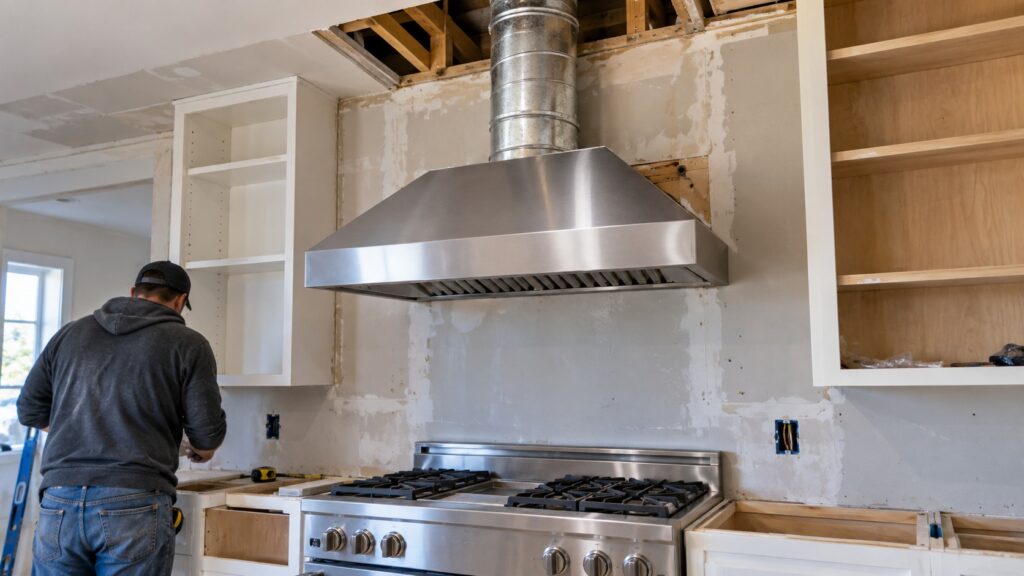
Range hood installation questions almost always come down to two things people skip when they focus on the hood itself: whether the duct run can actually carry the air the hood is rated to move, and whether the house needs a makeup air path once that hood is running. Both are decided before the hood goes on the wall, and both are far more expensive to fix after drywall is closed up than before. Getting lg range hood installation right the first time means treating the duct run and the makeup air path as part of the installation plan, not as afterthoughts once the hood is already mounted.
How do I size the duct for an LG range hood?
Duct size is matched to the hood’s rated CFM (cubic feet per minute) and to the duct’s total run length, including every elbow. A duct that is too small for the airflow forces the blower to work against higher resistance, which shows up as louder operation and weaker suction at the cooktop even though the motor itself is fine. As a general rule, higher-CFM hoods need a larger round duct diameter — check your specific LG hood’s installation manual for its rated CFM and matching duct size rather than reusing whatever duct was already in the wall, since a previous hood may have been rated very differently.
What is makeup air, and does my LG range hood need it?
A range hood exhausts air out of the house, and every cubic foot it removes has to be replaced from somewhere — otherwise the kitchen depressurizes, which can pull exhaust gas back down a water heater or furnace flue and make doors harder to open. Makeup air is a designed path, sometimes as simple as a passive damper and sometimes a small dedicated duct with its own control, that lets outdoor air back into the house to replace what the hood pulls out. Whether it is required for your installation depends on total exhaust airflow in the house and on your local building code, not on the hood being an LG model specifically — high-CFM hoods are the ones most likely to trigger the requirement.
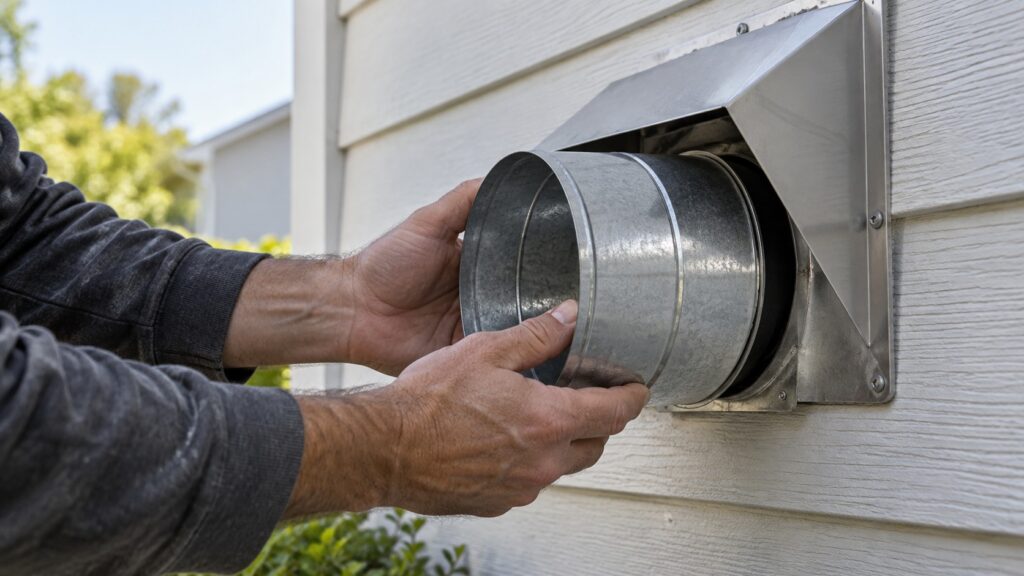
What if the existing duct run is undersized for a new hood?
This comes up constantly when a higher-CFM LG hood replaces an older, weaker one in the same kitchen. If the existing duct was sized for a much smaller blower, upgrading only the hood will not deliver the airflow on the spec sheet — the duct becomes the bottleneck. The fix is either resizing the duct run to match the new hood’s rating or choosing a hood model whose rated CFM matches what the existing duct can actually carry. Guessing at this step is the single most common reason a newly installed hood performs worse than expected.
Can I vent an LG range hood without ductwork at all?
Some LG range hood models offer a recirculating or ductless mode using a charcoal filter instead of an outdoor vent, which filters odor and grease from the air and returns it to the kitchen rather than exhausting it outdoors. That mode avoids duct sizing questions entirely but does not remove moisture or heat from the kitchen the way a ducted hood does, and the charcoal filter needs regular replacement to keep working. Check your specific model’s manual to confirm whether ducted, ductless or both modes are supported before planning the installation around one or the other.
Does the range or cooktop below change the installation requirements?
Yes. A gas range typically produces more combustion byproducts and moisture than an electric or induction cooktop, which is one reason many local codes set the makeup air threshold based on total kitchen exhaust airflow rather than treating every hood the same. A high-output burner, including LG’s UltraHeat gas burners, adds to the heat and moisture the hood has to move, so a hood and duct combination sized for a standard electric cooktop can be undersized once it is paired with a higher-output gas range. Confirming the CFM rating needed for your specific cooking setup, not just the hood’s default rating, avoids installing a duct run that turns out to be too small once the range is in daily use.
What installation mistakes cause weak suction after the hood is mounted?
Beyond duct sizing, the most common culprits are a damper that will not open fully, too many tight bends stacked close together right where the duct leaves the hood, and a termination cap with a spring-loaded flap that is too stiff for the airflow to push open. Each of these can make a correctly sized, correctly rated hood perform as if it were undersized. Our range hood weak suction guide covers how to tell these installation issues apart from a failing blower motor.
How do I keep the hood performing once it is installed?
Grease buildup in the duct and on the filters reduces airflow gradually, in a way that feels like the hood getting weaker over months rather than failing outright. Our range hood maintenance guide covers the filter-cleaning schedule that keeps a correctly ducted hood working at its rated airflow, and our range hood buying guide is worth reading before the purchase if duct constraints in your kitchen might steer you toward a different CFM rating than you first planned.
We are an independent LG appliance repair company, not a factory installation service, and we check duct sizing and airflow on every hood we’re called to service, not just the motor. If your range hood’s performance does not match its rating, schedule a visit or start with our LG range hood repair page.