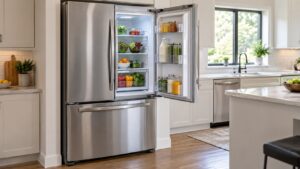
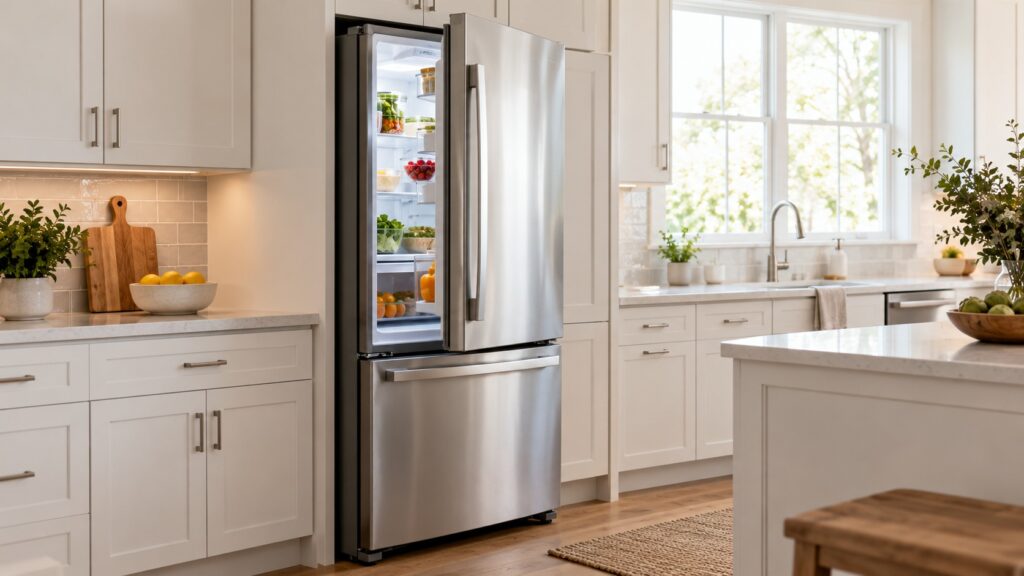
An LG bottom freezer refrigerator puts the fresh-food compartment at eye level and the freezer in a pull-out drawer underneath. That is the whole idea, and it decides who should buy one: if you open the refrigerator many times a day for milk, produce and leftovers and open the freezer only a few times a week, this layout saves you from bending down for the things you use most. This guide explains how the layout works, what to measure and what to confirm about your exact model before you order, because features differ from one LG model to the next.
What is an LG bottom freezer refrigerator?
It is a refrigerator whose freezer is a drawer at the bottom of the cabinet, with the fresh-food compartment above it. The doors you open most often sit between waist and shoulder height, so you look straight at the shelves instead of crouching. Our model library lists a bottom-freezer, counter-depth LG refrigerator, so the layout is part of the LG range, but this site does not publish a complete list of every bottom-freezer model, and the feature set varies. Read the spec sheet for the exact model number before you decide.
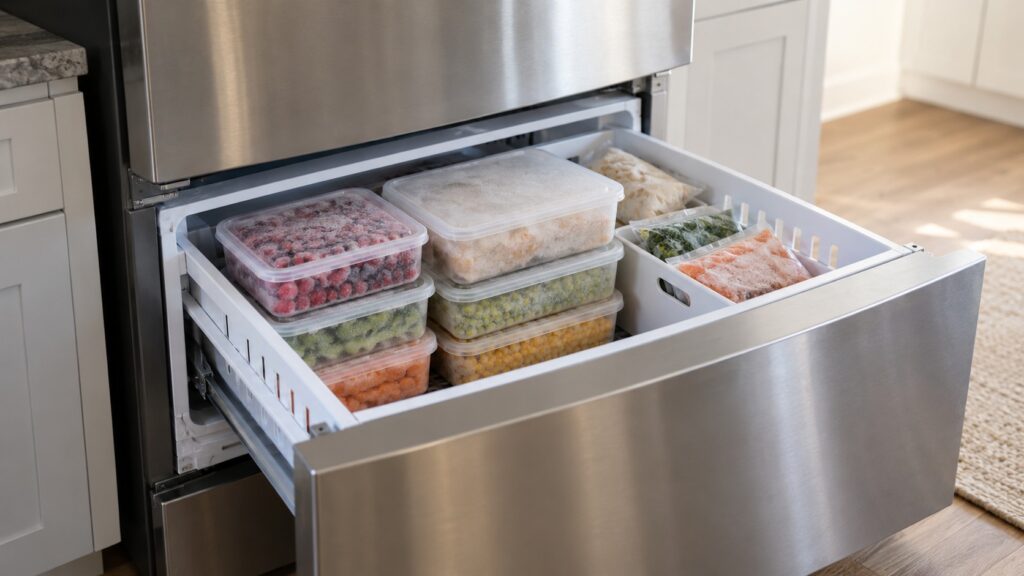
Because the freezer is a drawer, you pull the whole bin toward you instead of swinging a door open. Everything in the drawer is visible from above, which suits flat packs, bags and containers that stack in layers. It does not suit tall boxes that need to stand upright, so think about the frozen food you actually buy.
Who is a bottom freezer layout right for?
The layout rewards a particular kind of household. If your daily routine is built around fresh food, such as lunches, vegetables, drinks and leftovers, the eye-level compartment is the main benefit. If you buy frozen food in bulk, keep large frozen items or reach into the freezer every day, a different layout may suit you better. Our comparison of an LG French-door and a side-by-side refrigerator shows how the other layouts handle that trade-off, since a French-door model also puts the freezer at the bottom while a side-by-side puts it at eye level next to the fresh food.
Kitchen size matters too. A pull-out freezer drawer needs floor space in front of it to open fully, and the fresh-food doors need room to swing. Stand where the refrigerator will go and open an imaginary drawer and doors before you commit. Do not assume that a narrower refrigerator opens in less room, because the drawer still has to clear the opposite counter or island.
How do you use the freezer drawer day to day?
A freezer drawer works best with a system. Because you look down into one open bin, group like items together: one area for meat, one for vegetables, one for prepared meals, and one for things you use rarely. Our LG freezer organization tips explain why airflow matters inside any freezer: do not pack food flat against the vents, leave space so cold air can move, and aim for comfortably full rather than packed solid. Those habits apply to a drawer as well as a column.
The drawer is also where frost shows itself first. A light dusting on old packages is normal, but heavy frost on the walls or the drawer rim points to warm, humid air getting in or to a defrost problem. Close the drawer fully every time, and make sure no bag corner keeps it from seating. If the drawer does not close flush, the seal cannot do its job.
What should you measure and confirm before you buy?
Start with the opening and the path to it. Measure the width, height and depth of the space, the doorways and hallways the refrigerator has to pass through, and any turns. Then add the clearance your model’s installation sheet asks for at the sides, top and back, because a refrigerator needs room for air to move around it. Our guide to LG refrigerator installation, clearance and leveling covers the general checks, and the exact numbers for your model come from its installation sheet, not from a general rule.
Next, confirm the features rather than assuming them. Some LG models have an automatic ice maker and some do not. Some have a tinted glass panel on the door and some have standard doors. Some are counter-depth, which means they stand closer to the cabinet line, and the LG counter-depth refrigerator buying guide explains what that does and does not mean. If the model has an ice maker or a water dispenser, you also need a cold-water supply, and our refrigerator water line setup page describes what a clean connection looks like. Have the water line connected by a qualified installer if you are not sure how to do it.
How do you compare it with other LG layouts?
Compare on three things: how you reach food, how wide your shelves need to be and how the doors open in your kitchen. Fresh-food shelves in a bottom-freezer model are easy to reach but often narrower than in a wide French-door model, so a platter or a large pizza box may or may not fit. Measure the items you store most. Ask the same question about the freezer drawer: does it hold the frozen things you really buy, and can you lift them out without unloading everything?
Do not compare only the headline numbers. Two refrigerators that look alike on a showroom floor can differ in the compressor, the ice system, the finish and the controls, and those differences show up in daily use and later in repairs. Write down the model number of each candidate and read its page and spec sheet side by side.
What should you know about care and repairs?
A bottom-freezer refrigerator needs the same basic care as any other: wipe the door gaskets, keep the vents inside clear, clean the condenser area as your manual describes and replace the water filter on schedule if the model has one. Our LG refrigerator maintenance checklist puts the routine in one place. If a code or a warm compartment ever appears, do not open the back panel or the freezer liner yourself; that work belongs to a technician, and our repair or replace guide for an LG refrigerator explains how the decision usually goes.
We are an independent repair company, not the manufacturer. Our LG refrigerator repair page explains how a visit works, and you can schedule a visit online or call (844) 612-0846.