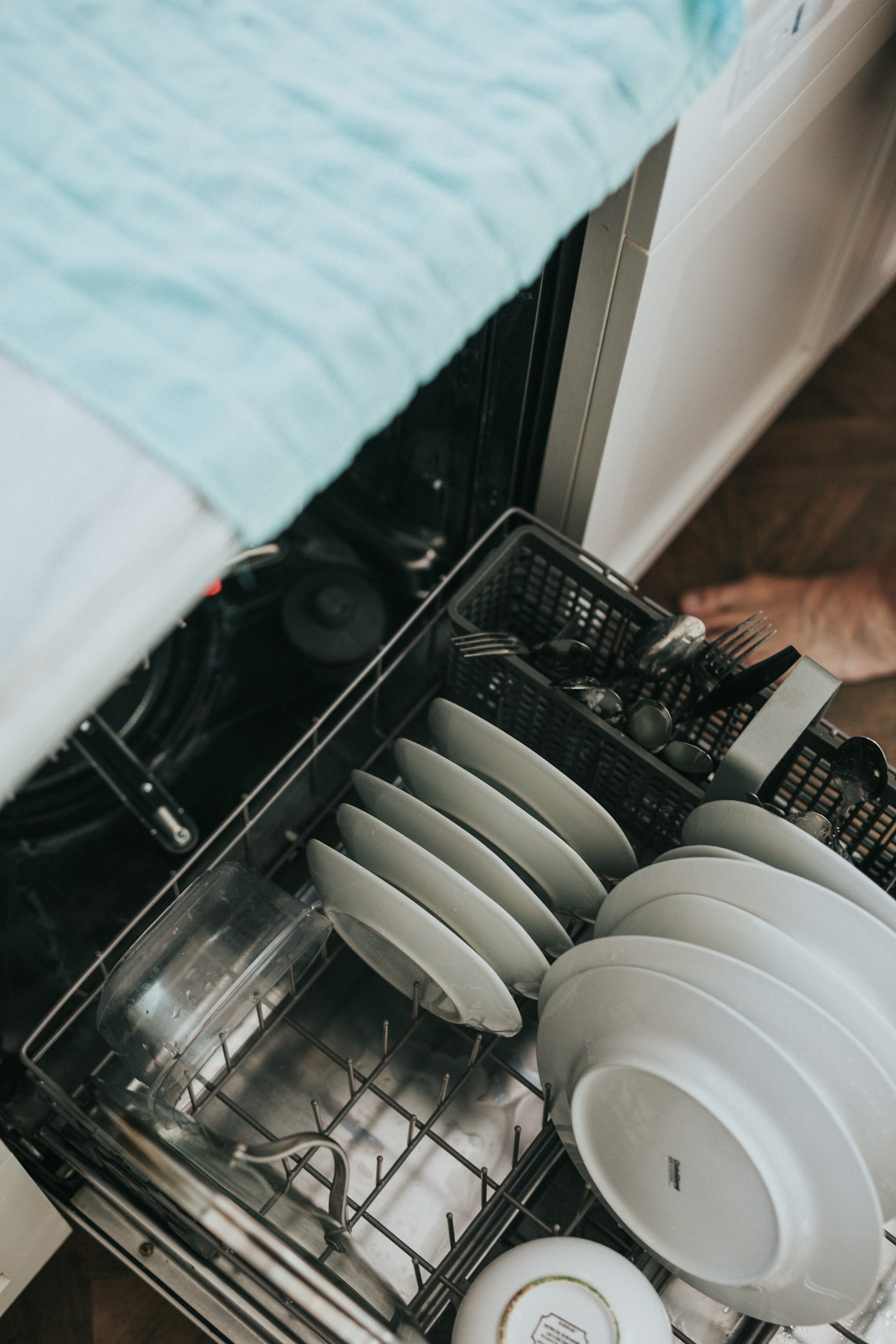
Consistent lg dishwasher maintenance keeps wash results sharp and heads off the OE drain errors and odors that bring most service calls. The filter is the heart of it — a clogged filter causes both poor cleaning and drainage problems.
LG dishwashers move water through a filter, pump, and spray arms, and they flag problems with two-letter codes such as OE and IE, so confirming the water path before suspecting electronics resolves most calls. We start with the everyday causes you can check yourself, then explain the signs that point to a part that genuinely needs a hands-on repair.
What a lg dishwasher maintenance usually means
Food, grease, and hard-water scale collect in the sump filter, the spray-arm jets, and the gasket. Left alone, the filter restricts drainage and triggers OE, while scale dulls the wash. A short monthly routine prevents all of it.
First checks you can do
Start with the checks you can safely do yourself. Each one rules out a common, inexpensive cause, and together they resolve the majority of cases without a service visit:
- Remove and rinse the cylindrical sump filter monthly; clear food, glass, and labels.
- Pull the spray arms and flush the spray jets of debris and scale.
- Wipe the door gasket and the edge of the tub to clear residue and mildew.
- Run a dishwasher-cleaner cycle periodically, especially in hard-water areas.
Take these in order and test whether the problem has cleared before moving to the next. If you do end up needing help, having worked through them gives the technician a useful head start.
Common symptoms and what they point to
Matching the exact symptom to its likely cause is how you avoid replacing the wrong part. Compare what you are seeing to the patterns below:
- An OE code or standing water usually means the filter is overdue.
- A persistent odor points to a dirty filter and gasket.
- Cloudy glasses or gritty residue indicate clogged spray arms or hard-water scale.
If more than one pattern fits, start with the simplest cause and confirm it is clear before moving on, so no part is bought before the diagnosis is certain. The aim is to narrow the field down to a single likely cause, because that is what turns an open-ended problem into a quick, affordable fix.
Getting it right for the long run
None of these tasks requires special equipment or much time — the value is in doing them consistently rather than waiting for a problem. Build them into a simple schedule and they stop feeling like chores, while the appliance rewards you with steadier performance, fewer odours and blockages, and a longer life. A neglected filter, vent, or seal is behind a surprising share of service calls, and every one of those is the kind of problem this routine quietly prevents. If you ever notice a new noise, smell, or drop in performance, treat it as early feedback worth acting on.
Putting it together
Work the checks above in the order given. Most LG dishwasher problems of this kind clear at one of the early, owner-checkable steps; the ones that do not point to a specific part and are worth a proper diagnosis rather than guesswork. Move from the simplest cause outward, confirm each step before the next, and treat a returning code or a lingering symptom as your cue to bring in help. A little routine care afterwards prevents most repeat calls, since LG builds these dishwashers to last.
Related reading: LG dishwasher not draining, LG dishwasher not drying, and our dishwasher repair service.
Book LG dishwasher service
If these steps do not resolve it, our experienced technicians repair LG dishwashers with genuine parts and a labor guarantee. Schedule a visit, see what our dishwasher repair service covers, or confirm your model details on the manufacturer’s site at lg.com/us.