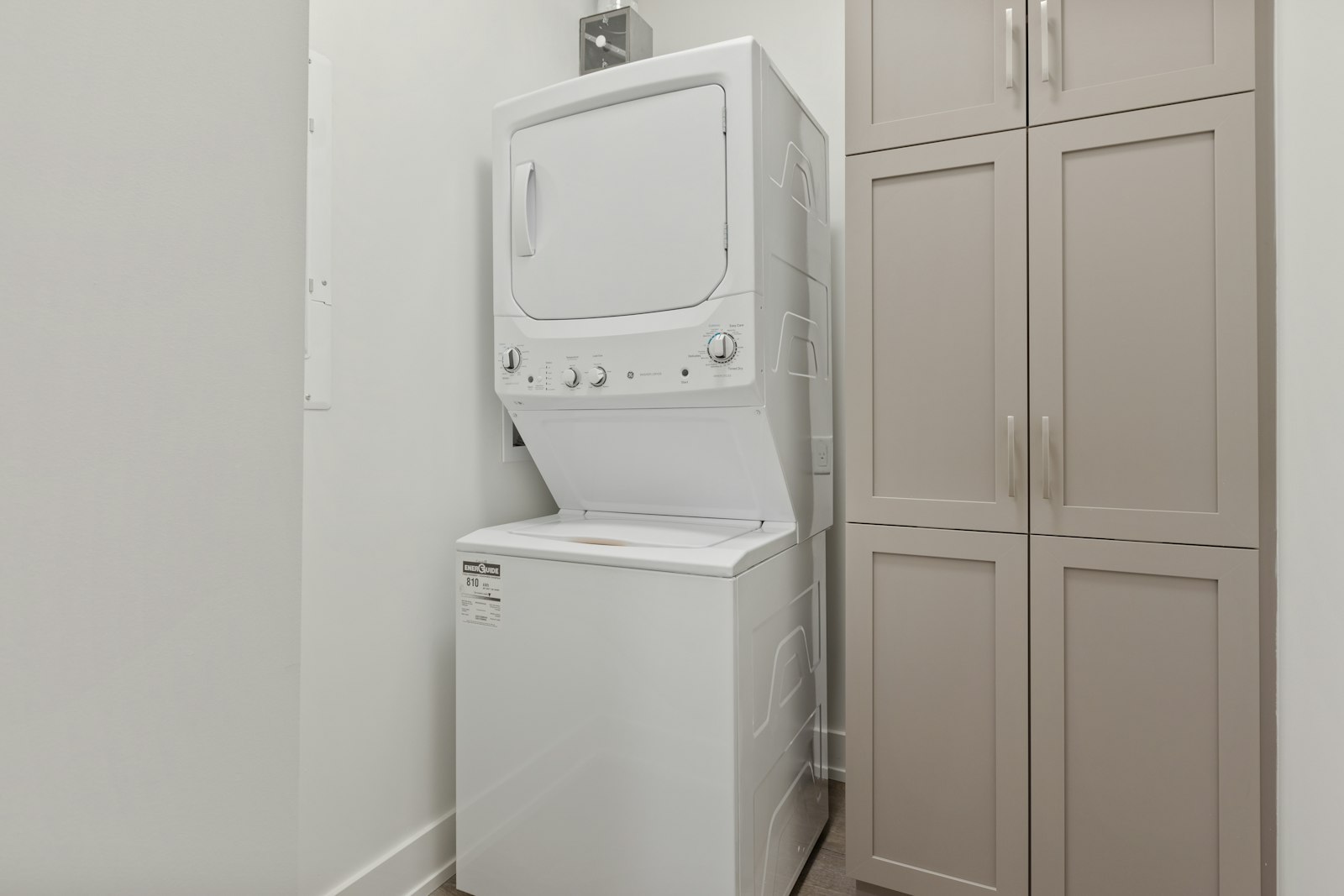
When an lg dryer drum not turning brings you here, the motor may hum or run while the drum sits still — a mechanical drive problem rather than a heat problem.
LG dryers monitor airflow with Flow Sense and temperature with thermistors, and they post codes on the panel or in the ThinQ app, so the symptom plus the code usually tells you whether the problem is the vent, the heat source, or the drive. We start with the everyday causes you can check yourself, then explain the signs that point to a part that genuinely needs a hands-on repair.
What a lg dryer drum not turning usually means
The drum rides on support rollers and is driven by a belt and idler (on belted designs) or directly. A worn roller, a seized idler pulley, or a broken belt stops rotation while the motor still runs. On ventless heat-pump models, an LE1 code points to the drum motor itself.
First checks you can do
Start with the checks you can safely do yourself. Each one rules out a common, inexpensive cause, and together they resolve the majority of cases without a service visit:
- Unplug the dryer and try turning the drum by hand to feel for a jam or a thrown belt.
- Listen for a hum with no rotation, which points to the drive or belt.
- Check for a large item wedged that stalls the drum.
- Note any LE1/LE3 code on heat-pump models.
Take these in order and test whether the problem has cleared before moving to the next. If you do end up needing help, having worked through them gives the technician a useful head start.
Reading the LG display for a lg dryer drum not turning
Note any code before you act, because it narrows the diagnosis more than any other clue. A good first move for most LG codes is a power-cycle: unplug for one to five minutes, or trip the breaker for 30 to 60 seconds, then restore power. If the code returns straight away, treat it as a real problem pointing at the named part.
- LE1 — drum motor (heat-pump models).
- LE3 — blower/fan motor (heat-pump models).
- PF — power failure.
Note the exact characters, including whether letters are upper or lower case, since LG sometimes uses capitalisation to separate a real problem from a normal status message.
When it is a problem, not a habit
If the everyday checks above do not resolve it, the problem has likely moved from something you can adjust to a component that needs testing or replacing. These are the signs that point that way:
- The drum is free and unobstructed but will not turn — suspect the belt, idler, rollers, or drive motor.
- A broken belt is a common cause on belted designs.
- A seized roller or idler needs replacement.
At this point a proper diagnosis beats guesswork, since the remaining causes involve a specific part or electrical testing. A technician can meter the suspect component and fit a genuine LG part so the repair lasts.
Putting it together
Work the checks above in the order given. Most LG dryer problems of this kind clear at one of the early, owner-checkable steps; the ones that do not point to a specific part and are worth a proper diagnosis rather than guesswork. Move from the simplest cause outward, confirm each step before the next, and treat a returning code or a lingering symptom as your cue to bring in help. A little routine care afterwards prevents most repeat calls, since LG builds these dryers to last.
Related reading: LG dryer won’t turn on, LG dryer error code archive, and our dryer repair service.
Book LG dryer service
If these steps do not resolve it, our experienced technicians repair LG dryers with genuine parts and a labor guarantee. Schedule a visit, see what our dryer repair service covers, or confirm your model details on the manufacturer’s site at lg.com/us.