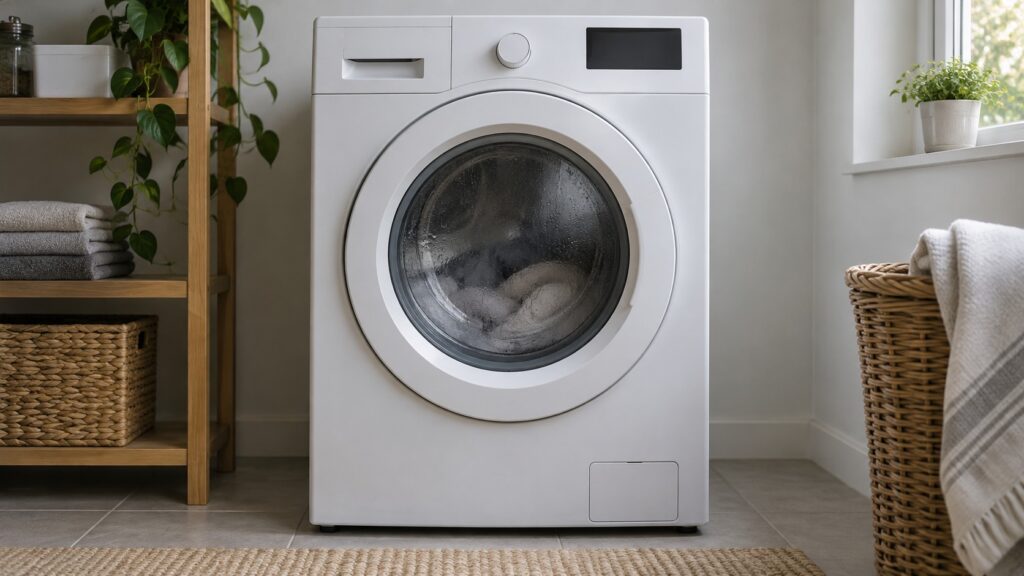
When LG washer steam stops working, the machine usually keeps washing perfectly well — which is exactly why the fault gets ignored until the allergen and sanitize cycles stop doing what they were bought for. Steam on these washers is made inside the machine by a small generator, not drawn from the hot tap, so the diagnosis has its own short list. This guide walks it in order, from what is normal to what needs a technician.
First: is it actually missing?
Steam is subtler than owners expect. On a front-load machine it shows as a light haze on the inside of the glass, usually near the end of a cycle, and it does not billow. If the load comes out cleaner and less wrinkled than a plain cycle, the system is working even if you never saw anything dramatic.
Check which cycle was chosen. Steam is available on specific cycles and as an option on others, and selecting it on a cycle that does not support it simply does nothing. On WM front-load and WashTower machines the option is remembered per cycle, so a setting changed months ago on one cycle can look like a failure today.
Water supply and pressure
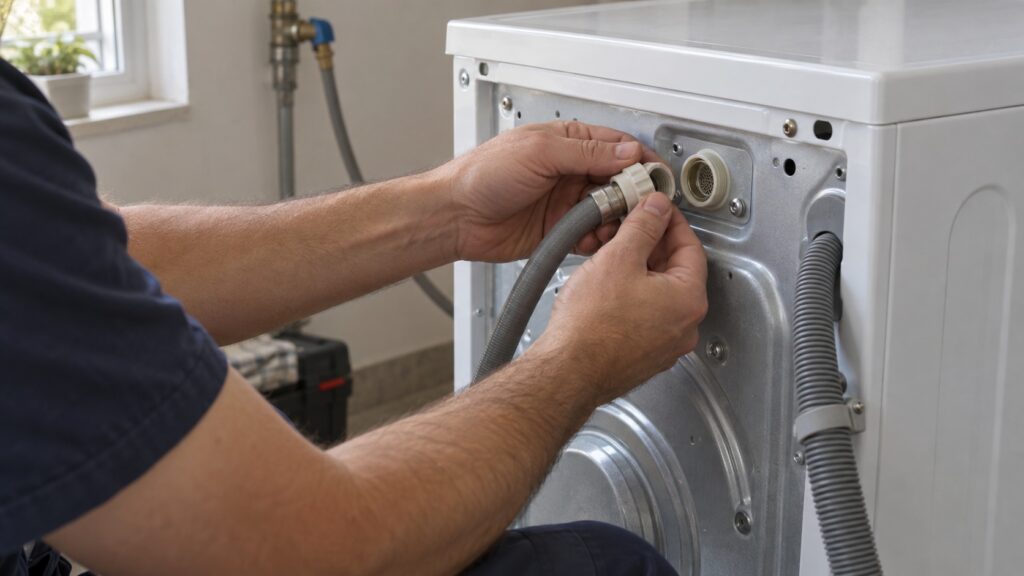
The generator draws its own water through an inlet valve. If supply pressure is low, both taps are not fully open, or an inlet screen is silted up, the machine will fill for washing but may never satisfy the steam function. The same restriction is behind the IE fill codes described on our page for an LG washer that will not fill.
Turn both taps fully on, unplug the machine, close the taps, and pull the inlet screens with pliers. Rinse them, refit them and run a steam cycle. In hard-water areas the screens are the single most common finding, and they cost nothing to clean.
Scale is the quiet killer
A steam generator boils water in a small chamber. Every boil leaves minerals behind, and in hard water the chamber and its heating element scale up until the element cannot transfer heat properly. The symptom creeps: steam gets weaker over months, then stops, with no code at all.
Run a tub-clean cycle with a washing-machine cleaner on the schedule in the manual, and more often if the water is hard. This is the same routine that keeps odors down, and it is set out in the washer maintenance checklist. It will not reverse heavy scale, but it prevents the next generator from going the same way.
Load size and door seal
An overstuffed drum leaves no room for vapor to move through the fabric, so a steam cycle on a packed load does very little. Fill the drum to about three-quarters and let the clothes tumble.
The door gasket matters too. Steam only works in a closed, sealed drum, so a gasket that is torn, folded or fouled with detergent residue lets vapor escape as fast as it is made. Wipe the gasket fold regularly, and look for a section that no longer springs back — that is a replacement, not a cleaning job.
What a technician tests, and in what order
That order is the difference between a valve and a board on the invoice. A steam function that fails with no code is almost never an electronics problem, and a diagnosis that starts at the board usually ends with an owner paying for a part they did not need.
What steam is and is not for
Steam relaxes wrinkles, refreshes garments between washes and helps reduce common allergens — that is the job it was designed for, and it is described further in our TrueSteam glossary entry. It is not a substitute for a proper hot wash on heavily soiled laundry, and it does not sterilize.
It is also worth knowing that steam adds time. A cycle with steam runs longer than the same cycle without it, and a machine that suddenly seems slow may simply have the option switched on. If cycle length is the real complaint, the answer is in the options rather than in a fault.
One last check costs nothing: run a steam cycle with the room quiet and the machine otherwise idle. The steam valve and the generator make their own distinct sounds — a short buzz as the valve opens, then a faint hiss — and hearing them tells you the control is asking for steam even if you cannot see any. A silent machine during the steam phase points at the valve or the control; a machine that buzzes and hisses but produces nothing points at scale or at a seal letting the vapor out.
When to call
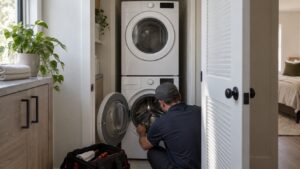
Call when the supply, the screens, the cycle selection and the load have all been checked and steam still does not appear, when the machine trips a breaker during a steam cycle, when water leaks during the steam phase only, or when you can smell hot electrics. A steam generator is a heating device with water around it, and that combination is not a good place for guesswork.
We are an independent repair company, not a factory service arm. Pricing starts from a diagnostic visit — from $89 — with the estimate confirmed before work begins. LG washer repair covers inlet valves, steam generators, thermistors, gaskets and controls on WM, WT and WashTower machines, and you can schedule a visit online.