When an lg dishwasher not cleaning leaves dishes gritty or filmy, the cause is almost always blocked water flow or loading, not a broken pump.
LG dishwashers move water through a filter, pump, and spray arms, and they flag faults with two-letter codes such as OE and IE, so confirming the water path before suspecting electronics resolves most calls. We start with the everyday causes you can check yourself, then explain the signs that point to a part that genuinely needs a hands-on repair.
What a lg dishwasher not cleaning usually means
Clean dishes need strong, unobstructed spray. A clogged filter, blocked spray-arm jets, hard-water scale, weak or old detergent, or items blocking the arms all reduce cleaning. The water must also be hot enough, which the HE heater fault can undermine.
First checks you can do
Start with the checks you can safely do yourself. Each one rules out a common, inexpensive cause, and together they resolve the majority of cases without a service visit:
- Remove and rinse the sump filter and clear the spray-arm jets of debris and scale.
- Use fresh detergent and add rinse aid; old detergent loses potency.
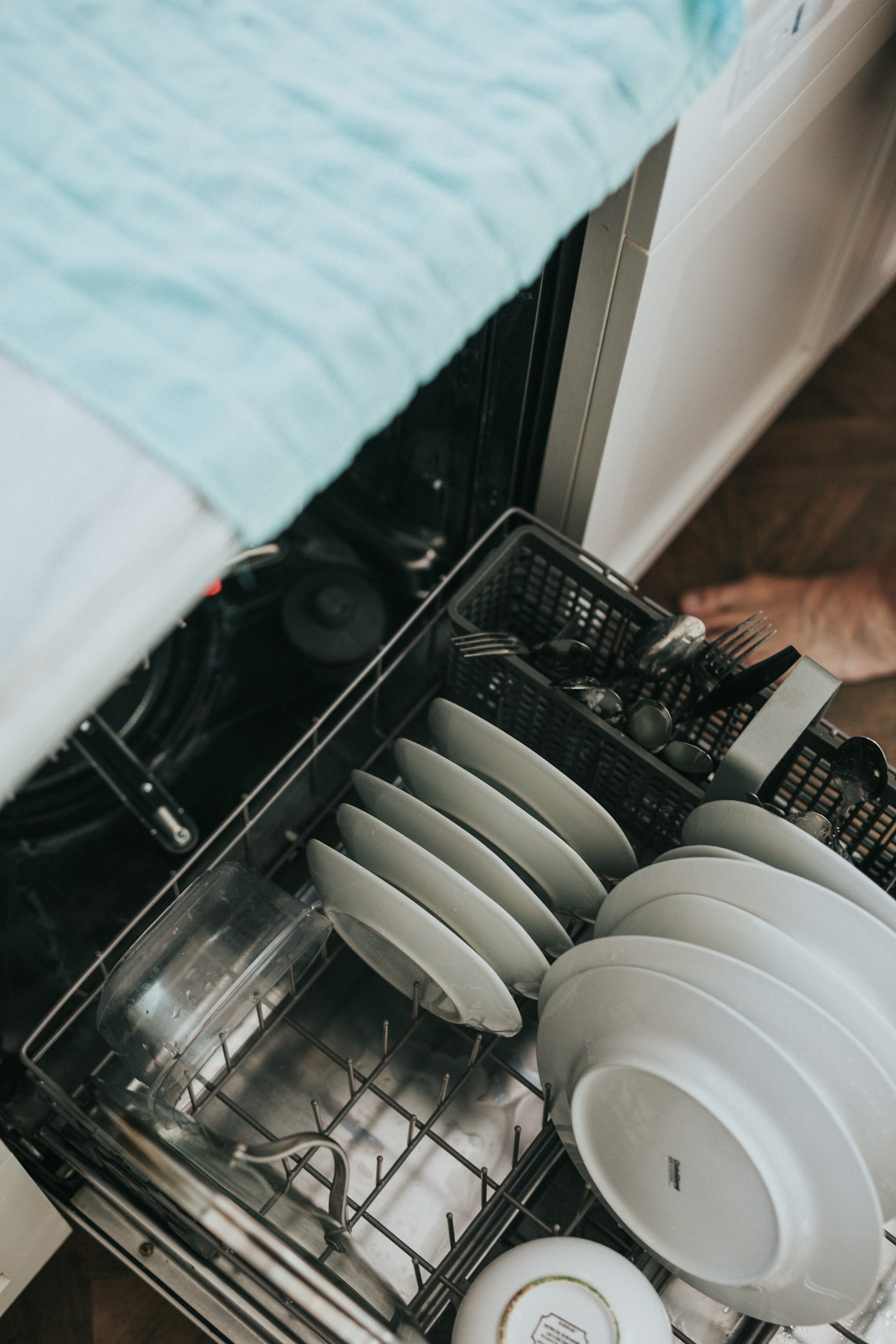
- Load so tall items do not block the spray arms from spinning.
- Run the hot tap at the sink before starting so the cycle begins with hot water.
Take these in order and test whether the problem has cleared before moving to the next. If you do end up needing help, having worked through them gives the technician a useful head start.
Reading the LG display for a lg dishwasher not cleaning
Note any code before you act, because it narrows the diagnosis more than any other clue. A good first move for most LG codes is a power-cycle: unplug for one to five minutes, or trip the breaker for 30 to 60 seconds, then restore power. If the code returns straight away, treat it as a real fault pointing at the named part.
- HE — heater fault; the dishwasher cannot reach wash temperature.
- tE — thermal/thermistor fault affecting water temperature.
- CE — motor or board comms, which can weaken spray.
Note the exact characters, including whether letters are upper or lower case, since LG sometimes uses capitalisation to separate a real fault from a normal status message.
When it is a fault, not a habit
If the everyday checks above do not resolve it, the problem has likely moved from something you can adjust to a component that needs testing or replacing. These are the signs that point that way:
- Filter, arms, and detergent are right but cleaning is still poor — a weak wash pump or a clogged diverter may be at fault.
- An HE heater fault leaves water too cool to clean grease.
- A failed diverter (nE) misroutes water between the arms.
At this point a proper diagnosis beats guesswork, since the remaining causes involve a specific part or electrical testing. A technician can meter the suspect component and fit a genuine LG part so the repair lasts.
Putting it together
Work the checks above in the order given. Most LG dishwasher faults of this kind clear at one of the early, owner-checkable steps; the ones that do not point to a specific part and are worth a proper diagnosis rather than guesswork. Move from the simplest cause outward, confirm each step before the next, and treat a returning code or a lingering symptom as your cue to bring in help. A little routine care afterwards prevents most repeat calls, since LG builds these dishwashers to last.
Related reading: LG dishwasher maintenance, LG dishwasher not drying, and our dishwasher repair service.
Book LG dishwasher service
If these steps do not resolve it, our experienced technicians repair LG dishwashers with genuine parts and a labour guarantee. Schedule a visit, see what our dishwasher repair service covers, or confirm your model details on the manufacturer’s site at lg.com/us.