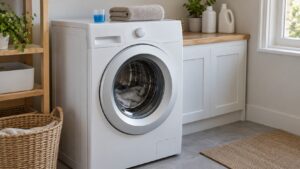
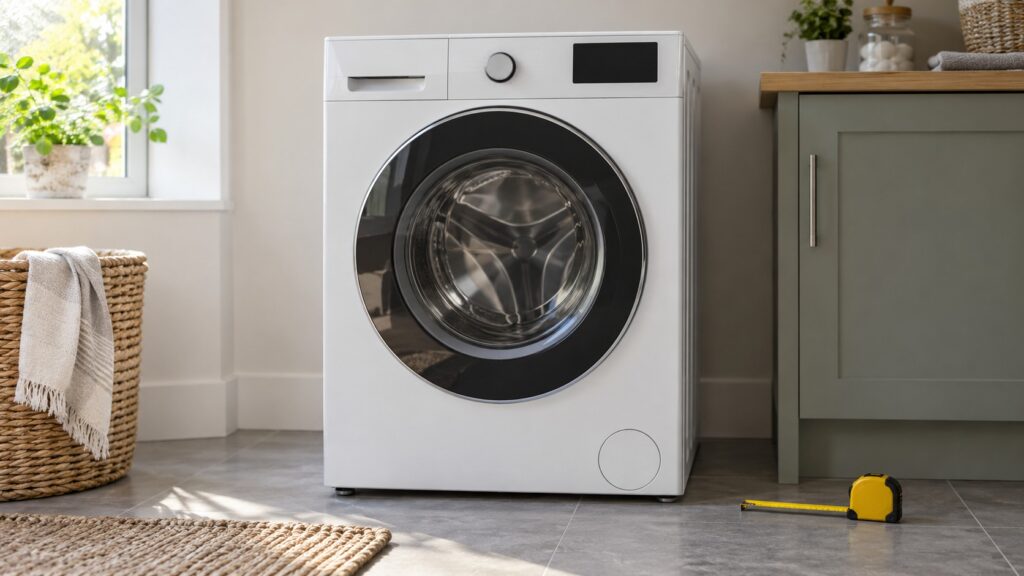
An LG front load washer installation comes down to five things: any shipping bolts or transit hardware removed as your manual directs, both water hoses connected to open taps, a drain hose that is secured and not kinked, a floor-level cabinet with the feet locked, and a short first cycle watched for leaks and codes. On this site’s WashTower guide, forgotten shipping bolts and an unlevel floor are the two most common causes of vibration and UE errors after an install, and the same checks are worth making on any front-load washer. The exact steps and measurements for your model are in the installation instructions that came with the washer, and this guide covers what to check around them.
What should you check before an LG front-load washer arrives?
Look at the space and the connections before delivery. The front-load models listed on this site come in two size classes on their model pages: the WM4000HBA and the WM3600HWA are listed as 27-inch front-load washers with a 4.5 cubic foot capacity, and the WM6700HBA is listed as a 29-inch front-load washer with a 5.5 cubic foot capacity. Use the dimensions in your installation instructions for the cabinet, the door swing and the space needed behind the washer for hoses.
You also need hot and cold taps within reach of the hoses, a drain connection such as a standpipe or a laundry sink, a power outlet that suits the washer and a floor that is level and firm. If any of these are missing or need changing, that is a job for a licensed plumber or electrician rather than a do-it-yourself fix.
Why check for shipping bolts first?
Front-load washers are commonly secured for transport, so look in your installation instructions for any shipping bolts that must come off before the first load. Our LG WashTower installation guide says leaving the washer shipping bolts in causes severe vibration and UE codes, and that forgotten bolts and an unlevel floor are the two most common causes of vibration after an install. Our site states that rule for the WashTower only. For a stand-alone washer, whether there are bolts, how many, where they sit and what the plugs look like varies by model, so follow your own manual and keep any bolts in case you move the washer later.
If a newly installed washer thumps hard during its first spin, stop the cycle and check for shipping bolts and check the level before you do anything else. Our LG washer UE unbalanced load guide explains the code you are most likely to see.
How do you connect the water supply to an LG washer?
Connect the hot and cold supply hoses to the matching taps and to the washer, then open both taps fully. Check the hoses for kinks and make sure they are not crushed behind the machine. If the washer is slow to fill and shows an IE code, our LG washer IE code guide says to confirm both supply taps are fully open, straighten the fill hoses and clean the small mesh inlet screens where the hoses meet the washer, with the taps turned off first.
A leak at startup most often points to a loose supply-hose connection. Tighten by hand as your instructions describe and do not force a fitting that will not seat. Our LG washer leaking guide covers the AE code that appears when the base-pan float detects water.
How should the drain hose be set up?
The drain hose has to be secured at the correct height in your instructions, with no crush or kink behind the washer. Two mistakes show up on this site’s drain pages. A hose that is crushed or kinked can trigger an OE drain error, and a hose pushed too far down the standpipe can cause siphoning, which can also confuse the washer’s water-level readings. Make sure the standpipe or laundry sink connection is clear and the hose is held in place so it cannot slip out during a cycle.
If the washer later shows OE with water left in the drum, read our LG washer not draining guide; it begins with the drain pump filter, the hose and the standpipe. Any change to household drain pipes belongs to a plumber.
How do you level an LG front-load washer?
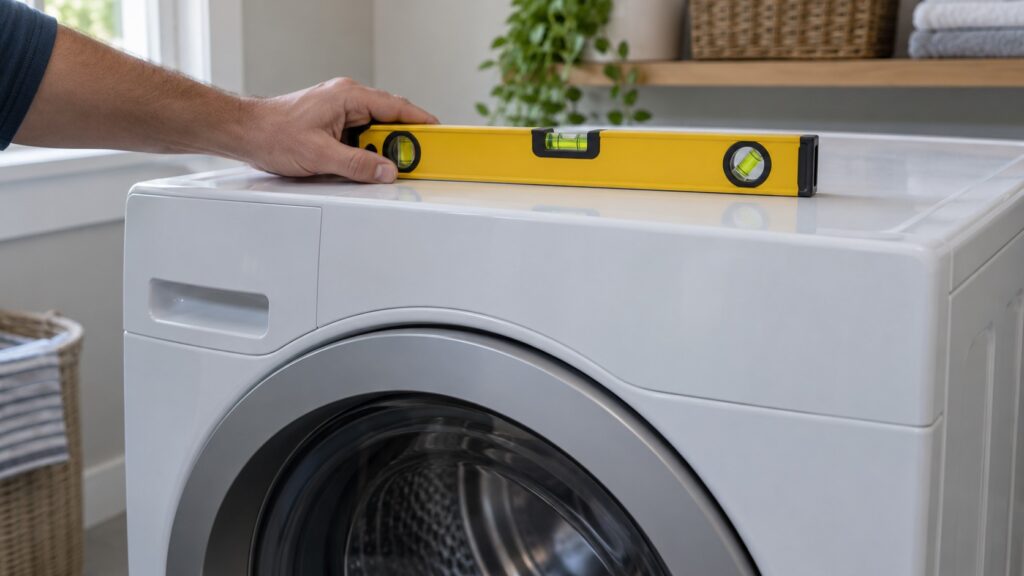
Level the cabinet using the adjustable feet, then lock them. Press down on each top corner of the washer and check that it does not rock. A rocking washer cannot balance a load, which is why an unlevel machine produces UE codes and a cabinet that walks during spin. Place a carpenter’s level on the top of the washer, front to back and side to side, and adjust until it sits true. If the floor itself slopes or flexes, the washer will keep moving, and the fix is a firmer floor, not another turn of the feet.
Do not lift or tip the washer to reach the feet unless your instructions describe how. A washer is heavy, so ask for help when moving it.
What should you do on the first run?
Run a short first cycle and watch it. Check every connection for drips, confirm the washer is steady and not walking, and make sure no code appears on the display. Catching a loose fitting or an overlooked bolt or fitting now, while everything is still reachable, is much easier than diagnosing it later. If you want to keep it running well afterward, our LG washer maintenance checklist lists the routine care, and our LG front load vs top load comparison explains the front-load habits, such as leaving the door ajar to avoid odor.
When should you stop and call a professional?
Stop and call if a hose or fitting leaks and will not stop with a gentle hand-tightening, if you see water near an outlet or the power cord, if the washer shows a code that returns after the simple checks or if the drum thumps even though any shipping bolts are out and the washer is level. If water has reached an outlet, switch off the breaker at the panel while standing on a dry floor, and never pull a plug from a wet outlet. Do not open the cabinet or the control area; that is a technician’s job. Our LG washer repair page explains how a visit works.