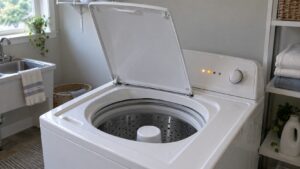
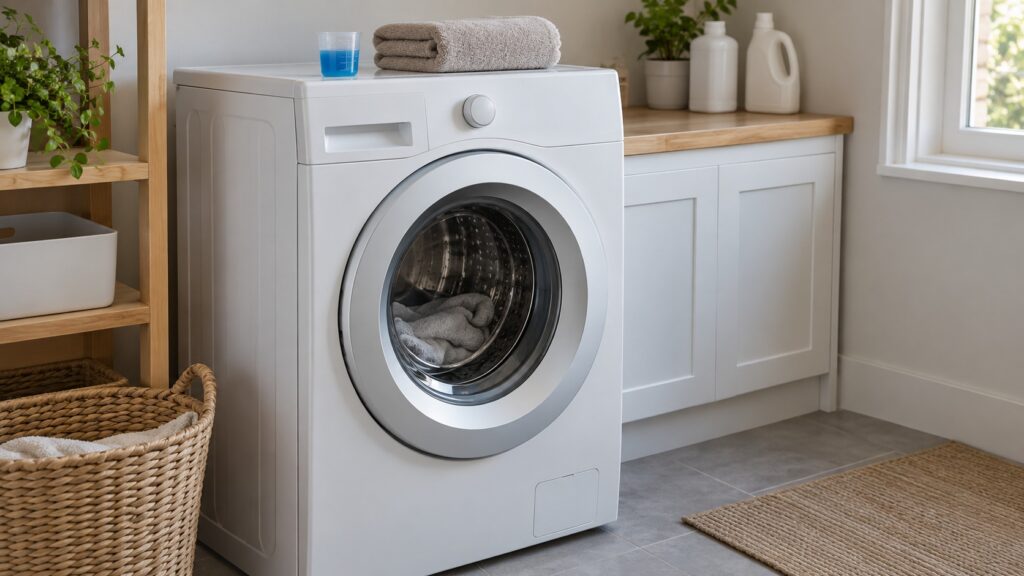
The right LG washer detergent is a high-efficiency (HE) formula, used at the amount on the label or less, and the right load fills the drum loosely rather than tightly. Too much detergent leaves residue, suds and a musty smell; too much laundry causes poor rinsing and unbalanced-load stops. Measure, do not guess, and keep soft fabrics and heavy towels in separate loads.
Most laundry complaints that bring people to look up their washer have little to do with a broken machine. Clothes come out dingy, towels feel stiff, the drum smells sour or the washer shudders and stops. In nearly every case the cause is one of two habits: too much detergent or too much laundry. These LG washer detergent tips explain what to buy, how much to use, how to size a load and what to change when the symptoms appear, so you can fix the problem with a measuring cup before you think about a repair.
What type of detergent should I use in an LG washer?
Use a high-efficiency detergent, marked HE on the label. Modern front-load and high-efficiency top-load washers use far less water than older machines, and ordinary detergent makes too many suds for that small amount of water. Suds cushion the clothes instead of letting the drum wash them, they trap dirt and they leave a film that feeds mildew. HE formulas are made to foam less and rinse out quickly.
Liquid, powder and single-dose pods all work as long as they are HE. Liquid is the easiest to measure for small loads, and powder can be useful for very dirty items, though it may leave residue in cold water if it does not dissolve fully. If you use pods, place the pod in the bottom of the drum before the clothes, not in the dispenser drawer, unless your manual says otherwise. If you use cold cycles often, our LG ColdWash glossary entry explains what cold-water cleaning asks of your detergent.
How much detergent is the right amount?
Less than most people think. The cap line on the bottle is written for a full load of heavily soiled laundry in hard water. If your water is soft, the load is small or the clothes are only lightly worn, you can often use half the marked amount and get the same result. Test it: run a load with a reduced dose, and if the clothes come out clean and smell fresh, keep that dose.
Signs of too much detergent are easy to spot. Clothes feel slick or stiff, dark items show a whitish film, and suds are visible in the window during the rinse. The washer may also run longer, because it detects suds and adds rinse time. A drum that smells musty is another clue; the LG washer smells musty guide shows how a residue film turns into odor and how to clear it. If a washer is already slimy, run an empty hot cleaning cycle with the right cleaner and wipe the door seal, as described in the LG washer maintenance checklist.
How full should the drum be?
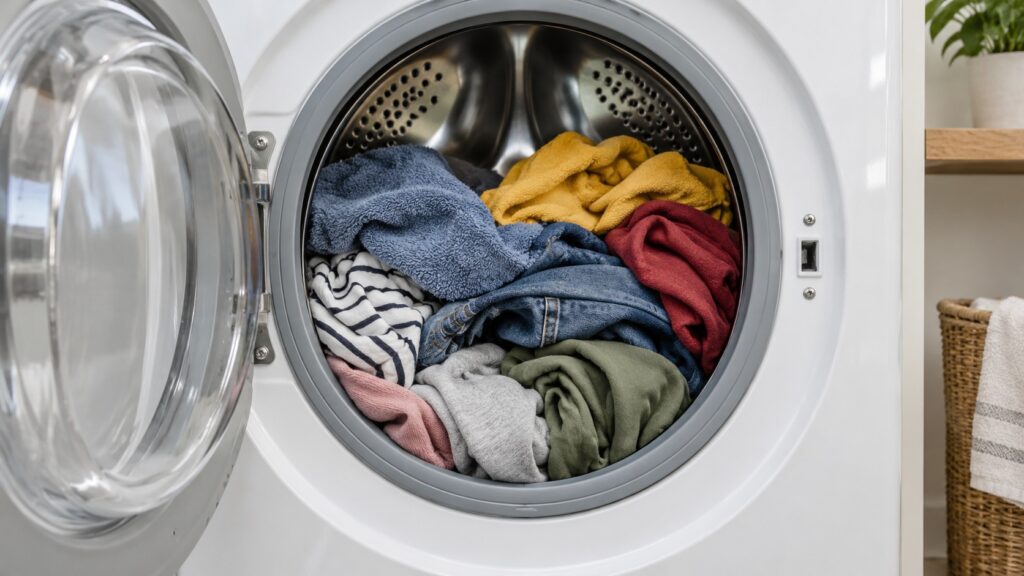
A washer cleans by letting clothes drop and flex through water, so they need room. Fill the drum about three-quarters full for a normal load, so you can still fit a hand between the clothes and the top of the drum. Packing it tight stops the clothes from moving, which leaves soil in the middle of the load and detergent trapped in the fabric. It also strains the motor and the drive.
Mix sizes within a load: a few large and small items together distribute weight better than all heavy items. For bulky bedding, use a larger cycle if your washer has one and wash only one or two items at a time. Do not mix a very heavy item with a few light ones, because the load will shift to one side. That uneven distribution is the typical cause of a stop with an unbalanced-load message, which our LG washer UE guide covers in detail.
What should I change when clothes still come out dirty or smelly?
Start with the dose and the load, since they are free to adjust. Reduce the detergent, spread the load across two washes if it was packed and check that pockets are empty. Then look at water temperature: oils and body soils clean better in warm water, and cold works best for delicate colors and light soil. Use a stain pretreatment on spots, and do not pour detergent on dry clothes in the drum, because it can leave marks.
If the washer is slow to drain or leaves a pool, the problem may be a blocked pump filter, not your habits. The LG washer not draining guide shows how to check that safely. Remove clothes promptly after the cycle, leave the door and detergent drawer ajar to dry out, and wipe the rubber door seal where lint and moisture collect.
When is it more than a laundry habit?
If you have used the right amount of HE detergent, kept the load moderate and cleaned the drum, and the washer still shakes, will not drain or shows a code, the cause is mechanical. Do not keep running loads that trigger the same stop, since repeated imbalance wears the suspension and bearings. A technician can check the shocks, the pump and the sensors; the LG washer repair page explains the visit, and you can schedule a visit when you are ready.