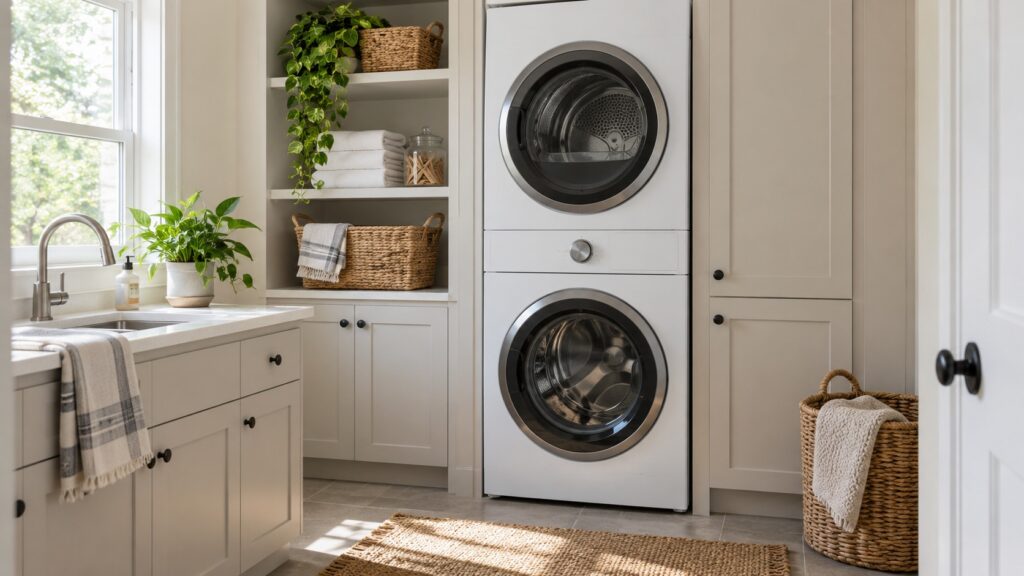
TL;DR: LG WKEX200HBA is the electric WashTower, WKGX201HBA is the gas version and WKHC202HBA is the heat pump version. All three stack a front-load washer under a dryer with one central control panel; what separates them is the dryer’s energy source and venting, so choose by what your laundry room can supply (a 240-volt outlet, a gas line, or neither) before you compare anything else.
If you searched “lg wkex200hba”, you have probably found the model number on a nameplate or a store listing and want to know what it is. Short answer: it is an LG WashTower with an electric dryer. The longer answer matters when you are choosing between the three WashTower models that appear on this site, because they look almost identical in a showroom and install very differently. This guide reads the model number, lays the three side by side, and tells you what to check in the room before you order.
What does the LG WKEX200HBA model number mean?
LG model numbers follow a pattern that repeats across its laundry line. The first two letters, WK, identify a WashTower, the single-column washer and dryer. The next pair says what the dryer uses: EX for an electric dryer, GX for a gas dryer, HC for a heat pump dryer. The digits that follow are the generation and feature tier, and the last three letters are a finish and market code. This is the same logic that sits behind LG’s stand-alone dryer numbers on this site, where DLEX is electric, DLGX is gas and DLHC is heat pump.
Treat this as a reading aid, not a guarantee: the rating plate on your machine and the spec sheet for the exact model are the final word on capacity and features. What the pattern does tell you quickly is how the dryer is powered, which is the question that decides whether the machine suits your home.
Which LG WashTower is right for my laundry room?
Start with the utilities already in the wall. If you have a 240-volt dryer outlet and a vent to the outdoors, the WKEX200HBA fits without any changes. If the room has a gas valve for the dryer, the WKGX201HBA makes use of it and avoids the need for a 240-volt circuit. If the laundry sits somewhere you cannot vent, such as an interior closet or an upper-floor unit, the WKHC202HBA is the one that works without a duct, though it still needs a 240-volt outlet.
A WashTower is one tall appliance, so measure the space as well: height, width, depth with the door open, and the path through doorways. Our LG WashTower installation guide walks through clearances and hookups, and the WashTower versus stacked washer and dryer comparison helps if you are still deciding between a single column and two machines.
How is the heat pump WashTower different from the electric one?
The difference is in how the dryer removes moisture. A vented dryer, electric or gas, heats air, passes it through the drum and pushes the damp air outside. A heat pump dryer recirculates the air in a closed loop, cools it to wring the water out, and reheats it. The result is a gentler, lower-heat process that uses less energy and needs no vent, with the trade-off of longer cycles and a condensate system to maintain.
For ownership, that means a heat pump WashTower adds a few chores that an electric one lacks: cleaning the lint filter and the condenser area on schedule, and making sure condensate has somewhere to go. It also has its own set of fault codes, which differ from a vented dryer; our guide to LG heat pump dryer LE codes explains them. To understand the mechanism before you buy, read how LG heat pump dryers work and the broader comparison, LG vented versus heat pump dryer.
What should I check before buying any WashTower?
Run through six questions before you order. First, is the outlet right: a dryer outlet is not the same as an ordinary outlet, and electric and heat pump versions both need the dryer type. Second, is there a vent route, and how long is it, because a long or crushed duct costs drying performance on the vented models. Third, is the floor level and solid, because a tall unit with a spinning washer below the dryer needs a stable base. Fourth, can you reach the controls and the dryer door comfortably, since the dryer sits higher than a normal one. Fifth, how will it get into the room, including stairs and turns. Sixth, who will install it, especially for the gas model, where the connection should be made and leak-checked by a qualified installer.
Which problems are common on a WashTower?
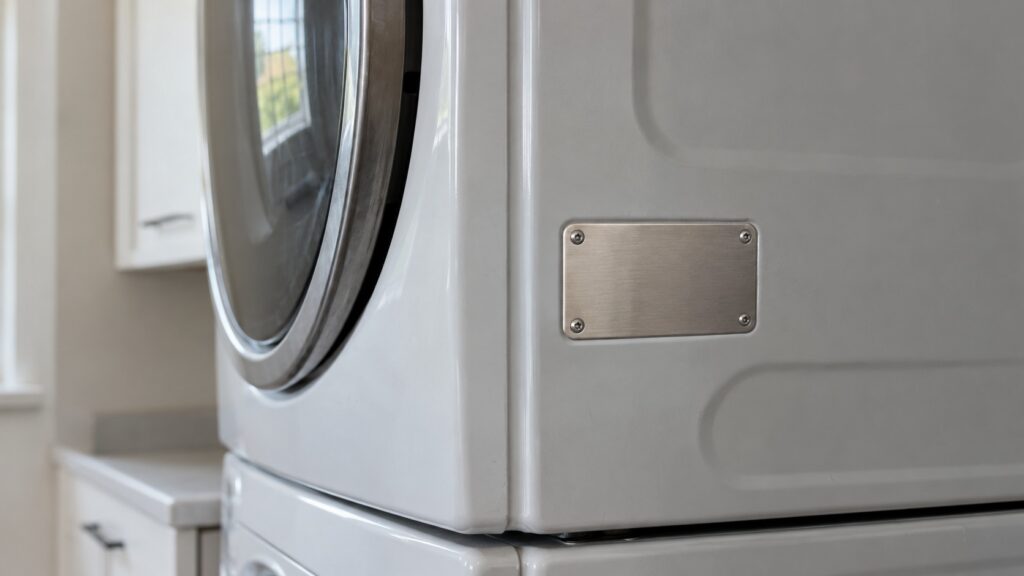
A WashTower is two appliances in one frame, so the faults are the ones of each half. The washer side shows familiar front-load codes, while the dryer side shows vented or heat pump codes depending on the model. One control panel does not change that; a door problem on the washer and a heat problem in the dryer are separate faults that happen to share a screen. Take a photo of the nameplate and note which half is complaining before you search for a code. For the washer, our LG washer LE code guide is a typical example, and for the dryer, LG dryer not heating is the most common starting point.
If something does go wrong, you do not need to remove the tower to book service. See LG washer repair and LG dryer repair, or schedule a visit and tell us the model number you read off the plate.
Is a WashTower worth it compared with separate machines?
For a tight space, yes: one column uses the footprint of a single appliance, with a clean look and one set of controls. The cost is flexibility. If the washer fails, you cannot simply swap in a stand-alone washer without affecting the dryer above it, and if the whole stack is old, a repair on one half has to be weighed against replacing both. If you have the room for two machines, separate appliances can be easier to service and replace one at a time. If you do not, the WashTower is a good fit.