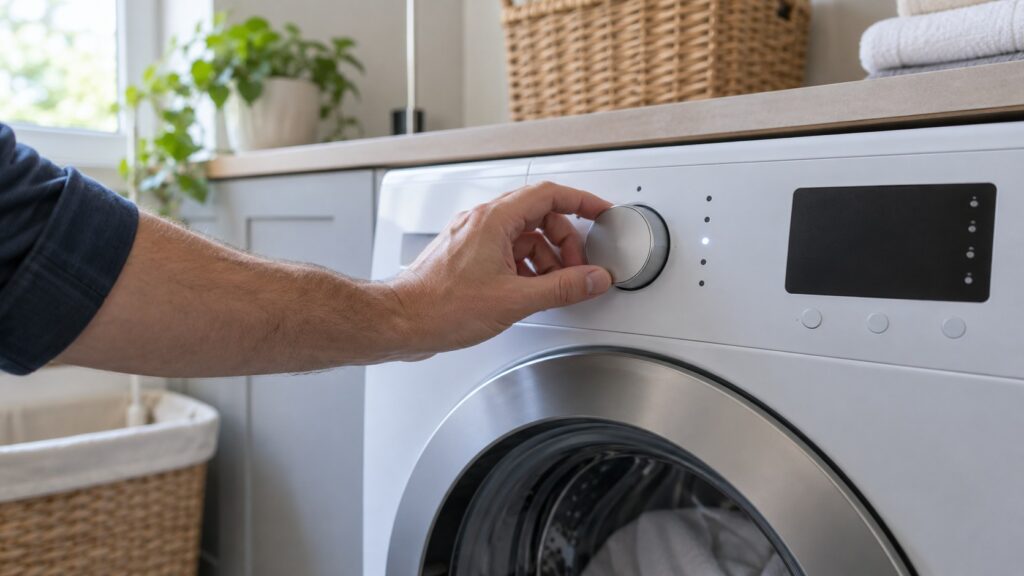
TL;DR: LG ColdWash is a wash-cycle setting that cleans a full load in cold water instead of warm or hot, using a longer agitation pattern and a tailored detergent-dispersal step to make up for the temperature drop. It is a setting you select on the cycle dial or app, not a separate machine or a hardware add-on.
The name shows up on control panels and in cycle lists on many LG washers, and it is easy to read as marketing for “just use cold water,” which undersells what the setting is doing mechanically. Cold water alone struggles to fully dissolve detergent and lift oily soil, so a plain cold cycle often leaves a load under-cleaned. ColdWash exists to close that gap without raising the water temperature.
What is LG ColdWash actually doing during a cycle?
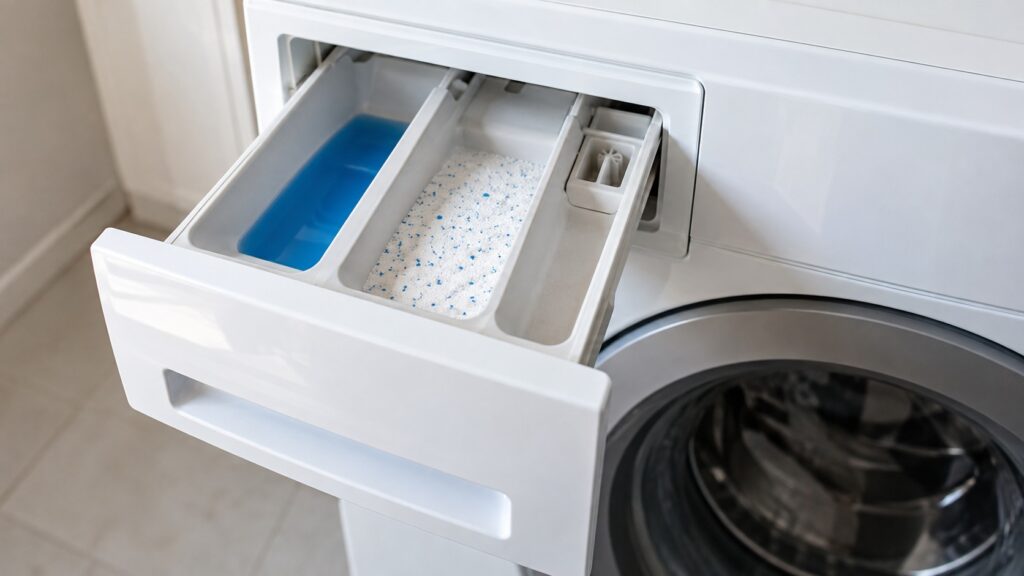
ColdWash changes two things about how the wash step runs, not just the water temperature dial. First, it extends the wash phase, giving detergent more contact time with the fabric to compensate for slower chemistry in cold water. Second, on machines with a dedicated dispersal step, it circulates water through the detergent compartment before the main fill, so powder or concentrated liquid detergent is fully broken up before it reaches the load instead of settling in cold water as a partial clump. The result is a cycle tuned to get standard detergent working at a temperature it was not originally formulated for.
How is ColdWash different from just picking a cold cycle?
Every LG washer lets you set any cycle to cold water manually, so the distinction is worth being precise about. A manually cooled cycle keeps whatever wash-phase length and dispersal behavior the original cycle used at its default temperature — timing built around warm or hot water, now run cold. ColdWash is the cycle logic rebuilt around cold water from the start, which is why the same soil level tends to come out cleaner on ColdWash than on a hot-based cycle simply turned down to cold.
Does ColdWash actually get clothes as clean as a warm cycle?
For everyday soil — sweat, light food spots, general wear — yes, in most owners’ experience, because the extended wash time and better detergent dispersal offset the slower chemistry of cold water. For heavy grease, ground-in stains, or loads that need sanitizing, warm or hot water still does more work, and no cycle name changes that basic chemistry. Choose ColdWash for load type, not as a universal setting.
Does ColdWash save on energy costs?
Heating water for a wash cycle is one of the largest single draws in a laundry cycle, so skipping it lowers the energy a load uses. That is real and worth using for loads that do not need warm water, though it is a side benefit of the cycle’s design rather than its main purpose — the main purpose is getting cold water to clean as well as it can.
Some loads are better left off ColdWash entirely. Bedding, towels and anything that has been in contact with illness benefit from warm or hot water’s ability to reduce bacteria and dust mites in a way cold water, however well the cycle is engineered, cannot fully replicate. Heavily soiled workwear, greasy kitchen linens and cloth diapers fall into the same category — the extended wash phase in ColdWash helps, but it is compensating for a temperature limitation rather than removing it. Reserve the setting for the loads it was built for: everyday clothing, lightly worn items, and colors that fade or bleed under warmer water, rather than treating it as a default for every wash.
Does ColdWash work the same way on every LG washer model?
Not exactly. Older LG washer models with simpler control panels may offer ColdWash as a single fixed cycle with one wash-phase length, while newer washers with more advanced controls can pair it with load-size sensing, so the extended wash phase scales up or down depending on how much laundry is actually in the drum. On the newest lineups, ColdWash can also be layered with a spin-speed or soil-level option, which changes overall cycle length even though the wash-phase logic underneath stays the same. Checking your specific model’s cycle guide is worth doing if the results on ColdWash do not match what a manual or a general description promises, since the feature is implemented a little differently across LG’s washer generations.
Why do clothes still look dingy on ColdWash sometimes?
The most common cause is not the cycle at all — it is a detergent dose calibrated for warm water, an overloaded drum that limits the extended agitation the cycle relies on, or a dispenser residue buildup that blunts the dispersal step ColdWash depends on. Checking dispenser cleanliness and dosing before assuming the cycle itself has a fault will solve most of these cases without a service call.
When is it worth calling for a wash-cycle problem instead?
If a load comes out with detergent residue on every ColdWash cycle even after cleaning the dispenser, or if the cycle is taking far longer than its posted time, the wash-phase logic or a water-inlet component may be the actual fault rather than anything about the ColdWash setting itself. That is worth a look before you write off the feature. Our washer smells musty guide and washer maintenance checklist both cover the dispenser and drum-care habits that keep any cold-water cycle performing the way it was designed to.
ColdWash sits alongside TurboWash 360 on many of the same control panels — one shortens a cycle, the other lowers its temperature, and they can often be combined depending on the model. We are an independent LG repair company, not a factory service center, and if a wash cycle is behaving oddly regardless of which setting is chosen, we can look at the actual cause rather than the setting name. Schedule a visit, or start with our LG washer repair page if the machine needs more than a settings check.