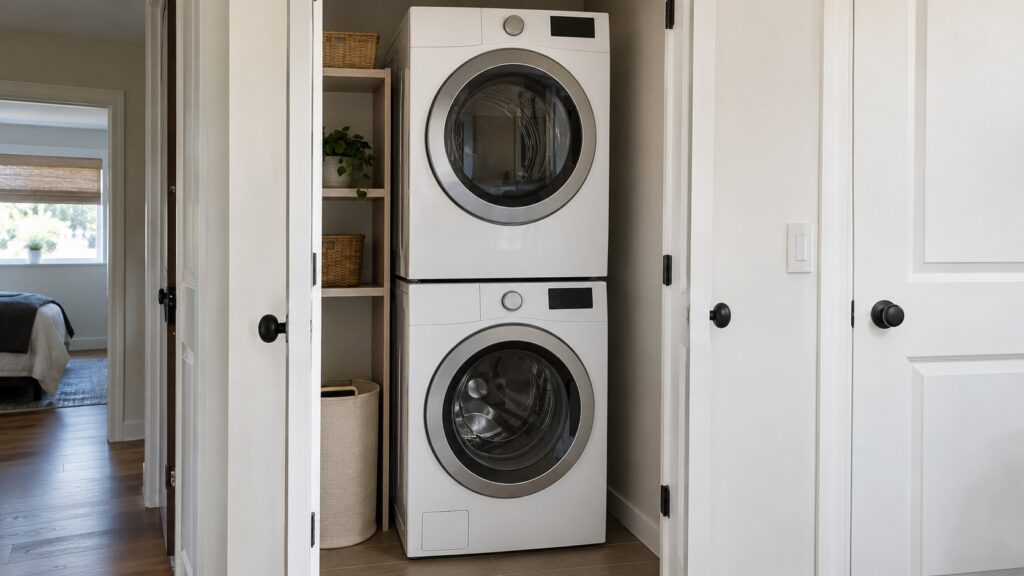
The LG WashTower repair or replace decision comes down to four things: which half has the fault, how serious the fault is, how long you have had the tower and what a new one would involve in your laundry room. A WashTower is one tall unit with a single control panel and a washer below a dryer, so a failure in either half affects the whole column, and the cost of a replacement includes more than the machine. Repair usually wins for a part-sized fault on a tower that has otherwise served well. Replacement starts to win when the failure is major, the repairs are stacking up, or the tower no longer fits your needs.
Should you repair or replace an LG WashTower?
Start from the symptom, not from the age. Many WashTower problems are small and cheap compared with replacing the whole column. A washer that will not drain or a dryer that takes too long are often a clogged filter, a hose or a vent, and they are usually fixed without drama. Those are repair cases. The calls that deserve a real decision are the ones where a major component has failed or where faults keep returning. Our guide to repairing or replacing an LG washer and the one for an LG dryer set out the same thinking for stand-alone machines, and a tower inherits both.
What is different about repairing a tower instead of two machines?
Three things. First, the unit is engineered as a single appliance. Our comparison of a WashTower versus a stacked washer and dryer makes the point that with separates you can replace one machine and keep the other, while a tower decision about a major failure is a decision about the whole unit. Second, one control panel serves both halves, so a panel or board fault can affect the whole tower at once. Third, access is more awkward. The unit is tall, heavy and often built into a closet, which makes any service visit and any removal harder than for a single machine.
None of this makes a tower a poor buy. It means you should weigh a repair against the cost of replacing both halves, plus delivery and installation, rather than against the price of one machine.
Which faults are usually worth repairing?
Faults that point at one wearing part and leave the rest of the tower sound are good repair candidates. The washer side often gives a clear code, such as UE for an unbalanced load, which on a new installation is often a leveling or shipping-bolt matter and not a failure. A washer that leaks or one that will not drain frequently has a hose, a pump or a filter problem. On the dryer side, a unit that is not heating or takes too long may only need its vent cleared. A diagnosis first is cheaper than guessing.
When does replacement start to make more sense?
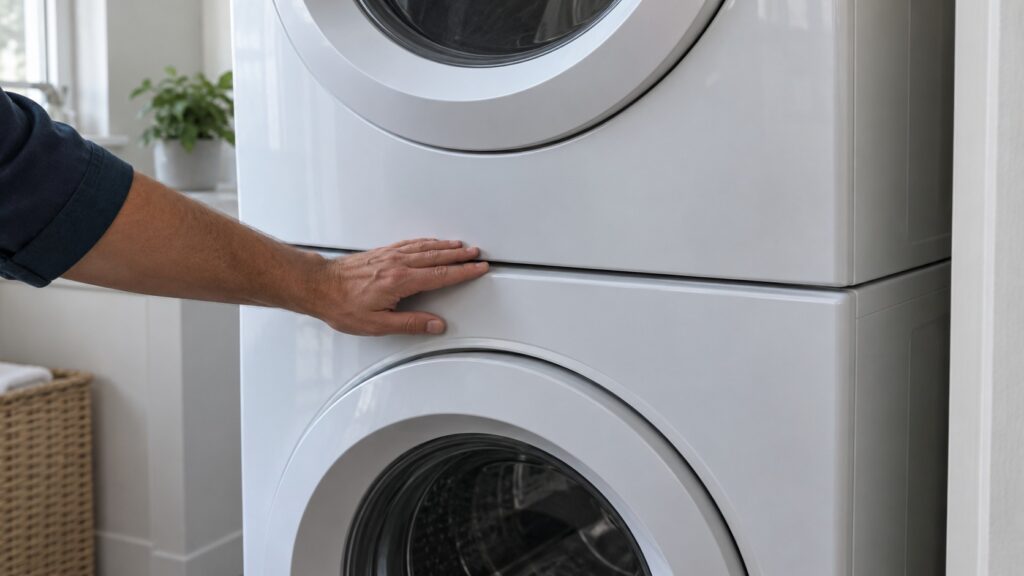
Consider replacing when a major fault appears in a tower that has been in service for a long time, when both the washer and the dryer have needed repairs, when the quoted repair comes close to what you would pay for a new tower, or when the tower never suited your household. Think about the whole picture. A new tower brings a new warranty and current features, but it also means delivery, removal of the old unit, and utilities that match the model you choose: electric needs a 240-volt outlet, gas needs a gas supply and a standard outlet, and heat pump needs a 240-volt outlet but no outdoor vent, as our WashTower model guide explains. If you replace with a different type, the room has to support it.
A technician can give you the facts you need for this decision: what has failed, whether the rest of the unit is sound and what the repair would cost. We cannot give a fixed price here because it depends on the fault and the model. Ask for the estimate in writing before you decide.
What should you do before you decide?
Write down the model number from the rating plate, the exact symptom, any code on the display and when it started. Check the easy things first: the washer filter, the drain hose, the dryer lint screen and the vent. Make sure the tower stands level and that the washer shipping bolts were removed at installation, as our LG WashTower installation guide describes. If the dryer is gas, leave every gas connection and any suspicion of a gas leak to a qualified installer: if you smell gas, do not touch switches, leave the house and call the gas service from outside. If you see water at an outlet or smell burning, switch off the breaker at the panel while standing on a dry floor. Do not remove panels yourself. When you are ready for an opinion, see our LG washer repair page.