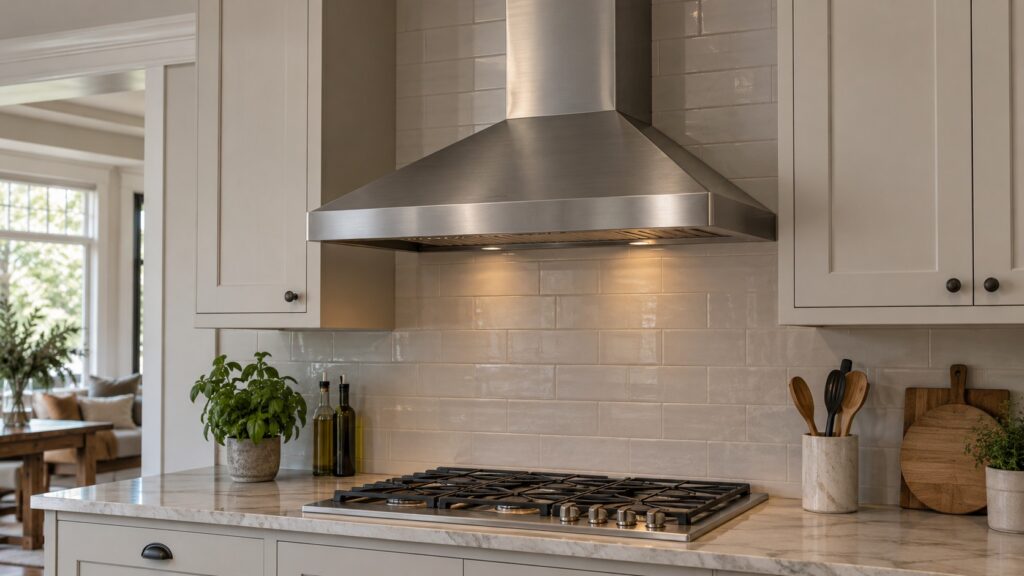
The LG range hood replacement decision is usually easier than it looks, because most hood complaints are not a dead hood at all. Weak suction is most often saturated grease filters, a dead light is a bulb or a switch, and a silent fan is a power, switch, capacitor, motor or thermal fuse question. Fix the cheap, common causes first. Replace only when the blower or its control has failed on a hood you were already unhappy with, or when the hood no longer fits how you cook.
Should you repair or replace an LG range hood?
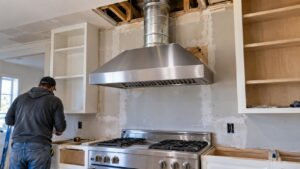
Repair if the fault is in the airflow chain you can clear or in a single inexpensive part. Replace if the hood’s blower or control has failed and the hood is still the wrong size or type for your kitchen. LG STUDIO hoods on this site, such as the LSHD3680N, LSHD3080N and LSHD3680ST, are wall-mount chimney models with a high-capacity 600 CFM blower and electronic push or touch controls. They have no digital diagnostics, so a technician diagnoses by symptom rather than by reading a code.
Before you shop, get a diagnosis: what failed, what the part costs, and what the labor is. A new hood is also a project, not just a purchase, so include the installation in the comparison. This is the same reasoning as in our LG range repair or replace guide: diagnose first, then price.
Which range hood problems are almost always worth repairing?
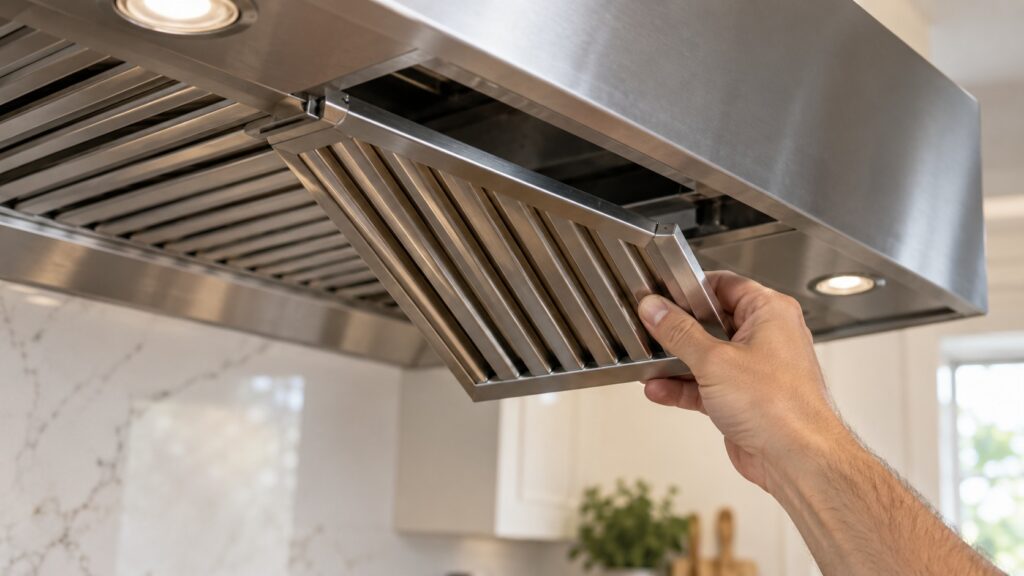
Weak suction comes first. Our LG range hood weak suction guide explains that most lost suction starts at the grease filters, which clog long before they look full. After the filters come a spent charcoal filter on a recirculating hood, a crushed or overly long duct and an exterior damper stuck shut with grease. All of those are cleaning or duct problems, not a reason to replace the hood. The baffle filters are listed as dishwasher-safe on the models above, and our maintenance guide says to wash the baffle or mesh filters in hot soapy water or the dishwasher and let them dry before refitting.
A light that will not turn on is the other easy one. See the guide to an LG range hood light that is not working: the hood still clears smoke, so a lighting fault alone is never a reason to replace it.
When does a failed fan tip the decision?
The hood’s fan circuit is simple: power reaches a control switch, which feeds a motor, often through a capacitor, and a thermal fuse for safety. If the lights work but the fan is dead, power is reaching the hood and the problem is downstream, in the switch, capacitor, motor or fuse. If the fan hums but does not spin, the capacitor or the motor is the likely area, and a technician has to tell which. If the fan ran and then quit and will not restart, a thermal fuse may have tripped, and the reason it tripped should be found before the part is replaced.
All of these are inside the hood’s housing. Do not open the hood or reach into the blower area yourself; that is a technician’s job. For a hood that was already underperforming, a failed motor is a fair point at which to compare the repair estimate with a new hood. For a hood you like, it is usually a straightforward repair. Our guide to an LG range hood fan not working explains the checks that come before any part is replaced.
What does a replacement really involve?
Three things make a new hood more than a purchase. First, size: our buying guide says the hood should be at least as wide as the cooktop, and the listed models come in 30-inch and 36-inch widths. Second, ducting: ducted installation extracts far better than recirculating, which relies on a charcoal filter and returns air to the room. Our LG range hood installation and duct sizing guide covers the duct side. Third, how hard you cook: our buying guide says to match the CFM to your cooking. If you are weighing a swap for performance, read our range hood buying guide before you decide.
What a new hood will not do is fix a duct that is crushed, too long or has too many bends. If your hood has weak suction because of the duct, a new hood is just as weak.
What to do before you decide
Run through the simple checks in this order: wash the grease filters, replace a spent charcoal filter if you recirculate, inspect the duct and confirm the exterior damper opens when the blower runs. If suction is still poor with clean filters, a clear duct and a free damper, call for a diagnosis of the blower and its control. Book an LG range hood repair visit and ask for the part cost, the labor and the age of the hood in the same conversation.