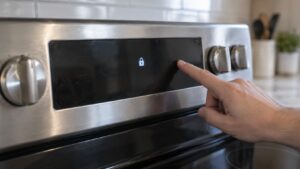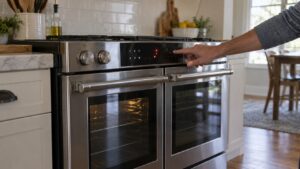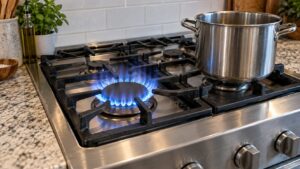
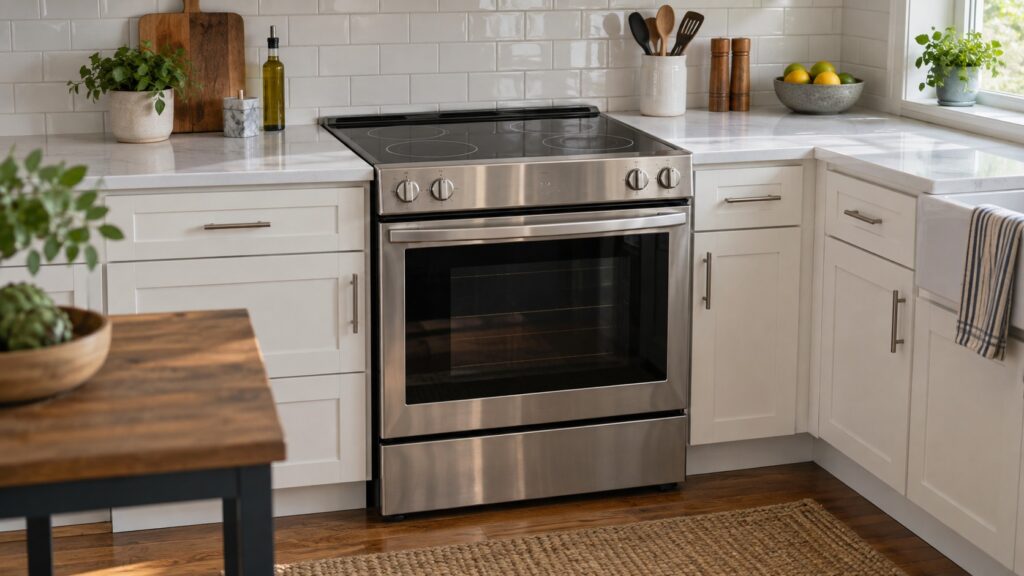
An LG range repair or replace decision is usually made in the wrong order: the price of a new range gets looked up first, and the fault gets diagnosed second. Reverse that and most of these decisions become easy, because the majority of range faults are a single replaceable part — an igniter, an element, a sensor, a relay — on an appliance that is otherwise sound. This guide sets out which faults are worth fixing, where the line sits, and what a new range genuinely buys you.
Diagnose first — the symptom lies
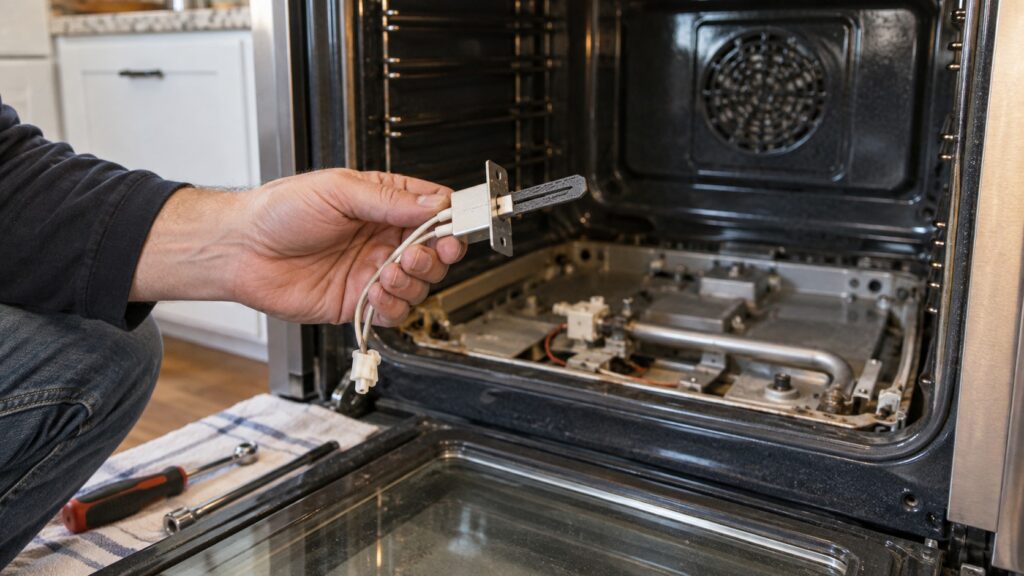
“The oven does not heat” is not a fault; it is a family of them. On a gas range it can be an igniter that glows but no longer draws enough current to open the valve, a failed safety valve, or a control problem. On an electric range it can be a bake element, a relay stuck open, or a sensor reading so far out that the control never calls for heat. Each of those is a different invoice, and only one of them is expensive.
The F-codes on these ranges narrow it down quickly and honestly — an overheat or stuck relay code and a convection-fan code point at genuinely different parts. Our guide to LG oven F-codes explains what each family means, and it is worth reading the code before reading a price list.
Where the line really sits
A useful rule: if the repair costs less than a third of a comparable new range, repair it without much soul-searching. Between a third and a half, the age and condition of everything else decides. Above half, on a range over ten years old, replacement starts to make sense — not because the repair will fail, but because the next repair is coming.
Age matters less than people assume on ranges, though. There is no wear-out mechanism in a cavity or a burner the way there is in a compressor. A twelve-year-old range with a fresh igniter is a perfectly good appliance, and the elements and igniters that fail are consumable parts by design.
The faults, and which way they fall
One surface burner will not light. Repair, almost always — an igniter, a switch or a blocked port. Our guide on a burner that will not light covers the owner-checkable part.
Oven heats but temperature is wrong. Repair. A sensor, a calibration, or a door that no longer seals. The parts are inexpensive and the difference in baking is immediate.
Convection fan noisy or stopped. Repair. A fan motor is a straightforward part and the alternative is an oven that bakes unevenly forever.
Induction zone dead, others fine. Diagnose. A single failed coil or a connection is a repair; a failed generator on an older unit is the case that needs a real comparison.
Glass cooktop cracked. Weigh it. The glass is a genuine part with a genuine price, and on an older range that price plus another fault often lands past the line.
One more factor belongs in the arithmetic: parts availability. Elements, igniters, sensors and switches for these ranges are common and stay available for years, which is what keeps an older unit economically repairable. A control board for a discontinued model is the part that occasionally forces the decision, and it is worth asking the technician directly whether the board is still supplied before committing to a repair on a range past its tenth birthday.
What replacement really costs
A like-for-like swap is straightforward. A change of type or fuel is a project, and it belongs in the comparison from the start rather than as a surprise on installation day.
Safety is the one line that overrides the arithmetic. A gas range that smells of gas, a burner that will not shut off, a cooktop with cracked glass over live elements, or scorching around a receptacle are not repair-or-replace questions at all — they are stop-using-it questions, and they need a visit before the next meal is cooked on them.
What a new range buys you, honestly
Efficiency gains on ranges are modest compared with refrigeration or laundry, so a new one rarely pays for itself in running cost. What it does buy is features — induction, better convection, connected controls, air fry — and the confidence of a warranty. If those matter to how you cook, that is a legitimate reason to replace a repairable range, and it is fine to say so out loud rather than looking for a technical excuse.
What it does not buy is better results from the same cooking. An oven that bakes unevenly because a fan has stalled will bake evenly again with a new fan, and so will a new range. Only one of those costs a weekend.
When to call
Call for a diagnosis before you shop: what failed, what the part costs, what the labor is, and what else on the range is near the end of its life. That conversation turns a guess into a decision, and it is the same information a fair quote is built on. If the oven has stopped heating altogether, our guide on an oven that will not heat is the place to start.
We are an independent repair company, not a factory service arm. Pricing starts from a diagnostic visit — from $89 — with the estimate confirmed before work begins. LG range repair covers igniters, elements, sensors, fans, glass tops and controls on LRGL, LREL and LSEL ranges, and you can schedule a visit online.