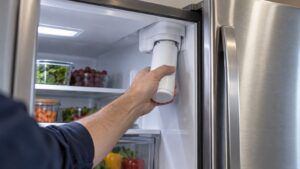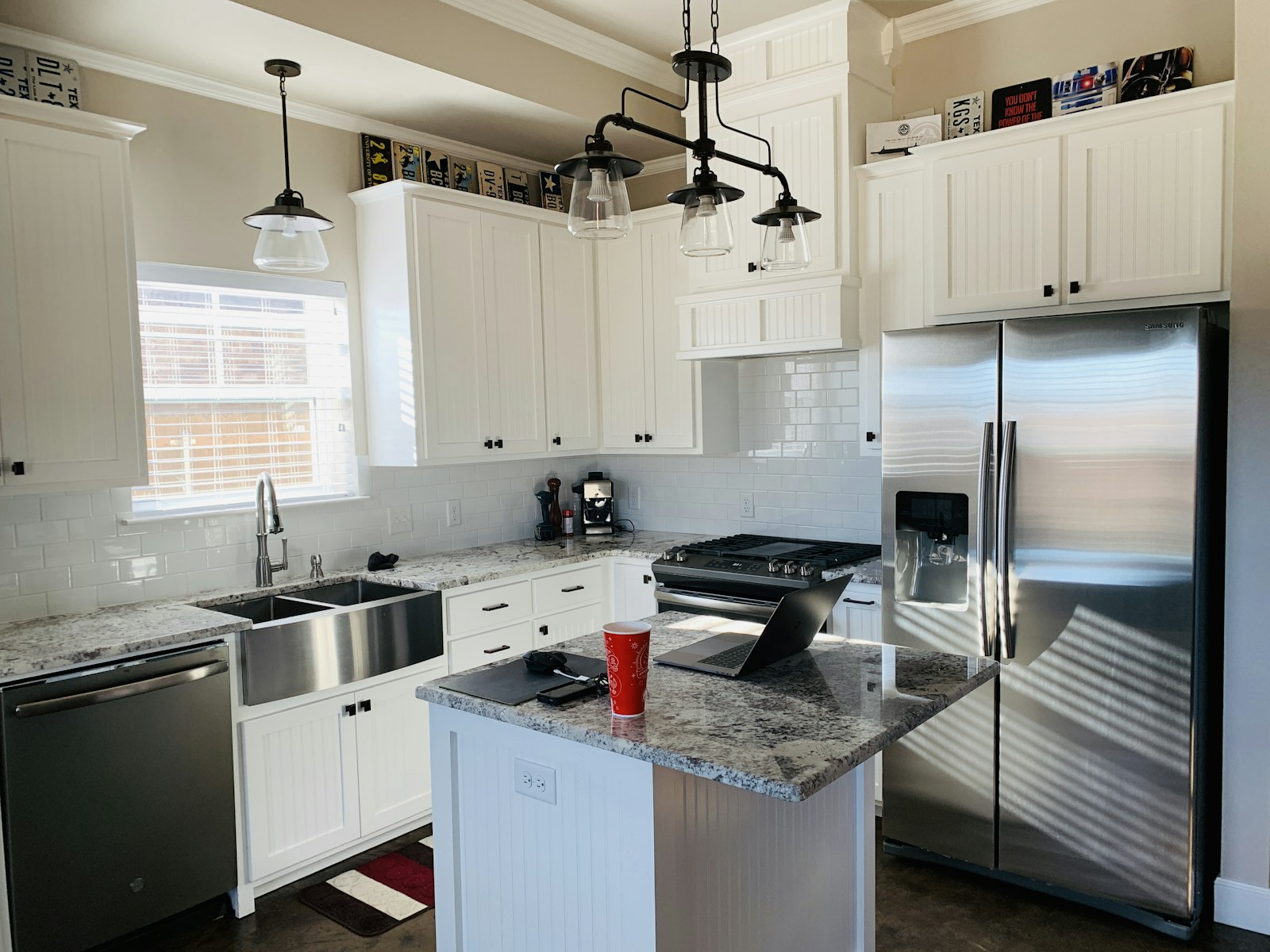
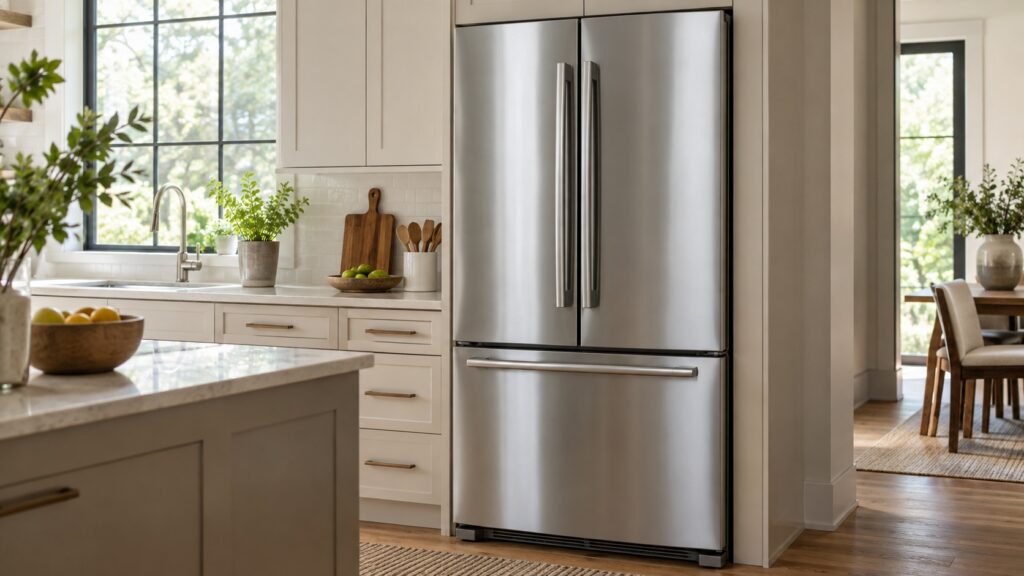
LG PrintProof is the name of a fingerprint-resistant stainless finish, and on our model pages it appears exactly where you would expect a finish to appear: in the specification line that reads “Finish: PrintProof Stainless” on refrigerators, ranges and wall ovens alike. It is a surface treatment, not a feature you switch on, and it changes one thing about living with stainless steel — how visible a hand print is an hour after somebody opened the door.
What does PrintProof actually change?
Plain brushed stainless holds the oils from a fingertip in the grain, which is why a busy kitchen door shows every hand that touched it by lunchtime. A fingerprint-resistant finish changes the surface so those oils sit on top rather than settling into the grain, and so they wipe away with much less effort. The print is still deposited; it simply does not stay and it does not need a specialty polish to remove.
What it does not do is make the door invisible to dirt. Grease that lands from a nearby range, dried cleaner residue and hard-water spots all still show. The difference is in how they come off: a damp microfiber cloth usually finishes the job, where plain stainless would need a polish and a second pass with the grain.
How should PrintProof be cleaned?
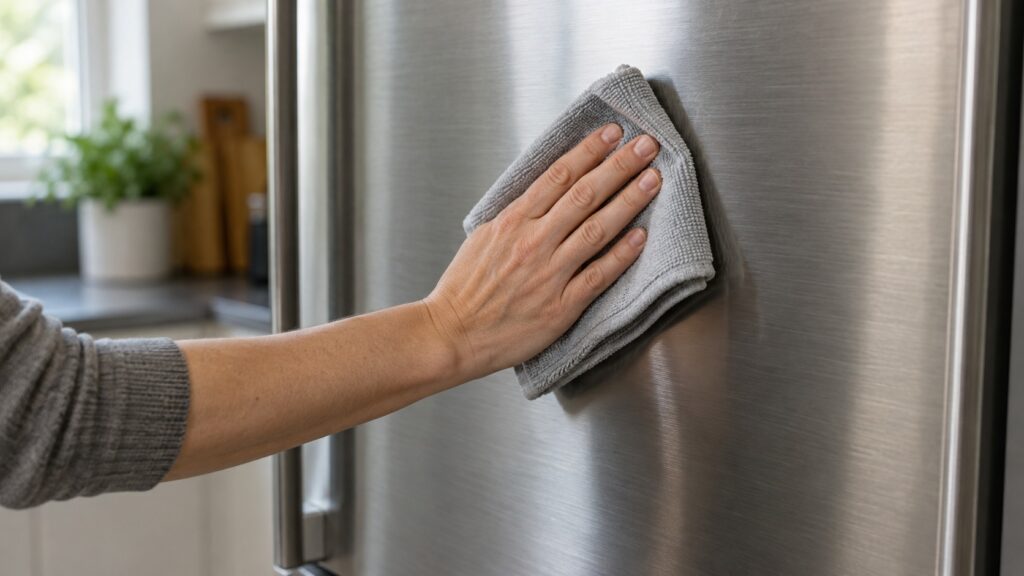
Warm water, a drop of dish soap and a soft microfiber cloth, followed by a dry cloth. That is the whole routine for daily marks, and it is the routine that keeps the finish looking the way it did in the showroom. Work with the grain, not across it, and dry properly — most of what people read as a dull patch is dried water, not damage.
For grease that has traveled from cooking, warm soapy water and patience beat any aggressive cleaner. If greasy film keeps landing on the refrigerator door, the ventilation over the range is the real subject, and our guide to LG range hood maintenance deals with the cause rather than the symptom.
What ruins the finish?
The pattern behind that table is simple: anything that works by scratching, and anything that works by chemistry aggressive enough to bite metal, is wrong for this panel. A finish that resists fingerprints cannot resist being sanded.
Hard water deserves its own sentence, because it is the most common complaint that gets blamed on the finish. Spots left by drying water are mineral deposits sitting on the surface, not marks in it, and they come off with a cloth dampened in a weak solution of white vinegar and water, followed immediately by plain water and a dry cloth. Leaving vinegar to sit is the mistake: rinse it off, do not let it dry on the panel.
Does it affect a repair?
It affects how a technician works, which is why it belongs on a service site rather than only in a brochure. Door panels are handled with clean hands or gloves, tools are not laid on the door, and a machine that must be pulled out for access gets its sides protected. A scratched door is not a mechanical fault, but it is the part of the visit an owner sees every day afterward.
It also affects parts. A replacement door or a replacement handle has to match the finish as well as the model, and a panel from an older suite in plain stainless will read as a different color next to a fingerprint-resistant one under kitchen lighting. When a door is quoted, that match is part of the price.
Where does it fit with the other LG names?
PrintProof is one of a set of names LG uses for things the appliance does or is made of, and it is easy to mix them up because they appear in the same sentence in a showroom. It describes the outside of the appliance only. Names such as InstaView describe a door feature, and others cover cooling, washing or cooking behavior inside the cabinet. If a specification line says PrintProof, it is telling you about the steel and nothing else.
That distinction is useful when a shopper is comparing two models with almost identical numbers. The finish line is not a capability difference: two refrigerators can share every mechanical part and differ only in the panel they wear.
What should an owner remember?
Three things. Clean with soap, water and microfiber, with the grain. Keep polishes, abrasives and chlorine away from the panel. And treat a mark that will not wipe off as a question for a cloth and warm water on a second attempt rather than for a stronger chemical, because the stronger chemical is what turns a mark into damage.
The rest of keeping a refrigerator looking and working well is the ordinary routine in our LG refrigerator maintenance checklist — gaskets, coils, drains and filters. The finish is the part you see; those are the parts that decide whether the appliance is still running in ten years.
We are an independent repair company, not a factory service arm. Pricing starts from a diagnostic visit — from $89 — with the estimate confirmed before work begins, and the number is 1-844-612-0846. LG refrigerator repair covers cooling, dispensers, doors and controls, and you can schedule a visit online.