TL;DR: The LG SpacePlus Ice system moves the ice maker out of the freezer and into the refrigerator door of select French door models, which frees freezer shelf space. Water arrives through the door hinge, cold air is ducted across from the freezer, and the ice drops into a bin in the door. When it stops making ice, the cause is nearly always the cold-air path, the water path, or the bin, not the whole refrigerator.
Most refrigerators keep the ice maker in the top corner of the freezer, where it uses up a block of space that could hold food. The lg spaceplus ice system is LG’s answer: a compact ice maker mounted in the refrigerator compartment door instead. It is clever engineering, and it explains why the troubleshooting is different from the freezer-mounted ice makers you may have used before. This guide covers how the system works, in plain terms, so a problem has a place to start.
What is the LG SpacePlus Ice system?
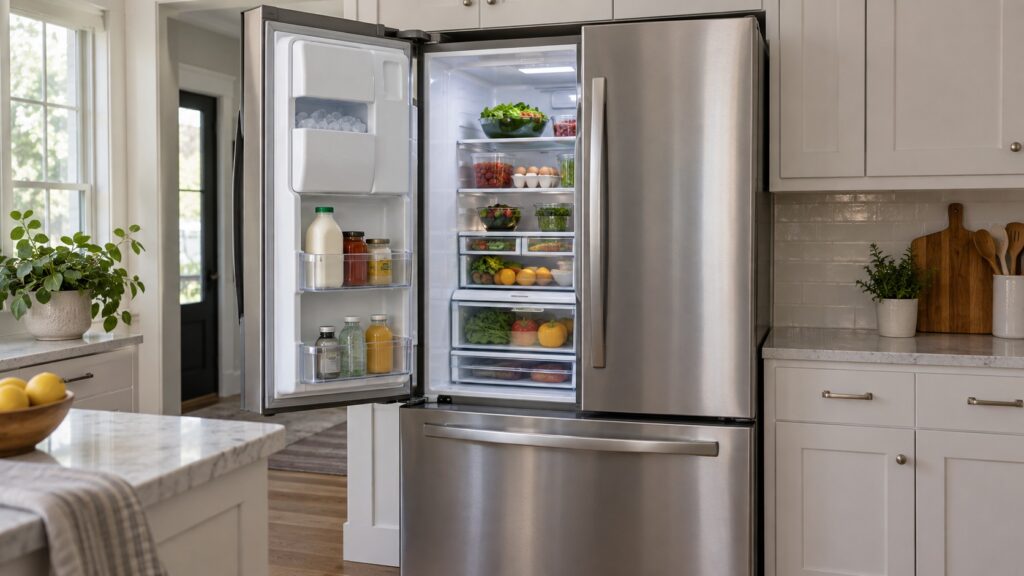
SpacePlus Ice is the name for an ice maker built into the door of the fresh-food side, not into the freezer. The idea is simple: because the ice maker is no longer in the freezer, the freezer gains a full shelf of usable storage. The ice maker still needs two things any ice maker needs, water and freezing air, so the door carries both across the hinge from the cabinet.
If your model makes round, slow-frozen ice in a freezer drawer, that is a different system, covered in how LG Craft Ice works. The two are easy to confuse because both are LG ice systems on the same families of refrigerator.
How does ice get made inside a refrigerator door?
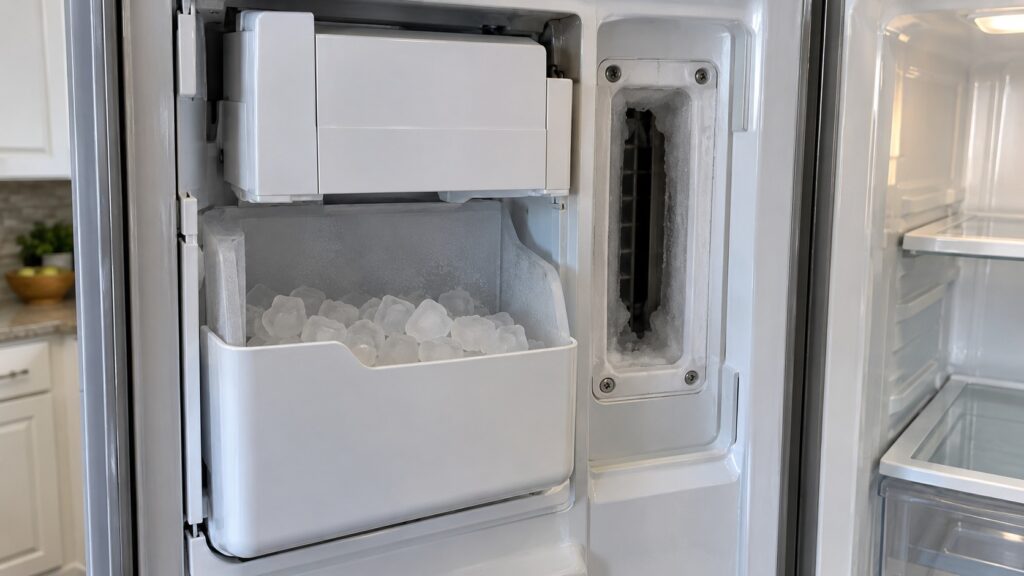
An ice tray needs to reach well below freezing, and the refrigerator compartment is kept just above freezing, so the door module must borrow cold from somewhere else. It borrows it from the freezer. A duct carries very cold air from the freezer side across to the ice maker, and a fan helps move it. Behind the ice maker is an insulated compartment, so the cold air stays in the module instead of leaking into the food compartment around it.
Water follows a parallel path. The supply line from your home runs to a fill valve, then through a tube routed along the hinge side of the door to the ice maker. The module fills its tray, the cold air freezes it, a heater or a twist releases the cubes, and they fall into the bin below. The control board watches the bin with a sensor and tells the module when to make more. That sequence is the same as in any ice maker. The unusual part is the journey the water and air take to reach the door.
Which parts matter when the ice maker stops?
Four things have to work together, and each has a distinct failure pattern. The cold-air duct and fan supply freezing air; if they are blocked by frost, the module never gets cold enough to freeze a tray. The door seal on the module compartment keeps cold air from leaking out; a worn seal lets the module warm and the tray freeze slowly or unevenly. The fill valve and the water line deliver water; a kinked or frozen line yields tiny cubes or none. The bin and its sensor tell the module whether to run; a bin that is not seated fully can make the system think it is full or missing.
Two LG refrigerator codes tie directly to these parts. A fault with the ice-maker fan is described on the site’s IF code page, and an ice-maker assembly defect that needs service is on the It code page. If you see either one, the module has told you which part to suspect.
Why would a SpacePlus Ice maker make small or hollow cubes?
The usual cause is water that arrives slowly or in small quantities. A partly closed supply valve, a kinked line behind the refrigerator, a clogged water filter, or low household pressure each reduce what reaches the tray. Cubes come out small, thin or fused together. A line that has frozen inside the door produces a pattern that is worse in the morning and better by afternoon.
The other cause is air that is not cold enough. If the duct is partly iced over, the module freezes slowly and may cycle more often than normal. You may notice the freezer itself seems fine, since the freezer does not depend on the duct to cool its own contents. That is why a refrigerator can keep food frozen and still make poor ice. For the water side, see our guide to LG refrigerator water line setup, which covers pressure, shutoff valves and filters.
What can I safely do when it stops making ice?
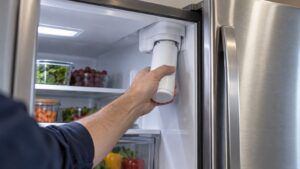
Start with what needs no tools. Confirm the door closes fully, the bin is seated, and the ice maker is switched on in the control panel. Look for visible frost on the duct opening or around the module. Check that the water shutoff valve behind the refrigerator is fully open and the line is not pinched. Replace the water filter if it is overdue, because a clogged filter is a leading cause of slow fill. Then allow a full day, since a module that was off or warm needs time to produce its first batch.
Stop when a step needs the cover off or live electricity: the module, the fan and the fill valve are service items. If the symptom is a complete lack of ice, the diagnostic path in our LG ice maker not working guide is a good next read. If the whole refrigerator is not cooling, read the LG refrigerator not cooling guide instead, because ice is then a symptom of a bigger problem. When you are ready to bring in a technician, see LG refrigerator repair or schedule a visit.
Is SpacePlus Ice worth choosing when buying a refrigerator?
It is a trade. You gain freezer space, which matters in a family kitchen, and you accept that the ice maker sits in a more complicated place. A door module has a water tube, a hinge pass-through, a duct and a seal, so there are more places for a leak or frost to begin than in a freezer-mounted unit. If freezer space is tight, the design is a real advantage. If you want the fewest parts that can fail, a conventional ice maker or none at all is simpler. The broader choice between layouts is in our guide to LG French door versus side-by-side.