How LG dryer works, in short: the dryer tumbles wet clothes in a drum while warm air passes through them, picks up the moisture and carries it out through the exhaust duct, and sensors decide when the clothes are dry enough to stop. Heat, airflow and sensing all have to work together. When one of them is weak, the usual result is a cycle that runs long, clothes that stay damp or a dryer that stops to protect itself. This guide explains each stage in plain terms and shows why a blocked vent causes so many problems.
How does an LG dryer dry clothes step by step?
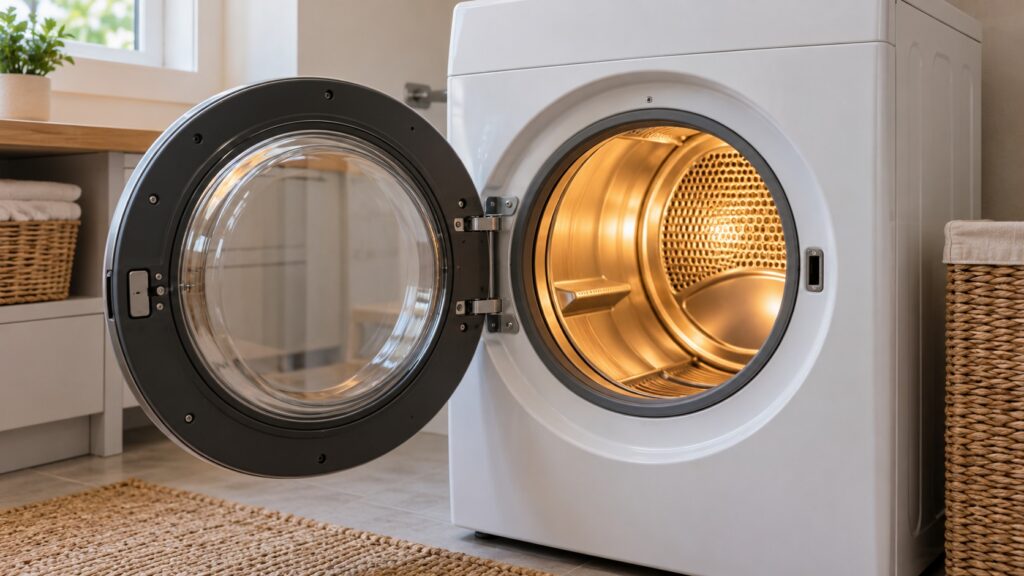
When a cycle starts, the drum begins to turn and the dryer draws in room air. That air is warmed by an electric heating element or, on a gas dryer, by a burner. The warm air moves through the tumbling clothes, takes up water as vapor and is pushed by a blower through the lint filter and out of the dryer into the exhaust duct. As the clothes get drier, they release less moisture, and the air leaving the drum gets drier too. The control watches for this change and ends the cycle on its own, so a sensor-based cycle should finish when the clothes are dry rather than at a fixed time.
Heat alone does not dry clothes. Without enough airflow, warm moist air stays in the drum and the load stays damp. That is why a clean duct matters as much as a working heater, and why a dryer that gets hot but does not dry is so often a vent problem rather than a heat problem.
How do the sensors tell the dryer when to stop?
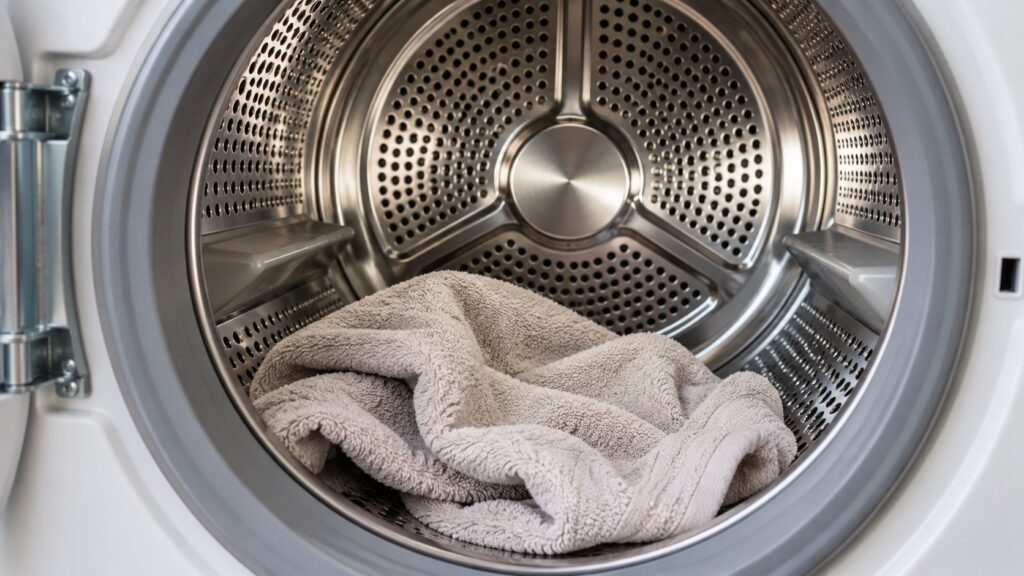
Our LG DLEX7900BE, the DLEX5500W and the gas DLGX5501W list Sensor Dry moisture sensing, marketed as AI Sensor Dry. In general terms, moisture sensor bars inside the drum touch the clothes as they tumble. Wet fabric conducts differently from dry fabric, and the control reads that difference. Temperature sensors, called thermistors, watch the air temperature so the heater can be switched on and off and the dryer does not overheat. Our site names an inlet thermistor, a heater assembly, wiring and a control board as parts that can cause temperature-related codes, so we leave the diagnosis of those to a technician.
Fabric softener and dryer-sheet film can coat the sensor bars and make them less accurate, which can lengthen a cycle. Our LG dryer takes too long guide suggests wiping the bars with a little vinegar. We do not give values for how a sensor reads or what temperatures it uses. Those depend on the model and are not published on our pages.
Why does a blocked vent cause so many dryer problems?
The lint filter catches part of the lint. The rest travels into the exhaust duct and settles there. As the duct narrows, less air can leave, the moist air lingers in the drum and the cycle gets longer. The dryer also runs hotter than it should because the heat has nowhere to go. Our LG dryer vent cleaning guide explains that Flow Sense watches exhaust airflow and posts d-codes as the duct restricts, and that a neglected duct is behind a surprising share of service calls.
Several of our LG vented models list a Flow Sense duct-clog indicator. The heat-pump LG DLHC1455W is listed as ventless with no exhaust duct, so this section does not apply to it. How a heat-pump dryer dries is a different process, covered in our guide on how LG heat pump dryers work.
Clean the lint filter at the start of every load. Have the whole duct, from the back of the dryer to the outside wall cap, cleaned as your manual suggests, and make sure the flap on the outside opens freely. If the duct is long, bent or made of flexible foil, it holds lint more easily.
What does steam do in a dryer cycle?
Some of our listed LG dryers carry TurboSteam, and the DLEX7900BE page lists a TrueSteam or TurboSteam refresh. In general terms, a steam option adds a small amount of moisture to the drum to relax wrinkles or refresh a garment before or during the heat. What steam does on your exact model, which cycles offer it and how it is connected is in your owner’s manual. Not every LG dryer has it, and the model pages list the standard dry cycles for the heat-pump DLHC1455W.
A steam cycle is not a replacement for good airflow. The vapor still has to leave through the duct or, on a ventless unit, be handled by the dryer’s own system. A dryer that is struggling to dry a normal load will struggle with a steam load too.
When is something wrong and not just normal?
A longer cycle with a heavy, wet or overloaded load is normal. A longer cycle with a normal load, a hot cabinet, a lingering damp feel or a code on the display deserves attention. Check the filter and the duct first. A warm, musty or hot smell, or a cabinet that is hot to touch, is a stop sign. Switch off the breaker at the panel while standing on a dry floor, keep the area clear and do not use the dryer until it has been checked. If you smell gas near a gas dryer, do not touch switches or light anything, leave the house and call your gas company or 911 from outside.
Do not open the cabinet panels yourself. Heaters, burners, thermistors and the control board are technician work. We are an independent repair company, not LG. If your dryer will not heat, takes too long or shows a code, see our LG dryer not heating guide, read about our LG dryer repair service or schedule a visit.