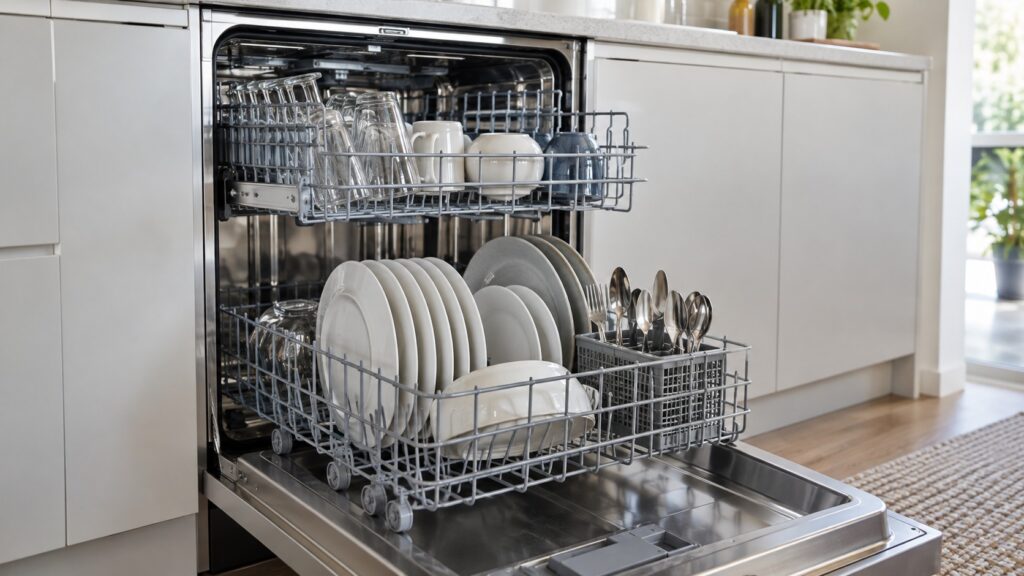
LG QuadWash is the name for a dishwasher that sprays from four directions instead of two, and understanding how it does that explains most of the complaints owners bring to it. The jets, the arms and the motor that decides where the water goes are all separate parts, and each fails in its own way. This guide explains the system, what each symptom points at, and which of it you can check yourself.
Why four directions instead of more pressure
A dishwasher does not scrub. It aims water, and anything the water cannot reach does not get clean. A conventional machine has an arm below and an arm under the upper rack, both spinning, both spraying upward and outward. The gaps in that pattern are predictable: the insides of tall glasses at the back, bowls nested at an angle, and the shadow cast by a baking sheet.
Adding directions closes those gaps more cheaply than adding pressure, which is loud and hard on glassware. That is the whole idea — more angles, similar pressure, better coverage of the awkward places.
The diverter is the part that makes it work
Feeding every arm at once would divide the pump’s pressure among them and weaken all of them. Instead a diverter motor sends the flow to one group at a time and switches between them during the cycle, so each gets full pressure in turn. It is why you can hear the spray pattern change through the door if you listen during a wash.
When that motor fails, or its cam sticks, water stops reaching part of the machine — and the results look exactly like a wash problem rather than a mechanical one. The control usually names it with an nE code, and that code is worth trusting: it points at the diverter and not at the pump.
What each symptom actually means
Top rack clean, bottom rack dirty — or the reverse. Classic diverter or blocked-arm pattern. One group of jets is not getting water. Pull the arms and check that every jet is clear.
Everything comes out gritty. Filter first. A clogged filter recirculates the debris it should be holding, and no spray pattern survives that. This is the most common finding on a machine that “stopped cleaning,” and it is covered in our guide on a dishwasher that is not cleaning.
Glassware filmed rather than dirty. That is water chemistry and rinse aid, not spray coverage. Hard water leaves the film after a perfectly good wash.
Dishes still wet. A drying question, not a washing one — the two systems are separate, and our guide on a dishwasher not drying covers it.
There is one more symptom worth naming, because it sends people to the wrong part. A cycle that runs much longer than it used to, with clean dishes at the end, is usually the machine compensating rather than failing: these dishwashers extend a cycle when the water is not reaching temperature or when the soil sensor keeps seeing dirt in the water. Check the incoming hot water and the filter before assuming the control has lost its mind. A machine that ends early with dirty dishes is the pattern that matters, and that one is about water arriving — supply, filter, arms, diverter, in that order.
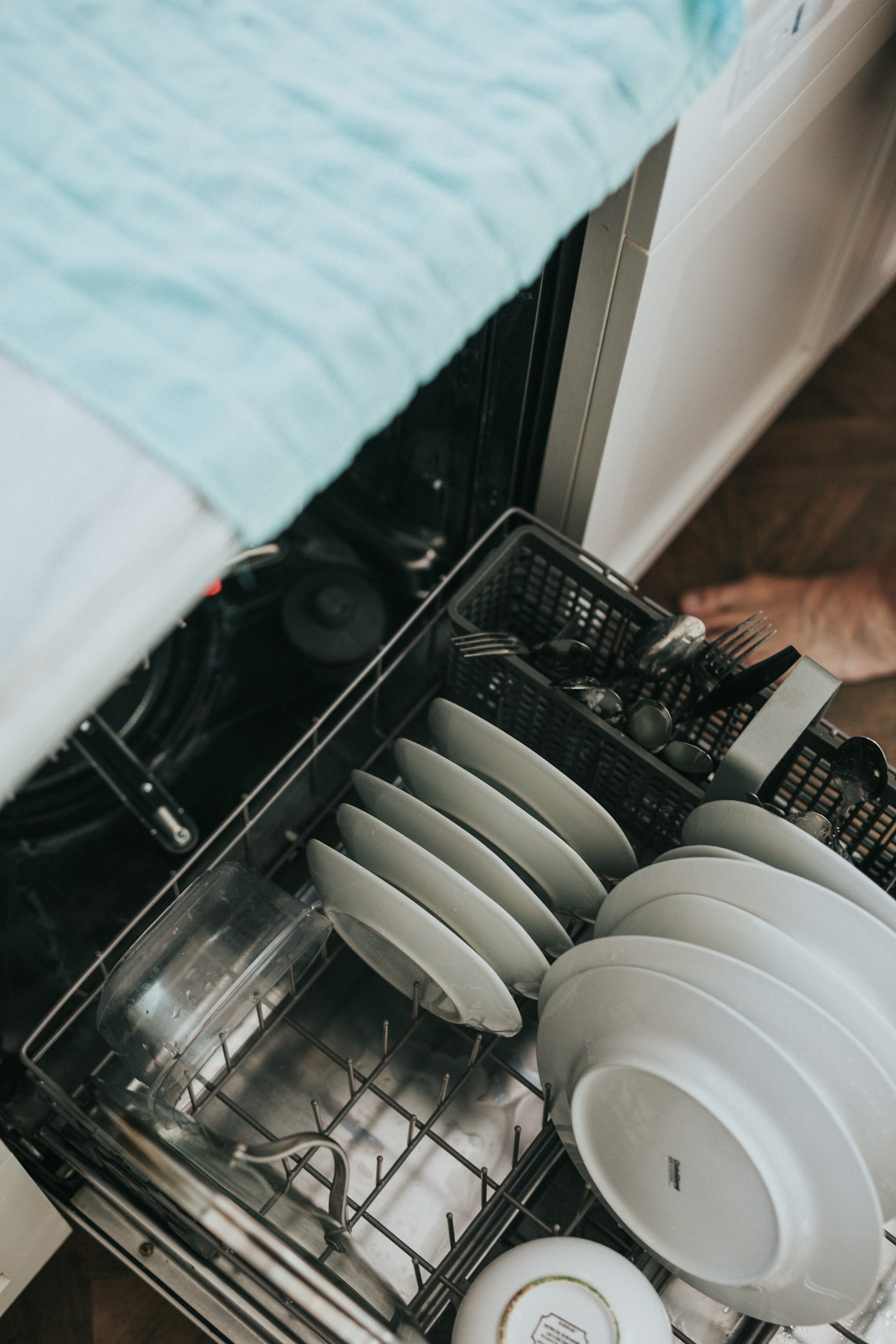
Loading for the way the water moves
None of this is fussiness. A machine that sprays from four directions is more sensitive to blocked paths than one that sprays from two, because each direction is doing a specific job rather than duplicating its neighbor.
Keeping the system healthy
Pull the filter monthly, rinse it under the tap and check the mesh for a film of grease — a filter can look clean and still be sealed by a layer you only notice with a fingertip. Take the spray arms off two or three times a year and hold each jet up to the light; a toothpick clears the ones that have taken a seed or a chip of label.
Run a machine cleaner periodically in hard-water areas, and keep rinse aid topped up if you care about drying and clarity. The full routine is in our dishwasher maintenance guide, and it is short enough to keep.
Detergent placement deserves a line of its own. The main dispenser opens partway through the cycle, not at the start, so a tablet dropped loose in the bottom of the tub dissolves during the pre-rinse and is gone by the time the real wash begins. Put it in the dispenser, keep the dispenser door’s path clear when loading, and the machine gets the detergent at the moment it was designed to use it.
When to call
Call when an nE code returns after a power reset, when one rack consistently stays dirty after the arms and filter have been cleared, when the machine is noisy in a new way during the wash, or when water is visible on the floor. A diverter, a wash pump and a leaking base pan are all jobs that need the machine pulled out and the panel off.
We are an independent repair company, not a factory service arm. Pricing starts from a diagnostic visit — from $89 — with the estimate confirmed before work begins. LG dishwasher repair covers diverters, wash pumps, spray arms, filters and controls on LDF, LDP and LDT machines, and you can schedule a visit online.