TL;DR: Repairing an LG wine cooler usually makes sense when the fault is a single part — a fan, a thermostat, a door seal — on a unit that is otherwise in good shape. Replacement makes more sense when the compressor or sealed cooling system has failed, when the cabinet is showing rust or seal damage from years of humidity, or when repeated repairs are chasing the same temperature complaint.
A wine cooler is a smaller, more specialized cousin of a refrigerator, built to hold a narrower temperature band steady rather than to run cold as fast as possible, and that specialization affects which faults are worth fixing. Because the units are smaller and the parts more compact, some repairs are quicker and cheaper than the equivalent job on a full-size refrigerator — and others, especially anything involving the sealed refrigerant system, cost close to what a new unit would. Working through an lg wine cooler repair or replace decision comes down to identifying which category a given fault falls into before any money is spent.
What wine cooler problems are usually worth repairing?
Faults tied to a single accessible component tend to be the most cost-effective repairs. A fan that has gone noisy or stopped circulating air, a thermostat or control board that is misreading temperature, a door gasket that has lost its seal and is letting warm air in, or an LED light that has failed are all common, contained repairs on an otherwise healthy cabinet. None of these touch the sealed cooling system, which keeps the repair straightforward and the cost proportional to the part.
When does a wine cooler repair stop making financial sense?
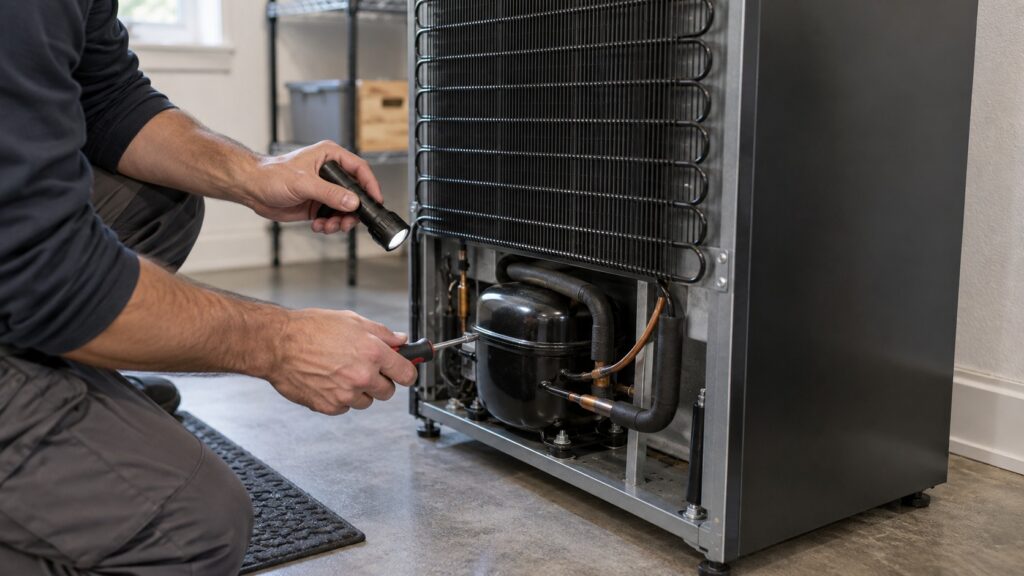
The clearest line is the sealed refrigerant system — the compressor, the evaporator and condenser coils, and the tubing connecting them. A failure here requires recovering and replacing refrigerant and often the compressor itself, which is skilled, time-consuming work on a small cabinet, and the labor and parts cost climbs close to what a comparable new unit costs. On an older unit, or one that has already needed a repair for something unrelated, that is usually the point to replace rather than repair.
Does a wine cooler’s age change the repair-or-replace decision?
Yes, more than it does for some other appliances, because wine coolers run continuously to hold a narrow temperature band and their compressors accumulate run hours faster than a refrigerator that cycles more intermittently. A unit in the first few years of service is usually worth repairing for almost any fault, since the rest of the cabinet has plenty of life left. Past roughly eight to ten years, a major repair on the sealed system is a harder case to justify, since the remaining components are aging alongside the one that just failed.
Can inconsistent temperature always be fixed with a repair?
Not always, and this is the symptom most likely to be misdiagnosed as a simple fix. Inconsistent temperature can come from a failing thermostat or a fan not circulating air evenly — both repairable — but it can also come from a slow refrigerant leak that gradually loses cooling capacity, which is a sealed-system problem. Our wine cooler not cooling guide walks through how to tell these apart before deciding which category a given fault falls into.
Does the type of wine cooler change this decision?
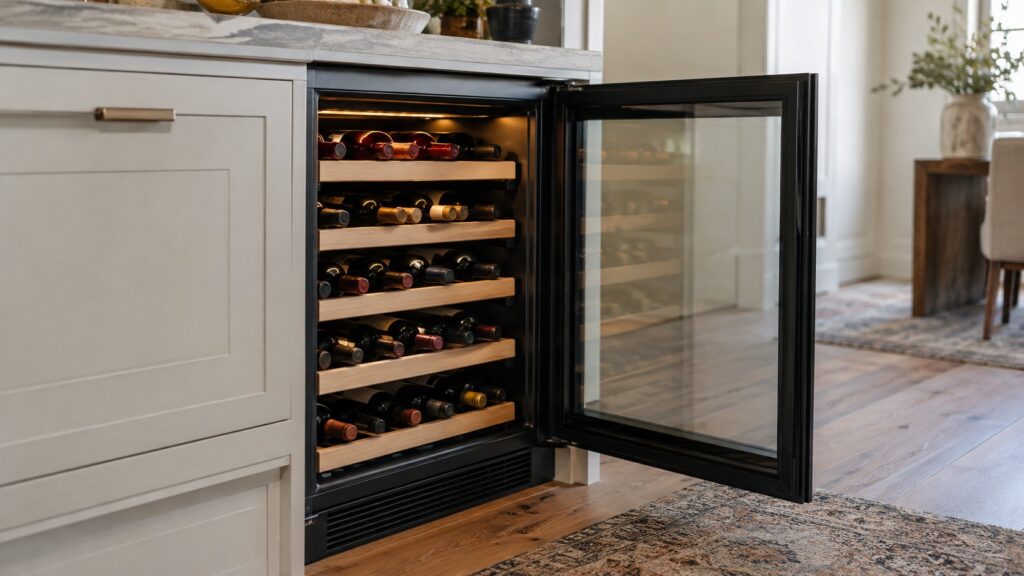
Built-in and freestanding LG wine coolers use the same basic compressor-based cooling as a standalone unit, so the repair-versus-replace logic in this guide applies to both. The practical difference shows up in labor: a built-in unit set into cabinetry can take longer to access for a compressor or evaporator repair than a freestanding cooler that simply pulls away from the wall, and that added labor time is worth factoring into the cost comparison even when the underlying fault is identical. Dual-zone models add one more variable, since a fault in one zone’s thermostat or fan does not necessarily mean the second zone’s cooling system is affected — it is worth confirming which zone is actually misbehaving before assuming the whole unit needs replacing.
Does regular maintenance change how often this decision comes up?
It does. Most of the repairable faults — clogged vents, worn gaskets, dusty condenser coils — develop gradually and are far cheaper to catch early than to let run until they strain the compressor. Our wine cooler maintenance guide covers the routine that keeps a unit in the “repair, not replace” category longer, and our wine cooler temperature tips guide is worth reading if the complaint is inconsistent temperature rather than a hard failure.
What should I check before calling for a diagnosis?
A remaining parts warranty can also change the math, but only for the specific component it covers. A warranty on the compressor or sealed system does not usually extend to the fan, the door gasket, or the control board, so check which part actually failed before assuming coverage applies. A unit still inside its compressor warranty is almost always worth repairing even if the same fault would tip toward replacement once that coverage lapses, since the sealed-system labor costs the same either way and the parts cost is the only variable the warranty removes.
Confirm the unit is level, that nothing is blocking the vents inside the cabinet or behind it, and that the door is sealing fully closed with nothing wedged in the gasket. These simple checks resolve a surprising share of temperature complaints without any repair at all. If the cooler still runs warm, cycles constantly, or has stopped cooling after those checks, that points toward a component fault worth having assessed rather than guessed at.
We are an independent LG appliance repair company, not a factory service center, and we will tell you honestly when a wine cooler has reached the point where a new unit costs less over its remaining life than another repair. Pricing on any visit starts from a diagnostic call, not a guessed number. Schedule a visit, or start with our LG wine cooler repair page for the full list of what we check.