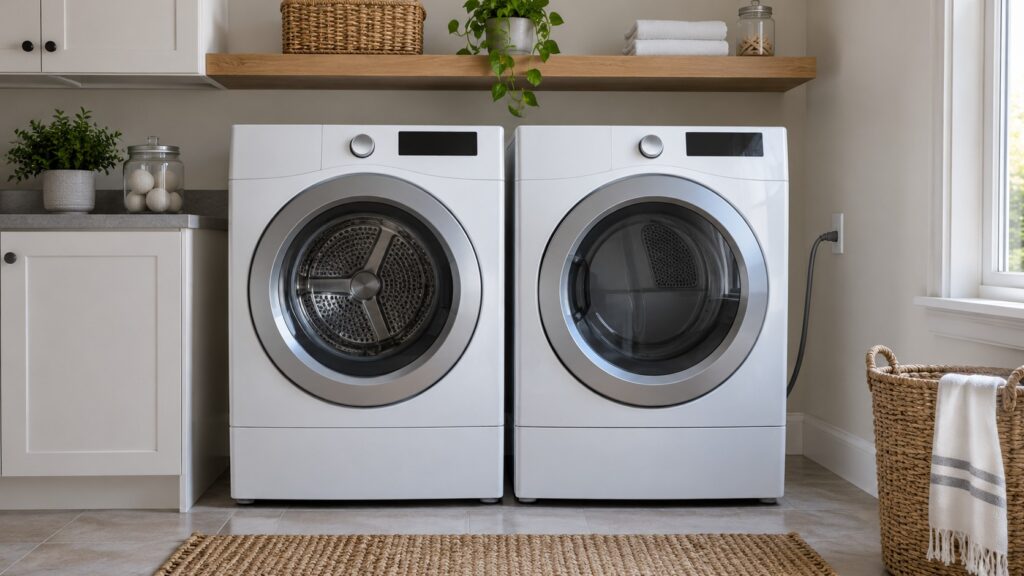
An LG dryer fuel type comes down to what is already behind your dryer. Gas models such as the DLGX5501W and DLGX4001B burn natural gas to make heat and still need a standard 120-volt outlet to run the drum, controls and igniter. Electric models such as the DLEX7900BE, DLEX5500W and DLEX4000B heat with an electric element and need a dedicated 240-volt dryer circuit. If your laundry room has only one of those connections, that usually settles the question before features do.
Should you buy a gas or an electric LG dryer?
Buy the one that matches the connection your laundry room already has. Switching fuel type later is not a swap of one box for another: going from electric to gas means a gas line that has to be installed, and going from gas to electric means a new 240-volt circuit. Both are jobs for a licensed professional.
If you are replacing an old dryer, look at the back of it and at the wall. A gas dryer has a gas connector and a plain household-style plug. An electric dryer has a thick cord that goes into a large, dedicated outlet. If you are not sure which one you have, a licensed electrician or gas installer can tell you in minutes, and our LG dryer installation guide lists what each type needs before delivery day.
What is different between the LG gas and electric dryers listed on this site?
Less than most people expect. The five stand-alone models listed here are all 7.3 or 7.4 cubic feet, all use Sensor Dry moisture sensing, all carry the Flow Sense duct-clog indicator, and all connect to ThinQ with Smart Diagnosis. The model pages show the differences that matter for a choice:
- The DLGX5501W is the gas model with AI Sensor Dry and TurboSteam. The DLGX4001B is the gas model with Sensor Dry, TrueSteam and Flow Sense.
- The DLEX7900BE is the electric model with AI Sensor Dry, TurboSteam and the dual-opening EasyLoad door. The DLEX5500W is electric with AI Sensor Dry and TurboSteam, and the DLEX4000B is electric with Sensor Dry and TrueSteam.
- The finish differs by model: white for the DLGX5501W and DLEX5500W, Black Steel for the others.
In other words, fuel type is not tied to a feature tier. You can find a gas and an electric dryer with similar drying features, so choose the fuel first and the feature set second.
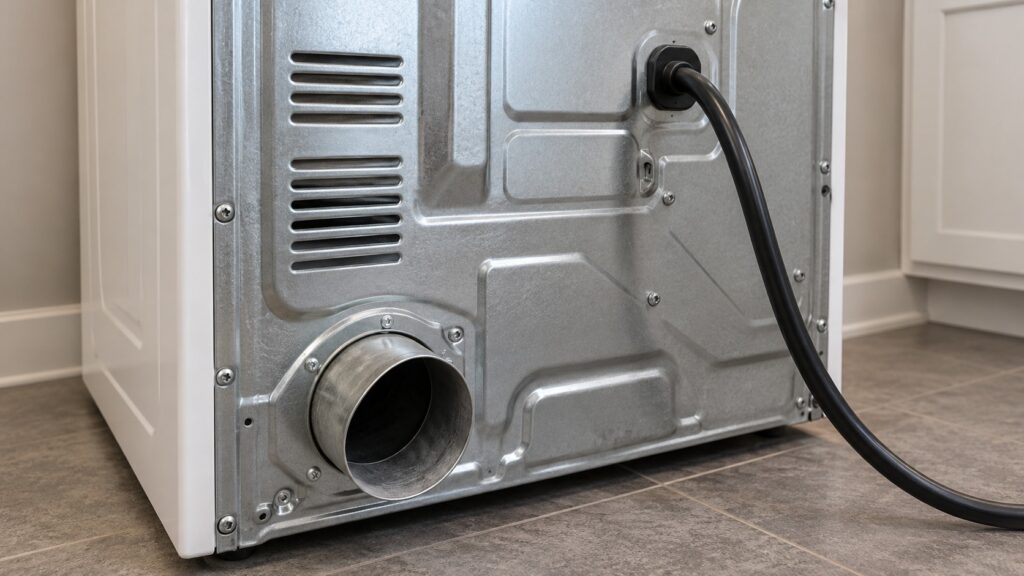
What does each fuel type need behind the dryer?
This is the part that decides the install. An electric LG dryer needs a dedicated 240-volt dryer circuit with a cord that matches the outlet in the wall. Houses built in different decades use different dryer plugs, so the cord has to match the receptacle, and an electrician can confirm the outlet type. When the connection is wrong, the dryer can tell you: an LG PS code points to improper cord voltage or wiring, and an nP code means no current is reaching the heater, often because one 240-volt leg is missing.
A gas LG dryer needs a gas supply with a manual shutoff valve and a flexible gas connector, plus an ordinary grounded 120-volt outlet. The gas connection and the leak check are work for a qualified installer, not for an owner with a wrench. If you ever smell gas, do not switch anything on or off and do not light anything. Leave the house and call your gas utility or 911 from outside.
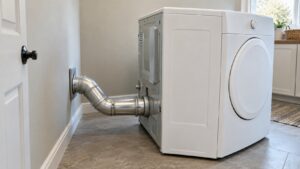
Both types need the same exhaust path: a short, straight run of rigid metal duct to the outdoors. If you cannot vent to the outdoors at all, neither fuel type is the right answer, and our LG vented vs heat pump dryer guide covers that different choice.
How does the fuel type change what can go wrong?
The two fuel types share most of their parts: the drum, the blower, the moisture sensor, the thermistors and the Flow Sense airflow monitor. The difference sits in the heat source. On this site, an electric dryer that tumbles but does not heat points first at a half-tripped double breaker, an nP code, a clogged vent or a failed element. A gas dryer that tumbles but stays cold points at a closed gas valve, a failed igniter, a flame sensor or the gas valve itself, and the display can show a GAS prompt, which our LG dryer GAS code page explains.
That split is worth knowing before you buy. Electric no-heat problems often start at the breaker panel, which is something a homeowner can look at safely. Gas ignition problems need a technician with training on gas components, because the parts involved handle a combustible fuel. Neither type is automatically the more trouble-free one; what matters is that the vent stays clear and the power or gas supply is installed correctly.
What about running cost and availability?
This site does not publish utility rates, and rates differ by region, so we do not quote a cost figure for gas or electric drying. The honest way to compare is to look at your own gas and electric bills, find out what you pay per unit of each, and check the energy information that comes with the specific model. All five stand-alone models listed here are ENERGY STAR certified, so the choice is between fuels rather than between efficient and inefficient dryers.
Also consider the rest of the laundry room. If you are pairing the dryer with a washer, a stacked tower has its own fuel versions, and our WashTower vs stacked washer and dryer guide covers that layout. For a dryer that is already installed and misbehaving, our LG dryer not heating guide helps you tell a power or gas problem from a vent problem.
When should you stop and call a professional?
Call before you buy if you are not certain what connection your laundry room has, or if you plan to change fuel type. Call an electrician for any new 240-volt circuit or an outlet that does not match the cord. Call a qualified gas installer for any gas line, connector or leak check. Do not open the dryer cabinet to look at the burner, igniter or heater yourself; that is a technician’s job. If a dryer already installed shows a GAS prompt that does not clear, or a burning smell, stop using it. For a burning smell, switch off the dryer’s breaker at the panel while standing on a dry floor and book a visit. Our LG dryer repair page explains how a diagnostic visit works.