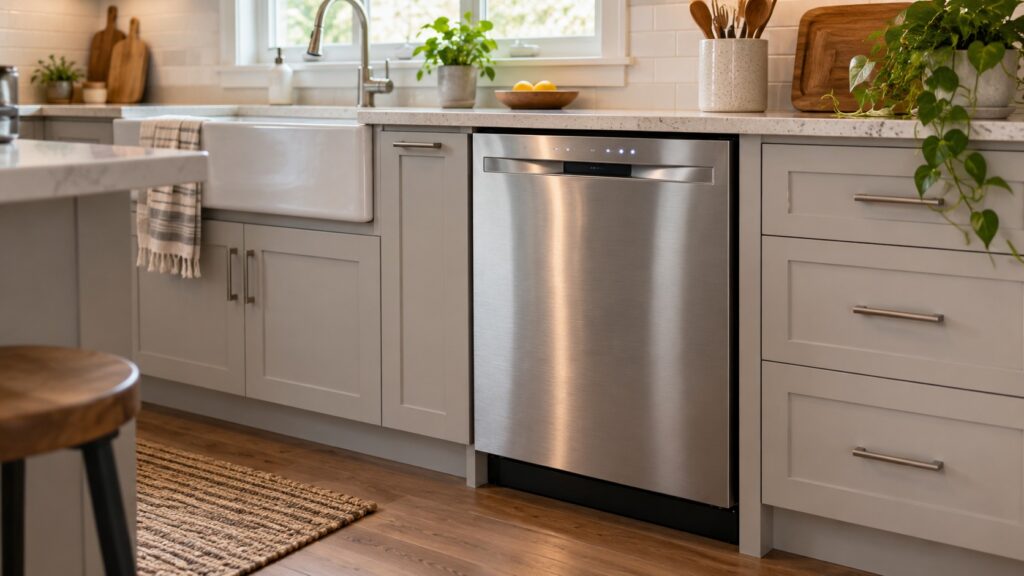
If you typed “how long is lg dishwasher cycle” into a search box, there is no single answer, and this site does not publish cycle times, so we will not quote any. The length depends on the cycle you pick, the options you add, how soiled the load is and how hot the incoming water is. The cycle time for your exact model and cycle is printed in your owner’s manual and often shown on the display. What this guide explains is the part that stays the same: the stages every cycle moves through, why the same cycle can run longer on some days, and what a cycle that never seems to end is telling you.
How long is an LG dishwasher cycle?
It depends, and honest sources say so. Different cycles on the same LG dishwasher are built for different jobs. A light, quick program is aimed at lightly soiled dishes. A normal program balances time and result, and a heavy program spends longer on baked-on food. Adding an option, such as extra drying or a high-temperature wash, usually lengthens the run. The display on many models shows the estimated time, and the owner’s manual lists the cycles for your model. Treat the on-screen estimate as an estimate: it can change during the cycle as the machine reads the water and the soil.
If you came here because your cycle seems to take much longer than it used to, the next sections explain why that happens and what to check. Write down the cycle you chose, the options you added and the time the display showed, because those three details make any comparison meaningful.
What stages does an LG dishwasher cycle go through?
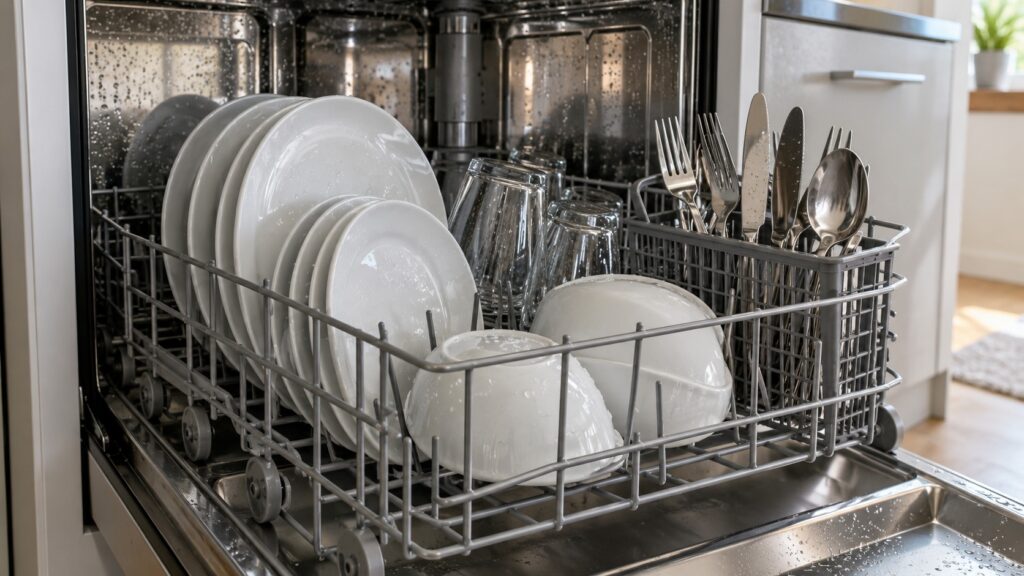
Every dishwasher cycle follows the same basic order, whatever the brand. First the tub fills with water. The water is heated, detergent is released from the dispenser and the spray arms wash the load. LG’s QuadWash models spray from four directions, and a diverter sends the water to one group of jets at a time, as our guide to how LG QuadWash works explains. Next come one or more rinses with clean water, and the pump empties the tub through the filter. Finally the dishes dry. The LG dishwashers listed on this site show Dynamic Heat Dry on their spec sheets, so the final stage includes heat, not just air.
The stages overlap in time and you will hear the pump, the spray and the drain take turns. A quiet pause in the middle is normal, because the machine is often heating water or waiting for a sensor reading.
Why does the same cycle sometimes run longer?
Dishwashers adapt, and the adaptation shows up as extra minutes. Our QuadWash guide notes that these machines can extend a cycle when the water is not reaching temperature or when the soil sensor keeps seeing dirt in the water. Several ordinary things trigger it. Very cold incoming water means the heater has more work to do. A heavily soiled load keeps the sensor reading dirty water. A clogged filter returns debris to the tub water so the machine keeps washing. Extra options add their own stages. A long cycle that ends with clean, dry dishes is the machine compensating, not failing, and it is usually fixed by clearing the filter and checking the hot water.
What if the cycle never ends or stops early?
Two patterns matter. A cycle that runs far longer than usual and leaves dirty or wet dishes points to the water path or the heat. Check that the filter is clean, that the spray arms spin freely and that the hot tap runs warm. Our guides on a dishwasher that is not draining, one that is not cleaning and one that is not drying cover each branch. A cycle that stops early and shows a two-letter code is a different case, and the code’s own page explains it, such as our LG dishwasher OE code guide.
If water is standing in the tub after the cycle, do not run another one. If you see water leaking onto the floor near the electrical connection or smell burning, switch off the breaker at the panel while standing on a dry floor and call for service. Do not remove panels or reach into the pump area yourself.
How can you help your dishwasher finish sooner?
Most of what helps is routine. Scrape large food off but do not rinse everything, since the sensor needs some soil to judge the load. Run the hot tap until it is warm before you start the dishwasher. Load the racks so that water can reach every item and so that nothing blocks the spray arms or the dispenser door. Use the right detergent and keep rinse aid filled because it helps water leave the dishes and speeds drying. Clean the filter on schedule, as our LG dishwasher maintenance guide explains. If you still have a problem, our LG dishwasher repair page explains how a visit works.