TL;DR: LG UltraHeat is the brand’s name for a high-output gas burner built into select ranges and cooktops, designed to bring a large pot to a boil faster than the range’s other burners. It is one burner among several, not a description of the whole appliance, and it works through a wider burner head and a larger gas orifice rather than any electronic control.
Shoppers run into the name on spec sheets and burner-cap labels and often assume every burner on the range performs the same way. It does not. A typical LG gas range mixes one or two UltraHeat burners with standard and simmer burners on the same cooktop, and knowing which burner is which changes how you should be using the range day to day. This guide looks at how an lg ultraheat burner actually works, so you can tell it apart from the range’s other burners at a glance.
What makes an UltraHeat burner different from a standard one?
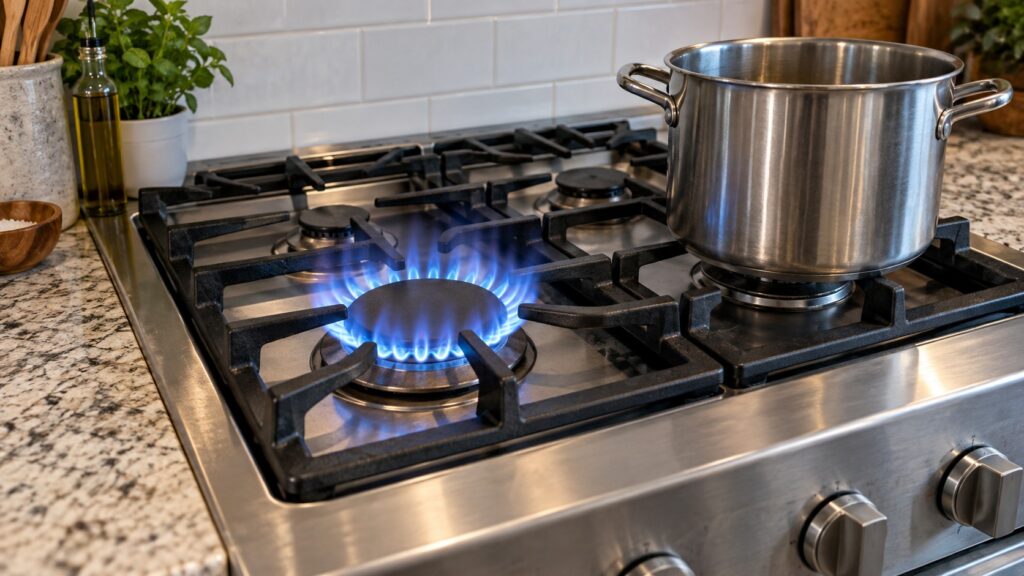
The difference is almost entirely mechanical. An UltraHeat burner uses a wider burner head with more and larger flame ports, fed through a bigger gas orifice than the standard burners on the same range. More gas flowing through more ports produces a larger, hotter flame footprint under the pot, which is what drives the faster boil time. There is no separate heating element, no electronic boost mode and nothing to activate — the burner simply moves more heat into the cookware whenever it is lit, at any setting you choose on the dial.
How do I tell which burner on my range is UltraHeat?
Check the burner cap or the control panel graphics near each knob — LG marks the UltraHeat position directly, since the burner hardware itself looks similar to the others at a glance. The owner’s manual for your specific model also maps each control knob to its burner. If the range has more than one high-output burner, the front and rear positions can differ by model, so do not assume symmetry without checking.
Is UltraHeat the same idea as induction cooking?
No, and this is where the two most common “why is my burner hot” questions collide. UltraHeat is a gas burner — it heats through an open flame and a larger burner head, the same basic mechanism as any gas burner, just scaled up. Induction cooking, which LG also sells on separate cooktop and range models, heats the pot itself through a magnetic field and involves no flame at all. If your cooktop has no visible flame ports and heats only with induction-compatible cookware, it is not an UltraHeat burner regardless of how fast it brings water to a boil. Our how LG induction cooktops work guide covers that separate mechanism, and our gas vs. induction buying guide compares the two families for anyone shopping between them.
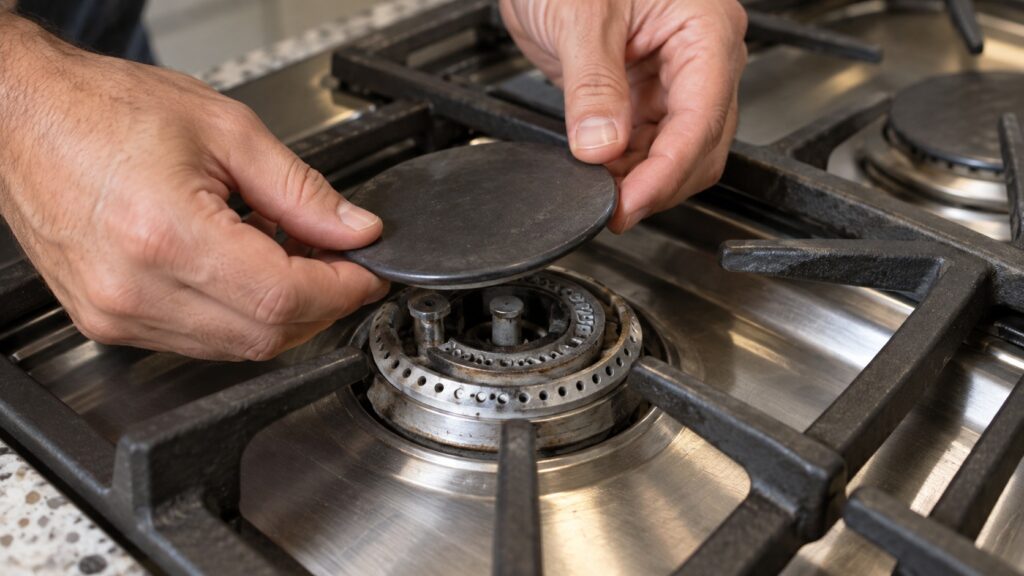
Why does the flame from an UltraHeat burner look different?
A larger burner head with more ports produces a wider ring of individual flames than a standard burner, and at full output that ring often looks taller and more blue than a simmer burner’s flame. That appearance is normal for the burner’s design and is not, on its own, a sign of a problem. What is worth attention is an uneven flame — some ports lit and others dark, a yellow or orange tint instead of blue, or a flame that will not stay lit at low settings. Those point at a clogged port or an air-mixture issue rather than the burner’s design.
Does an UltraHeat burner use more gas than a standard one?
Yes, at a given setting it does — more flame ports and a larger orifice mean more gas flows through the burner to produce that larger flame footprint, which is the entire mechanism behind the faster boil. In practice this rarely shows up as a noticeable cost difference, because the burner is typically used for the specific job it is designed for — bringing a pot to a boil quickly — rather than running continuously the way a simmer burner might during a long braise. Once the pot reaches temperature, most cooks turn the burner down to a lower setting anyway, and gas draw at low settings on an UltraHeat burner is comparable to a standard burner at the same setting.
Does an UltraHeat burner need different maintenance?
The burner head and cap need the same routine most gas burners need: removing and washing the cap and head when spills bake onto them, and clearing the flame ports with a soft brush or a straightened pin rather than a wire that can widen a port. Because UltraHeat ports are more numerous and packed closer together, a boiled-over pot tends to clog more of them at once than it would on a standard burner, so it is worth checking this burner first if the range starts lighting unevenly.
What should I do if the UltraHeat burner won’t light or runs weak?
Start with the simple checks: confirm the burner cap is seated correctly, clear any visible debris from the ports, and make sure the igniter is clicking when you turn the knob. If the burner lights on other positions but not on high, or if the flame is noticeably weaker than it used to be, the regulator or the orifice itself may need a technician’s attention rather than a cleaning. Our range burner won’t light guide walks through those checks appliance-wide, and it is worth reading even if only one burner on the cooktop is affected.
We are an independent LG appliance repair company, not a factory service arm, and every visit starts with a diagnosis rather than a guessed part. If a burner on your LG range is behaving oddly, schedule a visit or start with our LG range repair page for a fuller list of what we check on gas cooktops.