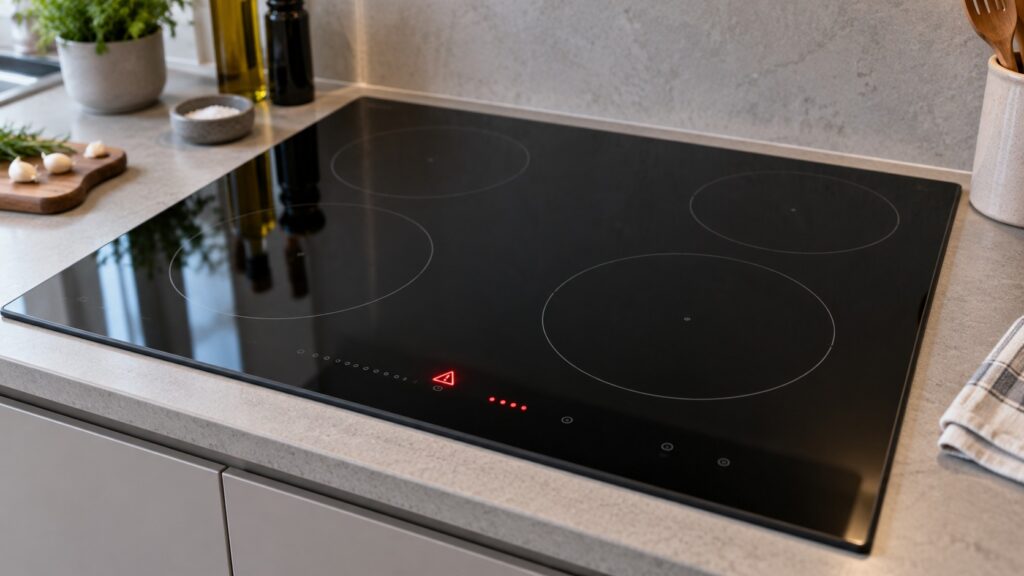
An LG cooktop F33 code is an induction burner sensor failure — the temperature sensor that watches one cooking zone is reading out of range, and the control shuts that zone down rather than keep driving power into glass it cannot measure. F34 is its close relative, a burner sensor or overheat condition on the same zone. Two more displays belong in the same conversation: F3, a touch key that reads as stuck, and H5, which is not a fault at all.
What does an LG cooktop F33 code mean?
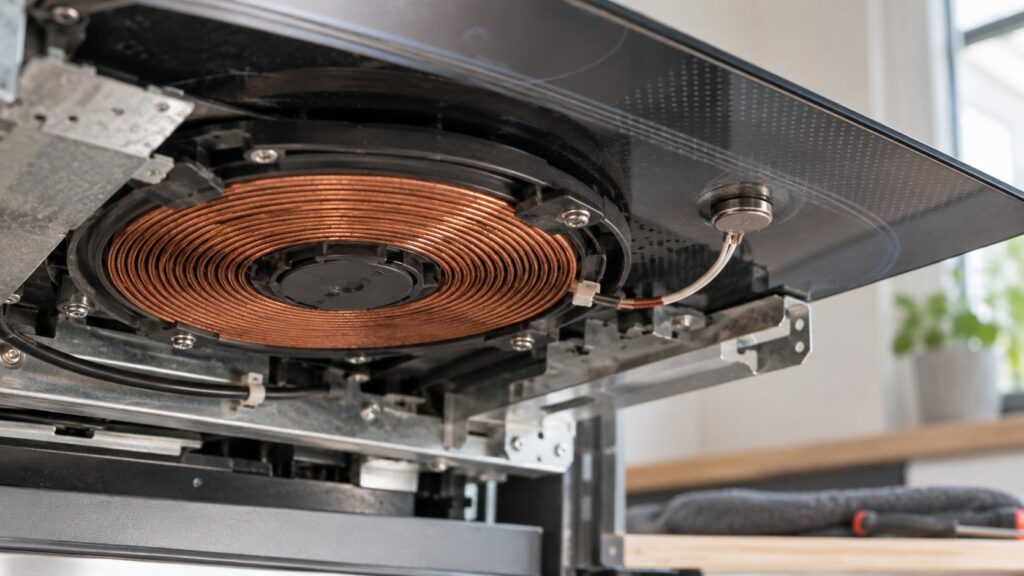
Under the ceramic surface of each induction zone sits a coil and, pressed up against the glass, a small temperature sensor. The coil makes the heat in the pan; the sensor tells the electronics how hot the glass underneath has become. That feedback is what lets the zone hold a low setting without scorching and what protects the glass from thermal damage. When the sensor reads a resistance the control cannot interpret — open circuit, short, or a value far from anything plausible — the zone is disabled and F33 appears.
Note what F33 does not say. It says nothing about your pan, nothing about the power supply and nothing about the other zones. If one zone is dead with a code and the rest cook normally, the fault is local to that zone, and that narrows a repair to one coil assembly rather than the whole appliance.
Why would a burner sensor overheat instead of fail?
F34 tends to appear in service rather than at start-up, which is the useful difference. The sensor works and reports honestly, but what it reports is a surface hotter than the design allows. The usual reasons are physical: an empty pan left on a high setting, a heavy pan boiled dry, a spill baked onto the glass acting as insulation, or cooling air blocked under the counter.
That last one surprises people. An induction cooktop has electronics directly under the surface and a fan to cool them, and the cutout needs the clearance stated in the installation instructions. A drawer packed to the underside of the appliance, or a slab of insulation added during a remodel, changes the airflow and produces overheat codes on a cooktop that behaved perfectly for years.
Is F3 the same kind of problem?
No, and it is the one on this list that owners most often clear themselves. F3 means the control is reading a touch key as continuously pressed. A puddle of boil-over on the panel, a wet cloth left on the glass, a lid resting across the controls or heavy grease film will all do it, because a capacitive key cannot tell a finger from a film of liquid.
Turn the cooktop off at the breaker, let the surface cool, clean the control area thoroughly and dry it, then restore power. If F3 returns on a clean, dry, cool panel, the touch board or its ribbon is at fault. A cooktop that will not respond at all is a different starting point — our guide to an LG cooktop that will not turn on covers power and lock-out before any code is involved.
Why is H5 not a fault?
H5 is the hot-surface indicator. Induction heats the pan, not the glass, but the pan returns heat to the surface it stands on, and that surface stays hot after cooking ends. The H reminds you not to touch it. It disappears on its own as the glass cools, and there is nothing to repair, reset or call about.
It is worth knowing this because H5 is sometimes reported as a fault by people who have just moved to induction from a radiant surface and expect the display to be blank. If you want the background on why the glass behaves this way, our explanation of how LG induction cooktops work covers the physics without the codes.
There is one more pattern worth recording before you pick up the phone. Note whether the code arrives as soon as the zone is switched on, or only after ten or fifteen minutes of hard boiling, and whether it follows the zone or follows the pan. A code that moves with the pan is usually an overheat provoked by cookware — a warped base leaves an air gap and the glass takes heat that should have gone into the food. A code that stays with one zone whatever you put on it is the zone’s own sensor, and that is a part, not a habit.
What can you check before calling?
A technician goes further: the sensor is measured cold and warm against the service value, the harness and connector are inspected, the coil is checked, and only then is the assembly replaced. A zone that never heats but shows no code at all belongs on our page about an induction cooktop that will not heat instead.
When should you call?
Call when F33 or F34 returns after a cool-down and a clean, when more than one zone reports a code, when the glass shows a crack or a chip anywhere, or when the cooktop smells hot after a fault. A cracked induction surface is an immediate stop: turn the appliance off at the breaker and do not use it, because the electronics and the wiring under the glass are no longer protected from spills.
We are an independent repair company, not a factory service arm. Pricing starts from a diagnostic visit — from $89 — with the estimate confirmed before work begins, and the line to reach is 1-844-612-0846. LG cooktop repair covers burner sensors, coil assemblies, touch boards and controls, and you can schedule a visit online.