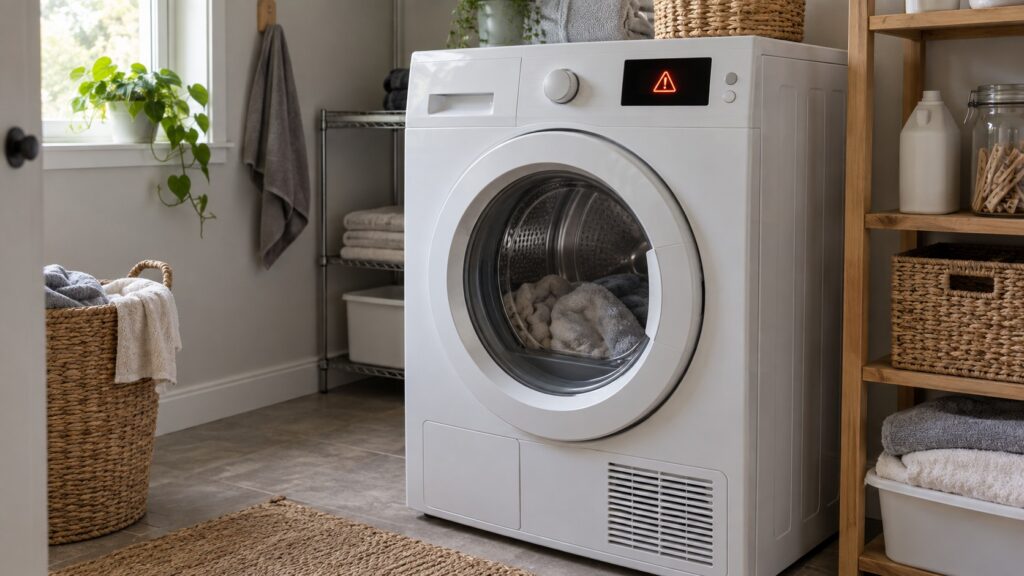
An LG dryer tE code is a thermistor code: the control is reading the temperature sensors and does not like what it sees. It is not a heating element code and not a vent code, even though a blocked vent is one of the things that can push a good sensor out of range. There are four of them — tE1, tE2, tE3 and tE4 — and they point at different sensors and different situations, so the first useful step is reading which number came up rather than treating them as one fault.
What does a tE code mean on an LG dryer?
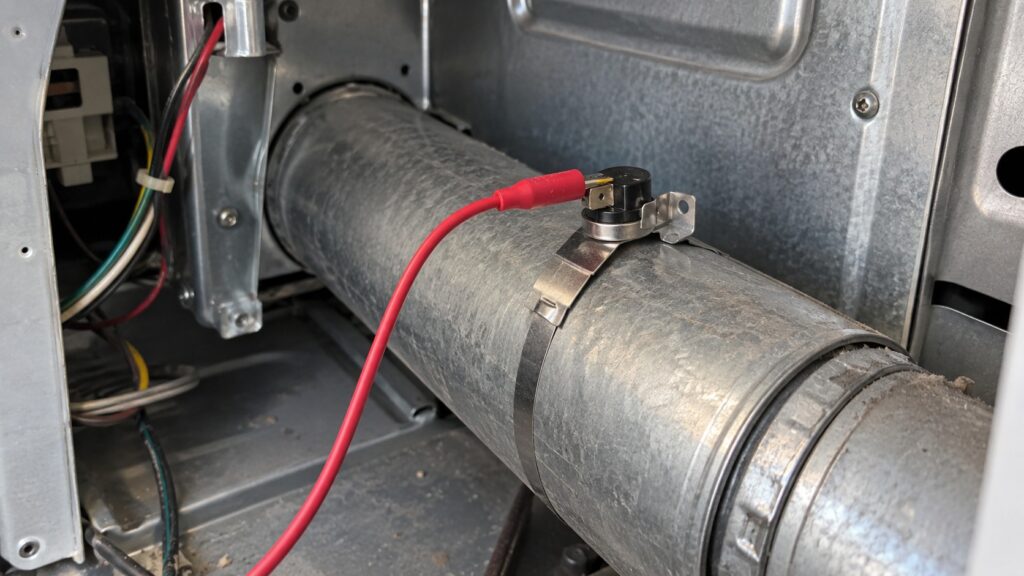
A dryer does not measure how dry your laundry is by looking at it. It watches air temperature at two points, compares that with what the cycle asked for, and adjusts the heat. Those two measuring points are thermistors — small sensors whose electrical resistance changes with temperature. When the control cannot make sense of one of them, it stops the cycle and writes a tE code rather than keep heating blind, which is the behavior you want from a machine with a heater in it.
That is why the code arrives before, not after, the damage. Owners often report that the dryer ran normally yesterday and today stops a few minutes in with tE3 on the display. Nothing broke overnight in the drum or the belt; a sensor drifted, a connector corroded, or airflow changed enough that the numbers stopped agreeing.
Which thermistor is which?
tE1 belongs to the inlet side, near the heater, where air is hottest. tE3 belongs to the outlet side, where air leaves the drum on its way to the vent. Knowing which end reported the fault tells a technician where to open the machine first, and it also tells you something about the likely cause: inlet sensors fail from heat cycling, outlet sensors fail from lint and moisture.
tE4 is different in kind. Both sensors may read numbers that look reasonable on their own, but the difference between them, or the rate at which the temperature climbs, does not match what the cycle expects. That pattern shows up when airflow is restricted, when a heater relay is sticking, or when one sensor has drifted rather than failed outright.
Can a tE2 clear itself in cold weather?
Yes, and this is the one tE code that frequently needs no repair at all. A dryer in an unheated garage or a Florida laundry room after a cold snap can start with the whole cabinet near the low end of the sensor’s working range. The control sees a reading it treats as implausible and refuses to start. Give the room and the machine time to warm up, run a short cycle, and the code does not come back.
Two rules keep this honest. First, a tE2 that returns in warm weather is not a cold-weather reading any more and should be treated as a sensor fault. Second, a dryer installed somewhere that is genuinely cold most of the season will keep doing this, and the answer is the installation site rather than a part.
What blocks heat before the thermistor is at fault?
Restricted airflow produces temperature readings that look like a sensor problem. Hot air that cannot leave the drum drives the inlet sensor up fast and leaves the outlet sensor reading a stalled, smothered airstream, and either of those can be reported as tE4 or push the machine into a shutdown. Before anyone buys a sensor, the vent run deserves a look — the same work described in our guide to dryer vent cleaning.
Check the lint screen every load, pull the duct at the back and look through it, and walk outside to see whether the flap opens when the dryer runs. Crushed flexible duct behind the machine is the single most common finding in a home laundry room. If the machine is also taking two cycles to dry a normal load, read that symptom alongside the code: our page on a dryer that will not heat covers the overlap between weak heat and blocked air.
How is a thermistor tested?
That order matters on the invoice. A thermistor is an inexpensive part; a control board is not, and a diagnosis that starts at the board usually ends with an owner paying for electronics that were reading a faulty sensor correctly all along.
When should you stop and call?
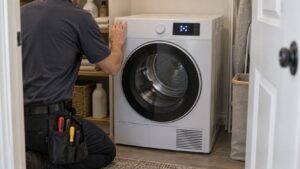
Clean the lint screen, clear the vent, warm a cold room and run one more cycle — that is the whole list of owner steps for a tE code. Beyond it, the work happens inside a cabinet that holds a heater, a blower and, on gas machines, a burner and a gas line. Stop there and call if the code returns after the vent is clear, if tE2 shows up in warm weather, if you smell scorching, or if the dryer trips a breaker.
We are an independent repair company, not a factory service arm. Pricing starts from a diagnostic visit — from $89 — with the estimate confirmed before work begins, and you can reach us at 1-844-612-0846. LG dryer repair covers thermistors, harnesses, heaters and controls on DLE, DLG and WashTower machines, and you can schedule a visit online. The code page for tE1 on an LG dryer has the short version if you only need the meaning.