TL;DR: An LG over-the-range microwave has two kinds of filter. The metal grease filters under the unit are washable and need cleaning about once a month, while the charcoal filter, used only when the microwave recirculates air into the kitchen, is not washable and must be replaced on a schedule. Clean the right one, with the unit off, and the fan, light and venting all work better.
Cooking grease rises, and an over-the-range microwave is the first thing it meets. Left alone, it builds up in the filters, drips onto the vent fan, and can show up as a sticky film on the control panel. LG microwave filter cleaning is a five-minute job that most owners never do, which is why it is one of the cheapest ways to keep this appliance running well. This guide covers both filters, how often to service them, and what to do when the problem is bigger than a dirty screen.
Which filters does an LG over-the-range microwave have?
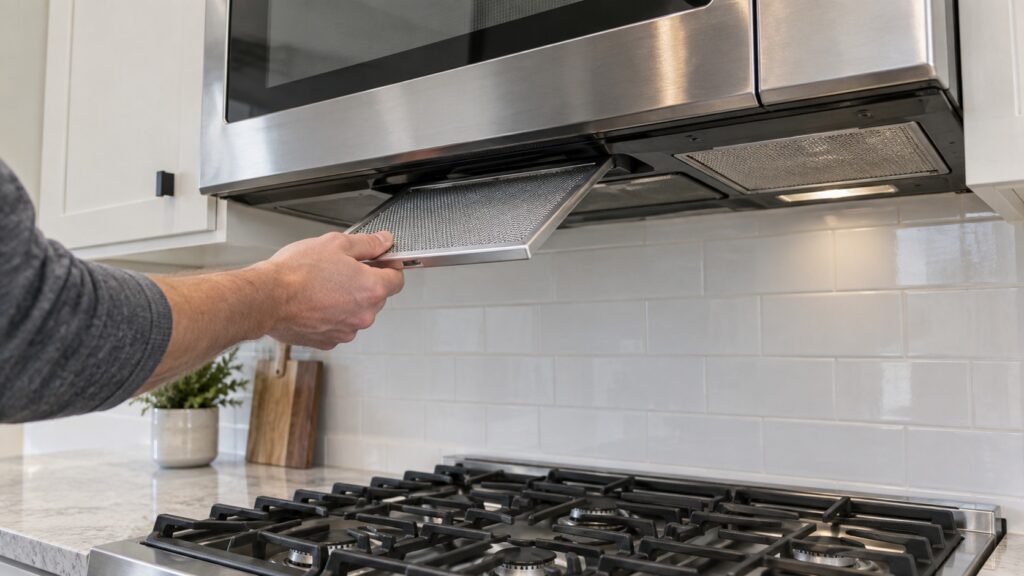
There are two, and they do different jobs. The grease filters are the flat metal mesh panels you can see on the underside of the microwave, over the cooktop. They catch airborne grease and smoke particles before they reach the fan. The charcoal filter is a separate, usually thicker pad found behind the top vent grille. It only matters when the microwave is set up to recirculate air instead of venting outdoors, because its job is to absorb odors before air returns to the room.
How the microwave is installed decides whether you need the charcoal filter at all. If yours vents outside through a duct, there is normally no charcoal filter fitted. If it recirculates, it needs one. Our LG over-the-range microwave venting guide explains the two setups, and the models this site lists for the category include LMV1764ST, LMV2031ST, LMHM2237ST and MVEL2137F.
How do I clean the grease filters?
Turn the microwave and cooktop off and let the surfaces cool first. Then work through a simple routine.
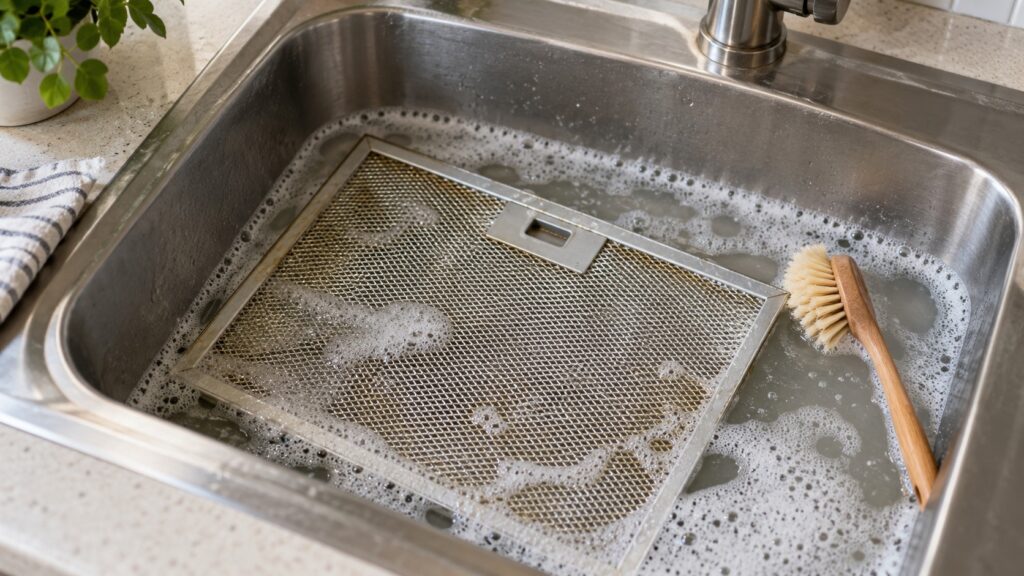
Slide the filter toward the center or release its latch; the way it comes out depends on the model, so check your manual. Fill a sink with hot water and a strong degreasing dish soap, and soak the filter for several minutes. Scrub gently with a soft brush in the direction of the mesh, rinse in clean hot water and let it dry fully before it goes back. If your manual says the filters are dishwasher-safe, the top rack is the usual place, but heavy grease can discolor aluminum, so hand washing is the safest default. Do not use abrasive pads, bleach or oven cleaner on the mesh, because they can damage or pit the metal.
A filter is dirty enough to clean when it looks gray or sticky, or when you can no longer see light through the mesh. Cooking that involves a wok, bacon or heavy searing means you should check them more often than monthly.
When should I replace the charcoal filter?
Charcoal does not wash clean; the pores that absorb odor fill up and stay full. Replace it on the interval in your owner’s manual, which for many LG models is roughly every six months, and sooner if kitchen odors linger after cooking. The filter sits behind the top vent grille, which you can usually open by removing a screw or two. Match the replacement to your model number, since the size and shape differ between lines.
If you vent outdoors, do not fit a charcoal filter just because one is for sale. It will not help a ducted setup and can restrict the airflow the microwave needs. If you are unsure which setup you have, look for a duct on top of the microwave and a vent in the wall or roof above it.
What else collects grease around the microwave?
With the filters out, take a minute to wipe the visible vent grille, the underside of the cabinet and the lens over the cooktop light. Grease can drip down into the vent slots and build up on the fan housing, where only a technician should clean it. Do not spray liquid into the vent openings, because the fan, the light socket and the electronics are right behind them. If you can see a heavy drip or smell old, burnt grease when the fan runs, the buildup is past what a surface wipe will fix.
Grease also affects the microwave’s cooking side. A greasy film on the interior ceiling or the waveguide cover is a common cause of arcing, as described in our guide to LG microwave sparking. Wipe the interior regularly, and keep food splatter off the small waveguide cover on the interior side wall.
How do I know the problem is more than a dirty filter?
A clean filter fixes weak suction and an odor problem, but it does not fix everything. If the fan is loud, rattles or does not run at all, the fan motor or its control may be at fault. If the cooktop light fails, check the bulb first. If the microwave does not heat, filter cleaning will not help; see LG microwave not heating. For a wider view of how to use the appliance well, read the LG microwave tips guide.
If a unit is old and several things are going wrong, weigh a repair against a replacement; the LG microwave repair-or-replace guide sets out how. When it is time for a technician, see LG microwave repair or schedule a visit.