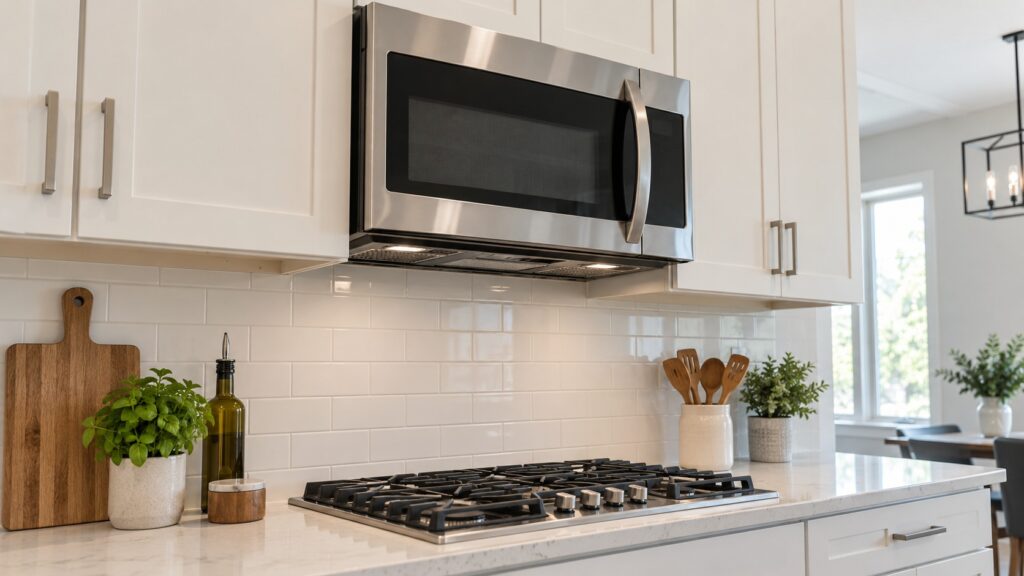
LG ExtendaVent is the name LG gives to the built-in vent system on some of its over-the-range microwaves. On this site the spec sheets for the LG LMHM2237ST, LMV1764ST and LMV2031ST list the ventilation as a “built-in vent hood (ExtendaVent 2.0 on select models).” In plain terms, it is the part of the microwave that does the job of a range hood: it pulls cooking steam, smoke and grease up from the cooktop below. What ExtendaVent 2.0 does on your exact model, and what separates it from other versions, is set out in your owner’s manual, not in a general guide like this one.
What is ExtendaVent on an LG microwave?
An over-the-range microwave replaces the hood that would otherwise hang over your range. Because it sits right above the burners, it carries a fan, a light for the cooktop and a set of filters, in addition to the oven cavity. LG gives its vent system a brand name, ExtendaVent, the same way it names its door cooling or its cooking modes. The name appears next to the word “Ventilation” on the model pages, and the sheets add that the “2.0” version is fitted on select models only. That wording matters: two LG over-the-range microwaves can look nearly identical in a showroom and still differ in the vent system, so the model number on your rating plate is the only reliable guide.
We are deliberately careful here. The site’s model pages confirm the name and the fact that it is a built-in vent hood. They do not describe airflow figures, fan speeds or how the “2.0” generation changed the hardware, and we will not invent them. If a number matters to you, such as the airflow your kitchen needs, take it from the spec sheet or manual for your model.
How does an over-the-range microwave vent actually work?
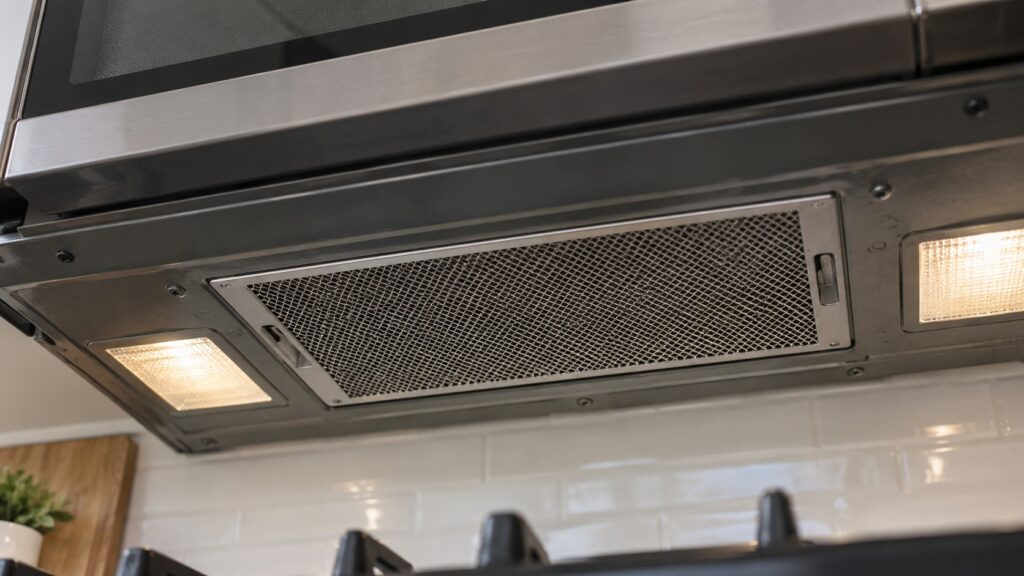
Whatever the brand name, the basic mechanism is the same across these appliances. A fan draws air in from the cooking surface, forces it through metal grease filters that catch airborne fat, and then sends it one of two ways. If the microwave is ducted, the air goes through a duct and out of the house through a wall or roof cap. If it is not ducted, the air passes a charcoal filter behind the top grille and returns to the kitchen. A damper, which is a small flap, opens when the fan runs and closes when it stops so that outdoor air and drafts stay out of the cabinet.
Our LG over-the-range microwave venting guide covers the installation choice in detail. The part worth remembering here is that the same vent system gives very different results depending on whether it is ducted or recirculating. A recirculating setup removes odor and grease but does not carry heat or moisture out of the room.
Why would the version number matter when you shop or call for service?
A name like ExtendaVent 2.0 tells you the manufacturer has revised the system at least once. It can matter in three practical situations. When you compare two microwaves, ask which vent system each one carries, and read the manual or spec sheet rather than the box. When you order a replacement filter, the shape depends on the model, so give the full model number and not just the feature name. And when you describe a problem to a technician, a plain account of the symptom, such as weak suction, a rattle or a fan that will not stop, helps more than the feature name does.
What does the vent need from you to keep working?
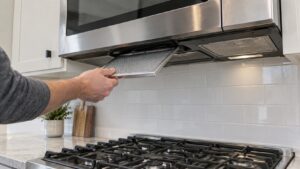
Most vent complaints on these microwaves trace back to a few ordinary things. The metal grease filters under the unit are washable and need regular cleaning, more often if you cook with a lot of oil; the interval is in your owner’s manual. A greasy filter restricts airflow, and the fan then sounds the same while moving far less air. On a recirculating setup the charcoal filter is not washable and has to be replaced on the interval in your owner’s manual, because a saturated one looks identical to a fresh one. Our guide to LG microwave filter cleaning explains which filter is which and how to clean the right one.
On a ducted installation, also check that the damper and the outside cap open freely. A cap clogged with lint or nesting debris is invisible from the kitchen. With the fan running, hold a tissue near the outdoor cap and see that air is leaving the building. Do not reach into the fan housing or spray cleaner into the vent slots; the light socket, the fan motor and the electronics sit right behind them.
What if the vent seems weak, noisy or dead?
Work from the simple to the complex. First, clean the grease filters and look at the fan speeds the control offers. A weak flow with clean filters on a ducted unit points toward the duct, the damper or a blower set for the wrong direction, which is mostly an installation question. A new rattle can mean a loose filter that is not seated, or a fan that has collected grease. A fan that does not run at all, or a unit that trips the breaker, is not an owner repair. Switch the microwave off at the breaker and book a visit, and if you ever see sparks, smell burning or find water around the unit, switch off the breaker at the panel while standing on a dry floor and keep everyone away from it.
Do not open the microwave’s outer cabinet. It contains a high-voltage capacitor that can hold a charge even when the unit is unplugged, so opening it is a technician’s job. If the microwave also shows an inverter code, our guide to LG microwave inverter error codes explains what F11, F13 and F19 mean. For general technician help, see our LG microwave repair page.
Is ExtendaVent a reason to pick one microwave over another?
Only a small one, and only if the model you are looking at actually carries it. The better questions are practical. Does the microwave fit the opening above your range, and can it vent the way your kitchen allows, through a wall, through the roof or back into the room? Our comparison of an LG over-the-range versus a countertop microwave helps with that choice. If you are reading a model page, such as the one for the LG LMHM2237ST, treat the ventilation line as the starting point and confirm the details in the manual that ships with the unit.