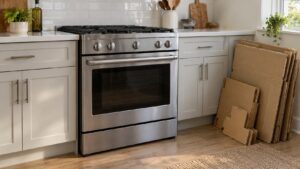
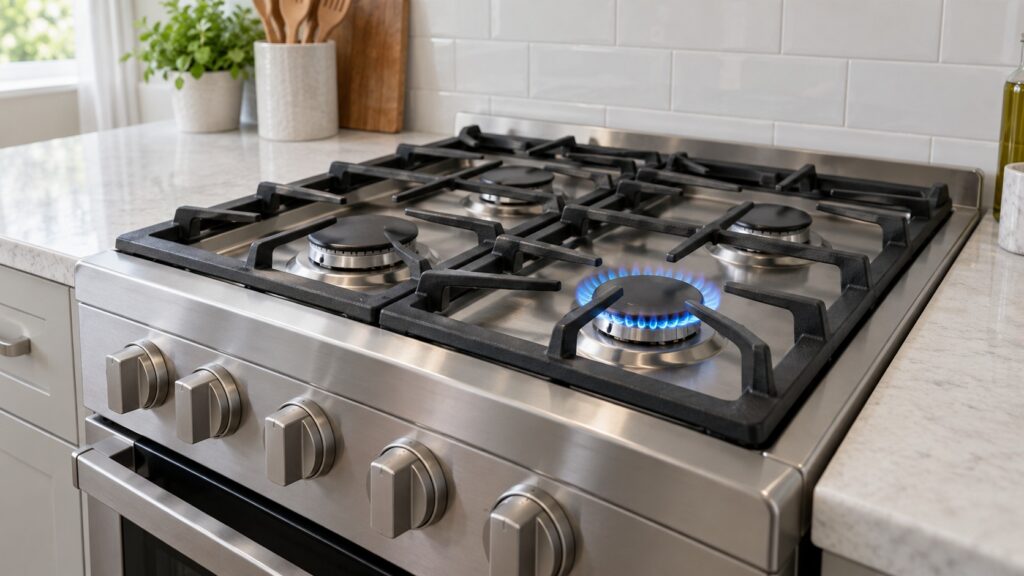
For LG gas range burner cleaning, let everything cool, lift off the grates and burner caps, scrub the caps, clear the ports with a straight pin or toothpick without enlarging them, wipe the igniter lightly and dry every part before you set it back. A burner that clicks but does not light, or lights unevenly, is most often dirty or wet. If you ever smell gas, stop and leave the kitchen.
A gas burner is simple: gas flows through a small opening, mixes with air and meets a spark. Anything that disturbs one of those three things makes the flame yellow, weak, noisy or slow to light. Boiled-over sauce, grease mist and damp caps are the usual causes, and a thorough clean takes about twenty minutes. This guide shows how to do LG gas range burner cleaning properly, what to look at on the igniter and how to put the parts back so the flame sits where it should. It applies to the sealed burners on most LG gas ranges, but your owner’s manual has the final say for your model.
What do I need before I clean the burners?
Gather a soft sponge, a non-abrasive dish soap, warm water, a soft toothbrush, a straight pin or a wooden toothpick, a cotton swab and a dry towel. Make sure the range is off, every knob is in the off position and the grates and caps are cool to the touch. If you have just cooked, wait at least thirty minutes. For extra safety you can switch the range’s gas valve off, but turning the knobs off and waiting is enough for a normal cleaning.
Skip steel wool, scouring powder and oven cleaner on the burner parts. They scratch the finish, and oven cleaner can leave a residue that burns off with a strong smell and can discolor the caps. A soft brush and hot soapy water beat harsh chemicals for this job.
How do I clean the grates, caps and burner heads?
Lift the grates off first and wash them in the sink. Next lift off each burner cap. The cap sits on top of the burner head, and it can be a different size from the one next to it, so it helps to wash one burner at a time or to keep the caps in a labeled row. Soak the caps for a few minutes in hot soapy water, then scrub the underside, where the baked-on residue collects.
Now look at the burner head, the base that the cap sits on. The small slots around its rim are the ports where the flame forms. If they are clogged, the flame will be patchy and a section of the ring will not light. Push a straight pin or a toothpick gently into each blocked port and flick the debris out; do not drill or widen the openings, because that changes the flame and can make it unsafe. Brush the head with a soft toothbrush and wipe it with a damp cloth.
Dry everything thoroughly. A damp cap or head is the number one reason a freshly cleaned burner will not light, since water in the ports blocks the gas. Leave the parts out for a while, or dry them with a towel and let them air for an hour before you reassemble.
How do I care for the igniter?
The igniter is the small ceramic or metal tip beside each burner head that makes the spark. Food and grease on it weaken the spark, so a burner may click for a long time before it lights, or may not light at all. With the range off and cool, wipe the igniter tip lightly with a cotton swab dampened with water or a little rubbing alcohol. Let it dry fully before you test. Never poke at it with a pin, and do not pull it: the tip is fragile and the wire behind it is not meant to flex.
If you hear clicking from every burner whenever one is lit, that is a normal sign that the spark system is active; but constant clicking after the flame is steady points to a dirty or wet igniter or cap. Our LG range burner won’t light guide goes through the symptoms step by step, including what to do when one burner is dead and the others work.
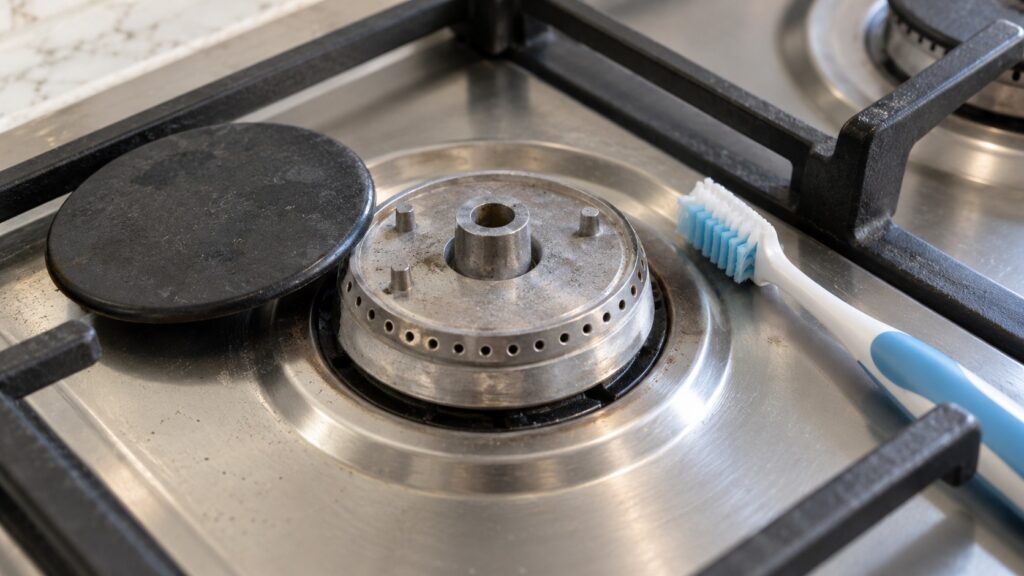
How do I reassemble the burner so the flame is right?
Put each cap back on its own burner head, and turn it slightly until it drops flat and does not rock. A cap that is crooked or on the wrong head is the reason for a lopsided or yellow flame. Set the grates back in place, making sure they are seated on all their feet. Then turn each burner on, one at a time, and watch the flame.
A healthy gas flame is mostly blue with a steady ring of small cones. A flame that is mostly yellow or orange, that lifts away from the burner or that makes a roaring noise points to a cap that is not seated, a clogged port or an air or gas setting that needs a technician. The way an LG UltraHeat burner shapes its flame is described in our guide on how LG UltraHeat burners work, which also helps you tell a normal high-power flame from a faulty one.
How often should I clean the burners, and when should I stop?
A quick wipe after each spill and a full cleaning of the caps and ports every month or two keeps most ranges trouble-free. If you cook with high heat or boil over often, clean more regularly. Stop and call for service if you smell gas, if a burner will not light after a good clean and dry, or if the flame stays yellow with the caps seated correctly. If you ever smell gas, do not use switches or the phone inside; open a window, leave the house and call your gas company from outside.
Oven cleaning is a different job, and our LG oven self-clean guide covers it. If a burner problem persists, the LG range repair page explains what a visit includes, and you can schedule a visit when you need one.