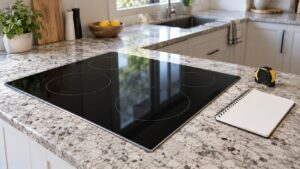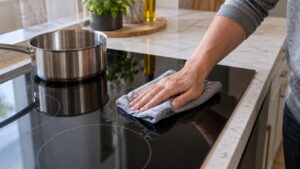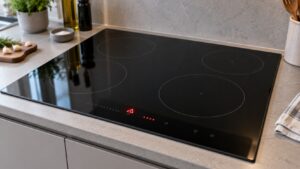
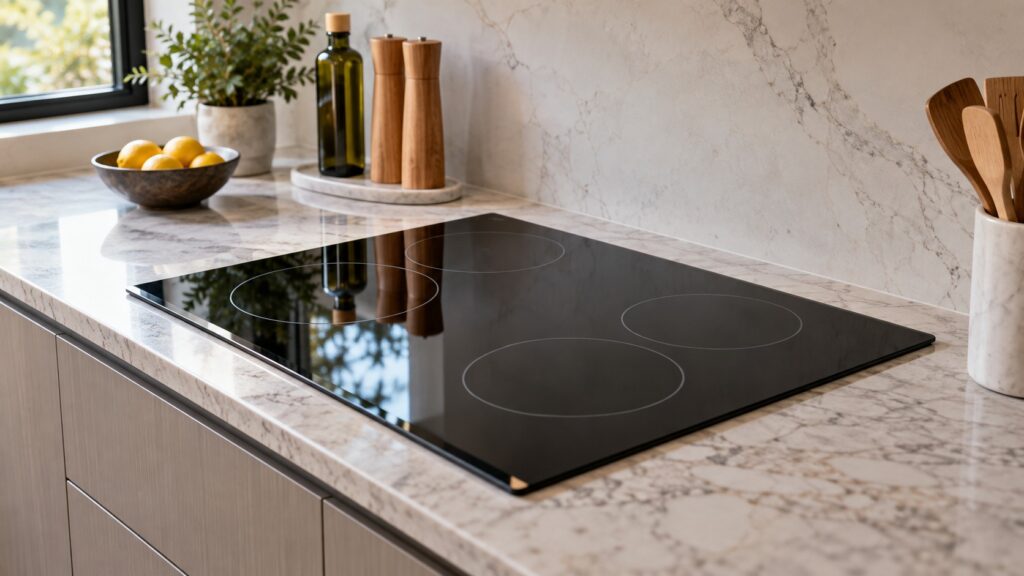
LG glass cooktop cleaning is simple if you follow one order: let the surface cool, lift loose crumbs, loosen the soil with a damp soft cloth and a cleaner made for glass-ceramic cooktops, use a razor-style cooktop scraper held at a low angle for anything that is stuck, and dry the glass so no film or water spots remain. On this site, the LG radiant glass cooktops are the LSCE365ST (36 in) and the LSCE305ST (30 in): both are black-glass electric radiant models with five radiant elements, a frameless glass-ceramic surface and touch controls, and the spec line for each one says wipe-clean glass surface.
How do you clean an LG radiant glass cooktop safely?
Start by switching every element off and waiting until the surface is cool. Both LSCE models carry a hot-surface indicator, and it should be dark before you put a cloth on the glass. A radiant surface can stay hot long after the element light has gone out, and a wet cloth on hot glass can scald you or crack the surface. Once it is cool, clear loose crumbs with a dry cloth, spray or wipe on a cleaner made for glass-ceramic cooktops and wipe in overlapping strokes. Buff dry with a clean lint-free cloth. That daily routine takes a minute and prevents almost every permanent stain.
Our LG induction cooktop maintenance guide makes the same point for induction glass: wipe before spills bake on, because a burned-on spill is behind most glass damage. The habit carries over to radiant glass, so do not leave spills for later.
What is the best way to remove burnt-on spills?
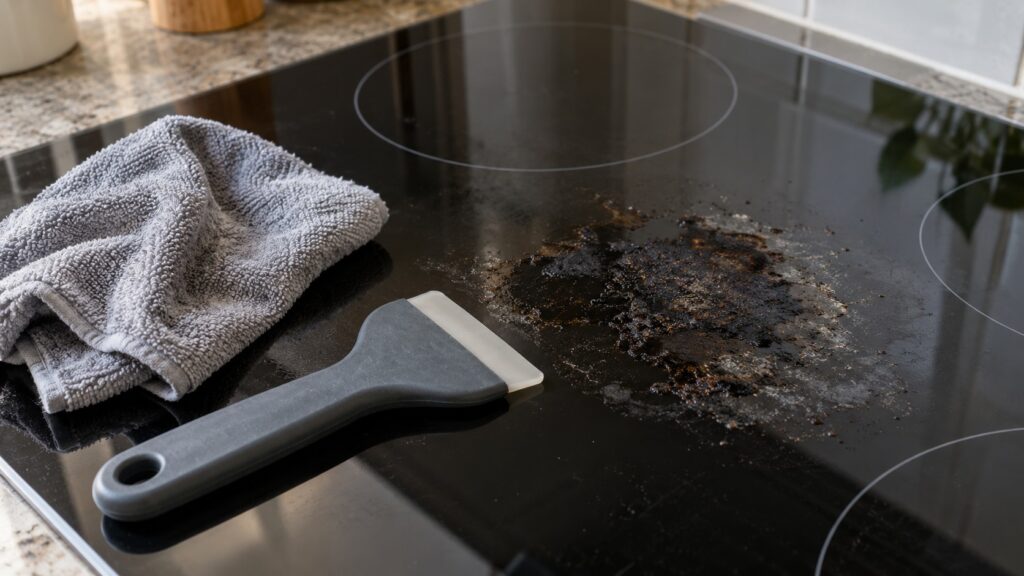
Let the surface cool, then soften the soil: lay a damp cloth over the spot for a few minutes, or apply cooktop cleaner and let it stand for the time its label gives. Then use a plastic scraper or a single-edge cooktop scraper made for glass, held at a shallow angle and pushed gently. Never use a metal putty knife, steel wool or a kitchen scouring pad, which can scratch glass-ceramic permanently. Sugar needs special attention: sugary spills such as jam, syrup or boiled-over fruit can pit or mark the glass if they are left to harden, so deal with them as soon as the surface is safe, and check your manual for its instruction on removing sugar while the surface is warm. Rinse off cleaner residue afterwards, because a film left on the glass can burn on at the next use.
How do you remove white haze, water spots and dark marks?
White haze and spots are usually mineral deposits or cleaner residue, and they come off with a cloth dampened with a little white vinegar and then a rinse with clean water; check that vinegar is acceptable in your manual before you use it. Dark streaks are more often residue than damage, so repeat the cleaner-and-cloth cycle before you decide the glass is stained. Gray or metallic marks can come from sliding cookware across the glass, so lift pots and pans rather than slide them. A mark that stays after proper cleaning may be a scratch or a pit in the glass itself, and no cleaner will remove that.
How do you clean around the touch controls?
Both models have touch controls and a control lock, which means moisture and cleaner should be kept off the panel. Use the control lock before you wipe, so a wet cloth cannot start an element or change a setting, then wipe the control area with a barely damp cloth and dry it at once. Do not spray cleaner directly on the panel and do not let liquid pool at the edge of the glass. If the panel will not respond after cleaning, or the controls will not unlock, our page on LG cooktop controls locked explains that it is a lock state and not a fault code.
What should you avoid doing to a glass cooktop?
Avoid the habits that scratch or crack glass. Do not use abrasive pads, powders or steel wool. Do not slide heavy cast iron, lift it. Do not leave a plastic bag, a dish towel or a wooden spoon on a warm surface. Do not set a hot lid or a hot pan on a cold, wet surface. Do not use the cooktop as extra counter space for heavy or sharp objects. Never use the oven cleaner you use for a self-cleaning oven on the cooktop. Our gas versus induction cooktop comparison shows how care differs by cooktop type, if you are choosing a replacement.
When does a glass cooktop need a technician?
Stop using the cooktop and call if the glass is cracked, chipped or has a deep gouge near an element, because a cracked surface can let spills reach live parts. Switch the cooktop off at the breaker with dry hands and keep liquid away from it. Call too if an element does not heat, if a zone stays hot after it is switched off or if the controls do not respond after you have cleaned and dried them. See our guide to an LG cooktop that will not turn on for the checks that come first, and our LG cooktop repair page explains what a visit covers.