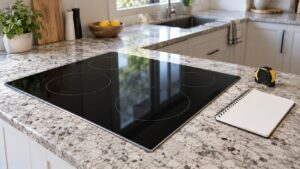
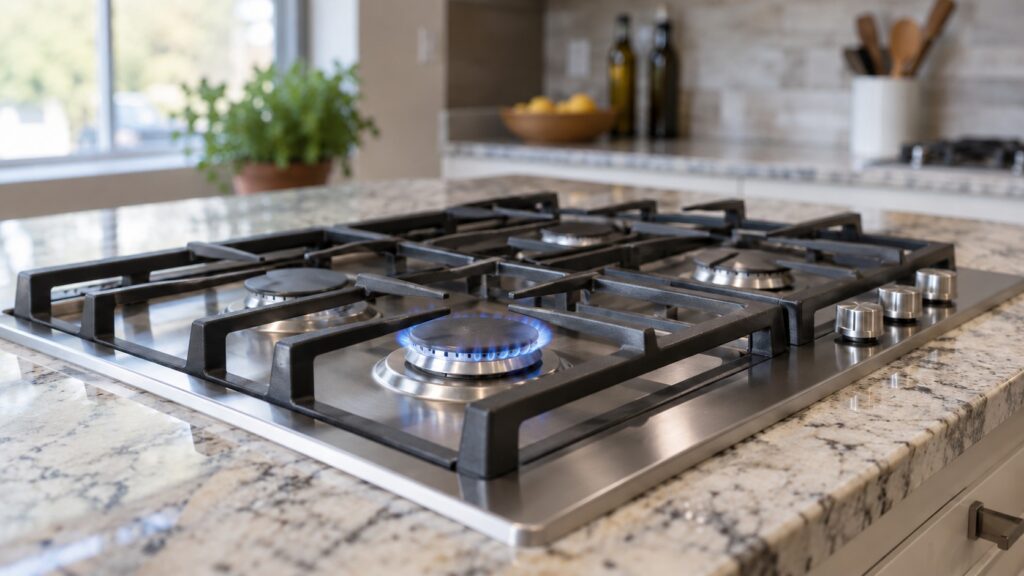
LG gas cooktop installation has two parts that should never be mixed up: the countertop and kitchen preparation, which you can plan and check yourself, and the gas connection, which belongs to a licensed installer. Everything on this page is about the first part. The gas line, the shutoff, the connection and the leak test are not a do-it-yourself job, and no guide should walk you through them. If you smell gas at any point, do not touch switches or flames: leave the house and call your gas utility or 911 from outside.
What do you need to know before an LG gas cooktop installation?
Start with the model. The five cooktops listed on this site are 30-inch gas cooktops with five sealed gas burners, continuous cast-iron grates and metal control knobs, set into the countertop as a drop-in or built-in unit. Our pages list the same features for all five: an UltraHeat Power Burner, electronic auto-reignition and removable grates. Those details matter for your plan because a built-in cooktop is only as good as the opening it sits in. Our CBGJ3027S model page shows the full spec list.
Write down your exact model number, then use the owner’s manual or the spec sheet for the cutout dimensions, the clearances to the wall and the space needed under the cooktop. This site does not publish those figures and nobody should work from a number remembered from another model. Ask the installer to confirm every dimension before anything is cut.
The spec lists for the CBGJ3027S, CBGJ3023S, CBGS3028S, LSCG307ST and LCG3011ST are identical on this site: the same burner count, the same grates, the same controls and the same install type. If you are choosing between them, the differences are not in the table, so check the owner’s manual, the finish and the retail listing for the model you plan to buy. Whichever you pick, the installation steps and the safety rules on this page do not change. A 36-inch model, the LCG3611ST, is also listed with the same features, and that one needs a wider opening, so confirm the width before you order.
Who connects the gas, and why?
A licensed installer, always. Gas work involves a supply line, a shutoff, a connection to the cooktop and a leak check, and a mistake is a safety problem rather than a cosmetic one. Our guide on gas versus induction notes simply that gas requires a gas line, while induction needs an adequate electrical circuit. If your kitchen has no gas line today, adding one is a separate project. Our gas versus induction cooktop guide helps you decide before you commit.
Do not test connections yourself, and do not use a homemade method to look for leaks. Leave that to the installer, and ask them to light every burner and confirm it works before they leave.
What should you prepare in the kitchen?
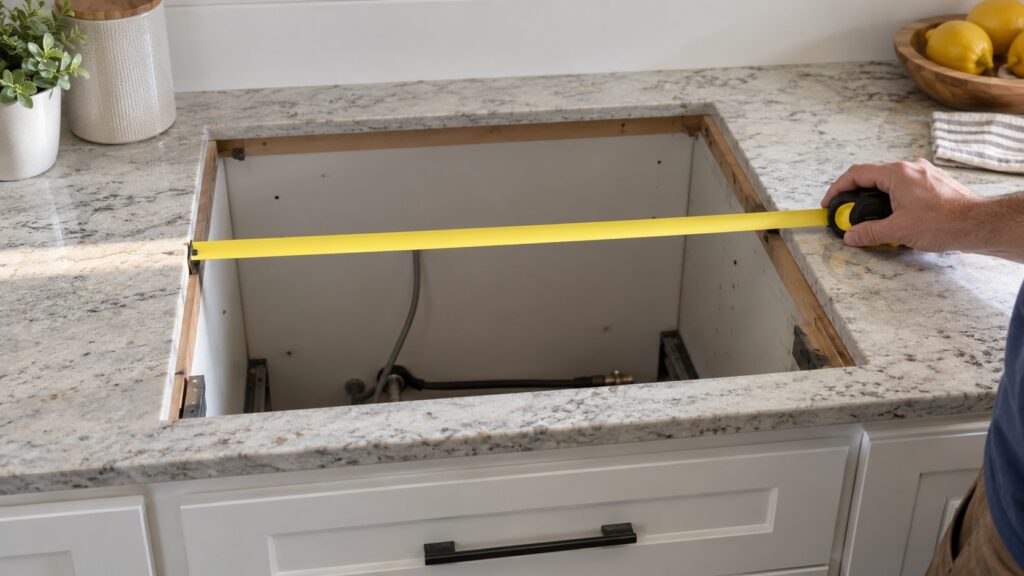
Prepare the countertop and cabinet so the installer arrives to a clear job. Remove the old cooktop only if the installer asks you to. Check that the countertop material can be cut for the opening and who will do it. Check that the cabinet below is clear. Plan the ventilation: a hood over the cooktop should be at least as wide as the cooktop, and ducted extraction works much better than recirculating, according to our range hood buying guide. Our range hood installation and duct sizing guide covers the duct side.
What should happen before the installer leaves?
Ask the installer to light every burner in front of you and to confirm that each one ignites and runs normally before they go. That check, and any gas test, is theirs to do, not yours. Then look at what is yours to look at: the grates should sit seated and the burner caps squarely on their bases, because our burner page notes that even a slight offset stops ignition. Our guide to how the UltraHeat burner works explains why the high-output burner looks bigger than the others.
If a burner later clicks but will not light, or the flame looks weak or yellow, our LG range burner that will not light guide says a clogged or wet port or a misaligned cap is the usual cause. Reseating a cap on a cooled, switched-off burner is the only owner-level step on that list that belongs here. If none of the burners light, do not go looking for a gas valve yourself: call the installer.
When should you call for service?
Call the installer, or book a technician, if a burner will not light after the caps are reseated, if the flame looks wrong, if a burner will not shut off or if you smell gas at any time (for a gas smell, leave first and call from outside). Do not open any panel or try to adjust the gas controls. For the repair-or-replace side once the cooktop has some years on it, read our LG cooktop repair or replace guide, and see how an LG cooktop repair visit works.