TL;DR: Repair an LG cooktop when the fault is a single part you can name, such as a gas igniter, a sensor or one touch key. Replace it when the glass is cracked, when several zones or the main board are failing, or when the cooktop is old enough that the next failure is only a matter of time. Cutout size, fuel type and age decide more than the repair itself.
A cooktop is one of the hardest appliances to judge, because it fails in ways that range from trivial to dangerous. A gas burner that will not light may need ten minutes of cleaning. A cracked ceramic-glass surface should be taken out of use that day. The question “lg cooktop repair or replace” has no single answer, but it does have a clear method: identify the fault, find out whether it is one part or a pattern, and then weigh age, cutout and safety. This guide gives you that method for gas, radiant electric and induction models.
When is an LG cooktop worth repairing?
A repair makes sense when three things line up: the fault is isolated, the part is a normal service item, and the rest of the cooktop is in good shape. A single gas burner that will not spark, one induction zone that will not heat on any pan, or one touch key that reads as stuck are all faults like this. Each points to a specific component, and the surfaces, the cutout and every other zone stay perfectly usable.
LG’s induction cooktop codes on this site describe exactly that kind of isolated fault. F33 is an induction burner sensor failure, F34 is a sensor or overheat problem on an induction burner, and F3 is a touch key that reads as stuck. H5 is only the hot-surface reminder and is not a fault at all. Our guide to LG cooktop F33 and F34 codes explains which part each one points to, and the H5 page confirms it can be ignored.
When should I replace an LG cooktop instead?
Replacement is the better call in four situations. The first is damage to the surface: cracked glass cannot be treated as a cosmetic problem, because spills reach the electronics and the edges can fail. The second is a pattern of faults, where two or three unrelated problems appear within a year or two, which tells you the machine is wearing out as a whole. The third is age. A cooktop that is a decade or more old, with a part that is now hard to find, is a poor candidate for a major repair. The fourth is a wish to change fuel type or style, which is a replacement decision even when the old unit still works.
If your cooktop will not turn on at all, do not assume the worst; our LG cooktop won’t turn on guide covers the checks that cost nothing, and LG induction cooktop won’t heat deals with the case where the glass lights up but the pan stays cold.
What does the cutout have to do with it?
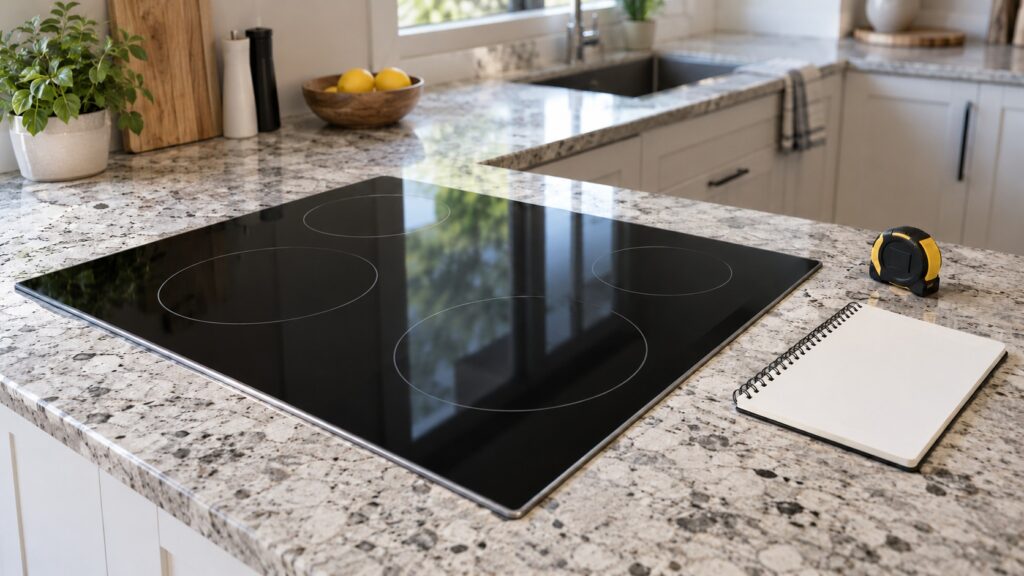
More than most owners expect. A cooktop drops into a countertop opening, and a replacement has to fit it. A new cooktop of the same width as the old one often fits the cutout with little or no change, but a different width, depth or burner layout may mean modifying the countertop, and a stone or quartz counter makes that costly or impossible. Measure the opening before shopping, and compare it with the dimensions on the new model’s installation sheet. If the opening and the countertop make a new unit awkward, that is a good reason to lean toward repairing the one you have.
Fuel type matters in the same way. A gas cooktop needs a gas line and ventilation, and an induction cooktop needs a dedicated 240-volt circuit sized for it. Swapping gas for induction means electrical work, and the other way around means a gas line. The model numbers on this site include LG gas units such as the CBGJ3027S and induction units such as the CBIS3618BE. Our gas versus induction comparison helps you decide whether to change type at all.
How do age and care change the answer?
Well-cared-for cooktops last a long time, and neglected ones do not. Gas burners that are kept clean and induction glass that is wiped after every use age more slowly, as our LG induction cooktop maintenance guide describes. A clean unit with one failed part is a better repair candidate than a greasy one with a failing board. A simple rule is to ask whether you would be happy to own this cooktop in three more years if the repair works. If the answer is yes, repair. If you suspect a second problem is coming, a replacement avoids paying twice.
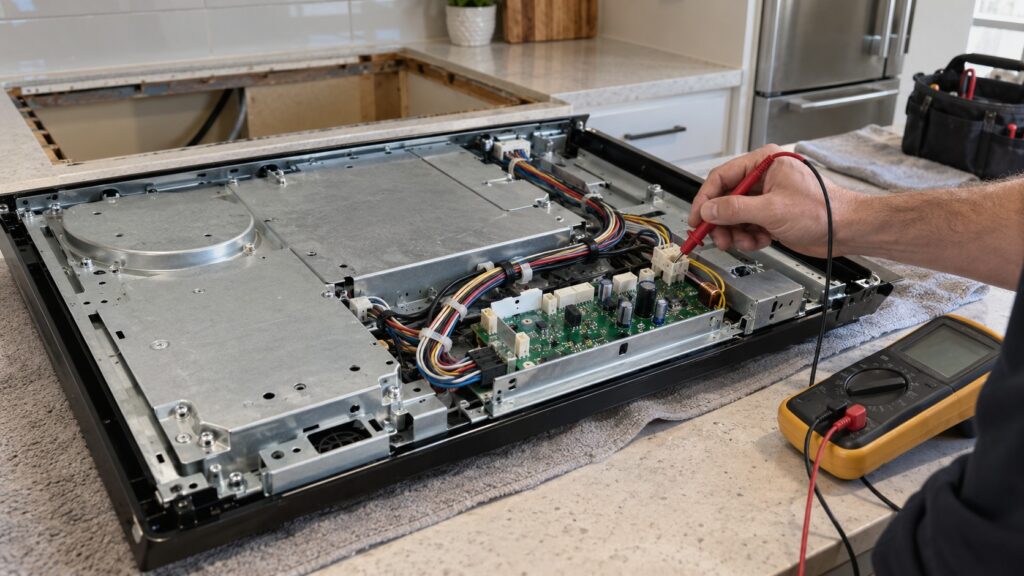
Think of cost in relative terms. A part swap on a single component is usually far cheaper than a new cooktop, and a diagnosis that finds a failed main board or a damaged glass top moves the balance the other way. A technician can tell you which case you are in before any work begins.
What should I do before deciding?
Write down the symptom, the exact code and whether the problem affects one zone or all of them. Try the free checks: confirm the breaker, clean the burner or glass, and test with different cookware on induction. If the cooktop is part of a range, the question changes, so read repair or replace an LG range instead. Then have the fault confirmed: our LG cooktop repair page lists what we test, and you can schedule a visit when you are ready for a straight answer.